News
Why Battery Consistency Determines the Lifespan of an Energy Storage System — From Cell to Pack to Rack
- October 21, 2025
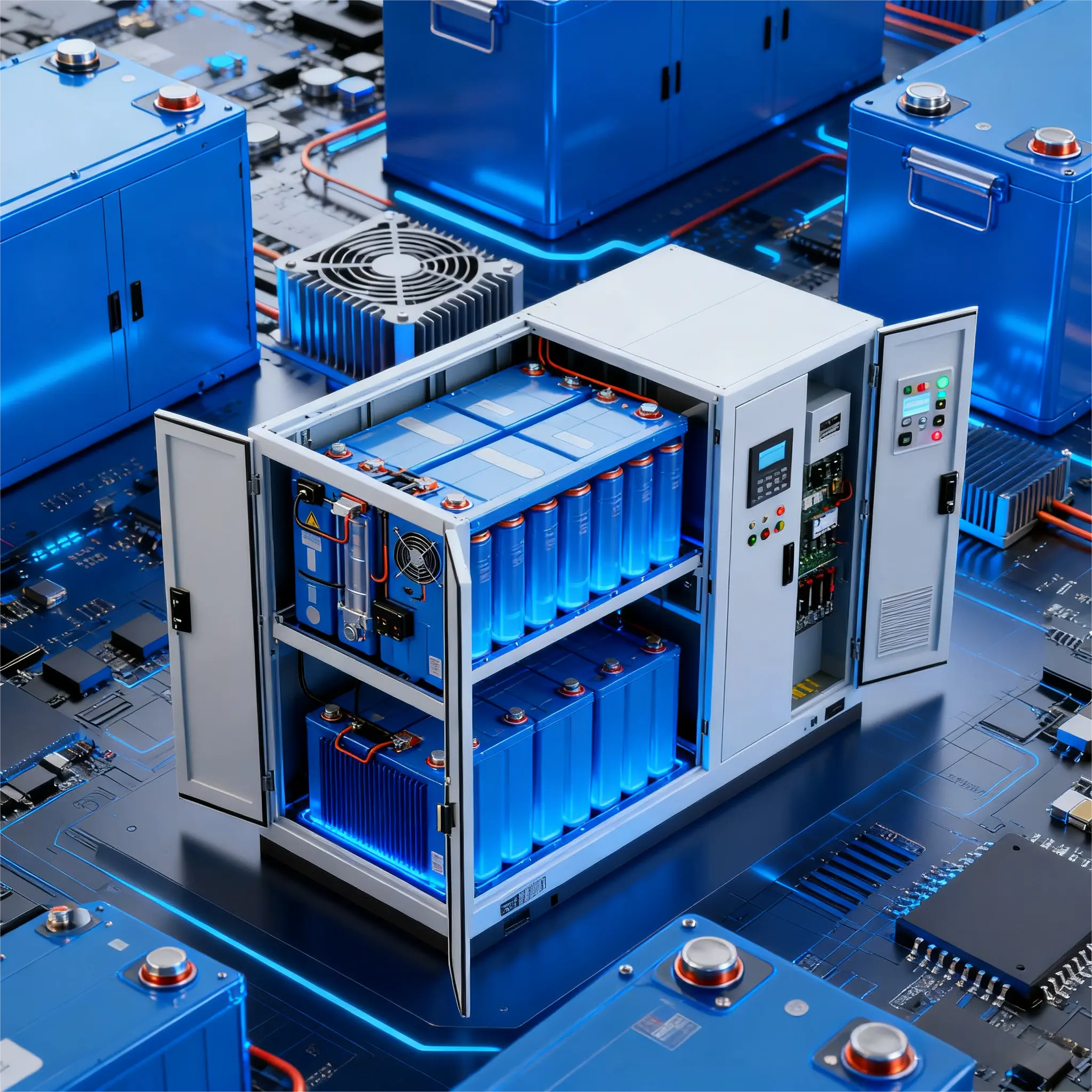
In every lithium-ion energy storage system, the true lifespan is not determined by the average performance of the battery cells — but by the worst cell inside the system. This is why top-tier manufacturers invest heavily in cell consistency, and why integrators and system owners must pay attention to it before making purchasing decisions.
Consistency is not a marketing concept. It directly shapes:
Cycle life
Available usable capacity
System safety and thermal stability
Round-trip efficiency
Total cost of ownership (TCO) and ROI
Whether deployed in factories, microgrids, solar-storage systems, or industrial energy arbitrage projects, battery consistency determines whether an ESS runs at full performance for 10+ years, or loses capacity rapidly after only a few years.
What Is Battery Consistency?
Battery consistency refers to how closely aligned multiple cells are in their capacity, internal resistance, voltage, SOC, SOH, temperature behavior, and aging characteristics. When cells behave uniformly, the system can operate safely, efficiently, and predictably throughout its lifecycle.
With poor consistency, imbalance grows with every charge-discharge cycle, causing premature degradation and early retirement of the system.
From Cell to Pack to Rack — How Inconsistency Propagates
Step 1 — Cell-Level Inconsistency (The Root Cause)
Even tiny differences at the cell level — for example, 1–2 mΩ internal resistance deviation or 1–2% capacity gap — will grow significantly over hundreds of cycles. Since all cells in a pack operate in series, the weakest cell decides:
When charging must stop (voltage ceiling reached earlier)
When discharging must stop (voltage floor reached earlier)
How much usable energy the system can release (capacity clipping)
Over time, this leads to:
Faster aging of weak cells
More frequent BMS balancing activity
Increased heat accumulation
Larger SOH divergence
This is the starting point of a chain reaction.
Step 2 — Pack-Level Spread (Efficiency Loss and Accelerated Aging)
When inconsistent cells form a pack, the pack experiences:
Reduced usable capacity at the start
Rising internal resistance and heat generation
Harder balancing work for the BMS
Increasing pack-to-pack deviation within the rack
The pack becomes less stable and more inefficient. The system now loses energy not because of calendar aging, but because of consistency-driven performance drag.
Step 3 — Rack-Level System Consequences (Lifespan Collapse)
At the rack level, inconsistency has already become a system-wide issue. The ESS now faces:
Early system derating
Thermal hotspots
Greater fire risk due to localized stress
Reduced RTE (Round-Trip Efficiency)
Shortened cycle life by years
Ultimately, the entire rack — worth tens or hundreds of thousands of dollars — retires early simply because a few weak cells pulled the system down.
Why BMS Alone Cannot “Fix” Bad Consistency
A high-performance BMS can manage consistency, but it cannot create it. Balancing algorithms can slow the divergence, but they cannot reverse it. If the cells are inconsistent on Day 1, the system will pay the price every day afterward.
Put simply:
Good consistency is engineered at the cell manufacturing and selection stage — not repaired by software later.
The Business Impact — Consistency Equals ROI
For commercial and industrial energy storage, buyers care about one thing above all: return on investment. Consistency affects ROI in four direct ways:
Longer cycle life = more revenue cycles
Higher usable capacity = more kWh delivered
Higher safety = lower operational risk
Lower LCOS = higher long-term profit
This is why premium LFP energy storage systems always emphasize consistency as a core value, not an optional feature.
FFD POWER’s Approach — Built for Long Life and Reliability
FFDPOWER ensures battery consistency through:
Strict cell selection from Tier-1 LFP suppliers
Multi-dimension cell matching (capacity, resistance, SOC, OCV curves, thermal behavior)
Rack-level SOH balancing strategy
Advanced EMS + BMS collaboration for long-life operation
Precision thermal management to minimize divergence growth
By controlling consistency from cell → pack → rack, FFDPOWER guarantees stable energy delivery and long system lifespan — protecting your investment for the full lifecycle.
Conclusion: Consistency Is the Foundation of Every Long-Life ESS
A lithium energy storage system ages downward, not upward — and inconsistency accelerates that aging faster than any other factor. The industry must recognize a simple reality:
The system is only as strong as its weakest cell.
To achieve 10+ years of stable performance, low LCOS, and maximum lifetime value, consistency must be the top priority from design to deployment.
FFD POWER delivers energy storage solutions built on this principle — ensuring safer, smarter, and longer-lasting systems for our global customers.