News
Where to Find Reliable C&I Energy Storage System Manufacturers with Grid-Forming Capability
- January 20, 2026
As commercial and industrial electricity costs rise globally, energy storage has become a strategic asset rather than an optional upgrade. Businesses now focus on how to select reliable Commercial & industrial energy storage systems manufacturers that can deliver long-term performance, grid compatibility, and economic value. A key requirement is grid-forming energy storage, which helps C&I sites maintain stable voltage and frequency, operate independently during grid disturbances, and support applications such as PV self-consumption, peak shaving, and EV charging. This guide explains where to find trusted suppliers and how to evaluate manufacturers for future-ready C&I energy storage projects.
Understanding C&I Energy Storage Systems
C&I energy storage means battery energy storage systems placed behind the meter at commercial buildings, industrial sites, logistics hubs, factories, data centers, and business parks. Unlike utility-scale BESS, C&I systems stress adaptability, quick setup, and tight links with local loads and renewable power sources.
What Is Grid-Forming Energy Storage and Why It Matters
Standard battery setups work in grid-following mode. This means they depend on the utility grid to set voltage and frequency. On the other hand, grid-forming energy storage can set and control those grid details on its own. So, it runs well even if the main grid falters or goes offline.
For commercial and industrial users, grid-forming capability brings several perks:
- Steady work in weak-grid or out-of-the-way spots
- Smooth switch between grid-tied and standalone modes
- Better toughness for microgrids and key infrastructure
- Stronger match with systems heavy on renewables
As grids change and spread out more, grid-forming becomes a basic need. It is no longer just an extra option.
Key Features Buyers Should Expect from Reliable BESS Manufacturers
All-in-One Energy Storage System Integration
Top BESS manufacturers now provide all-in-one energy storage systems more often. In these, batteries, PCS, BMS, EMS, thermal management, and safety features come pre-assembled at the factory.
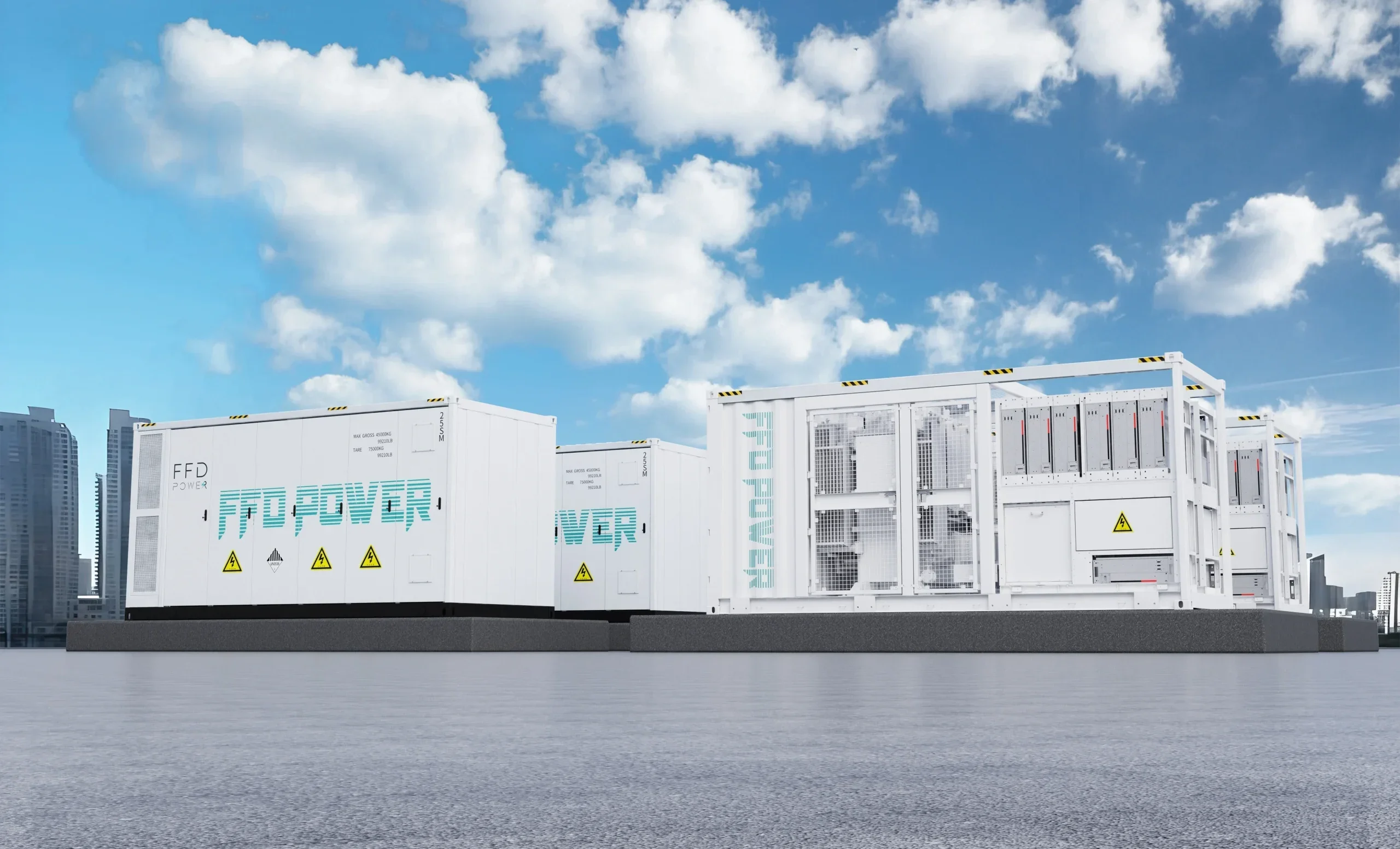
For instance, FFD POWER’s All-in-One (AIO) systems adopt factory-level integration, combining battery packs, PCS, BMS, EMS, liquid cooling, and fire protection in a plug-and-play cabinet. With proprietary BMS/EMS and pre-validated control logic, FFD POWER AIO solutions enable fast deployment, high reliability, and flexible scaling for C&I and grid applications.
Modular Design and Scalable Capacity
The 261kWh energy storage system has become the industry “sweet spot” due to:
- Optimal Energy Density: Perfectly balances weight and capacity using standard 314Ah cells.
- Logistics Efficiency: Designed for standardized freight and easy site handling without special permits.
- Voltage Compatibility: Matches common commercial 400V/480V grid connections, simplifying transformer needs.
- Flexible Expansion: Enables a “pay-as-you-grow” model through easy parallel scaling for larger projects.
Intelligent EMS and TOU Optimization
A smart EMS is crucial to get the most from storage resources. TOU optimization energy storage systems charge up during cheap rate times automatically. They release power during high-priced slots. This setup allows energy trading and savings without any hands-on work.

Common C&I Energy Storage Applications
Energy Storage for PV Self-Consumption
With commercial solar setups growing, energy storage for PV self-consumption ranks as a top use. Storage units grab extra solar output in daylight hours. They then supply it during evening high-demand times.
Commercial Peak Shaving BESS
A commercial peak shaving BESS cuts peak demand fees by giving stored power during brief high periods. FFD POWER Peak shaving reduces demand charges by discharging stored energy during peak load periods, easing grid stress and lowering electricity costs.
Energy Storage for EV Charging Stations
Quick EV chargers put a heavy load on distribution lines. Energy storage for EV charging stations cushions those power pulls. It avoids big grid fixes. And it lets chargers run at higher rates.
Online UPS Energy Storage for Critical Loads
In places like data centers, hospitals, and factory automation, online UPS energy storage offers instant backup with no switch delay. It also allows energy tweaks when the grid runs fine.
For instance, FFD POWER online UPS-BESS uses true double-conversion architecture with zero transfer time. It ensures stable, clean power for critical loads while enabling bidirectional energy flow for peak shaving and energy optimization when grid conditions are normal.
Recommended C&I Energy Storage Manufacturers and Suppliers
When looking for solid suppliers, buyers need to focus on tech readiness, blend skills, and ongoing help. The manufacturers below show varied ways in the C&I energy storage field:
FFD POWER
FFD POWER covers the following aspects:
- Provides C&I energy storage systems with grid-forming capability for stable on-grid and off-grid operation
- Provides BESS optimized for PV self-consumption, supporting AC- and DC-coupled solar integration
- Provides 261kWh modular energy storage systems for scalable behind-the-meter projects
- Leading All-in-One (AIO) energy storage system manufacturer with factory-integrated BMS, PCS, and EMS
- Supplies energy storage with online UPS functionality for critical commercial and industrial loads
- Delivers BESS for commercial peak shaving and demand charge reduction
- FFD POWER BESS for EV charging stations mitigates grid impact, supports fast charging, and optimizes energy costs through peak shaving and intelligent EMS control.
- Enables TOU optimization through advanced EMS for cost-efficient C&I energy management
Sungrow
Built around full PCS setups along with energy storage, Sungrow serves utility clients and businesses alike, known for combining solar with batteries in large-scale setups across continents.
Tesla
Out in the field, Tesla leans into big battery setups – both central and distributed – to help smooth out power flows, cut down spikes during demand surges, while also making space for solar and wind output via reliable, repeatable storage designs.
Siemens
Siemens offers energy storage and grid integration tools – safe, reliable, built for transmission needs, microgrids too, plus heavy-duty industrial setups where strong power systems matter most.
BYD
Energy storage setups built around lithium iron phosphate batteries roll out from BYD, aimed at homes, offices, and grid-level use – where reliability, long-term performance matter most, along with designs ready to grow without loss of control.
How to Evaluate Energy Storage System Suppliers by Region
When picking energy storage system suppliers, buyers should look beyond just product details. Important checks include:
- Meeting local grid rules and certifications
- Access to area-based tech aid
- Background in like commercial setups
- Growth potential and update routes
- Ongoing watch and full-life handling
A mix of local reach and worldwide making know-how usually offers the steadiest choice.
Conclusion
Finding trustworthy C&I energy storage system manufacturers with grid-forming capability calls for a firm grasp of use needs, tech demands, and lasting run goals.
By zeroing in on tested manufacturers and setups ready for tomorrow, businesses can make sure their energy storage spends bring strength, adaptability, and green value for years ahead.
FAQ
Q: What is grid-forming capability in C&I energy storage systems?
A: Grid-forming capability allows an energy storage system to actively regulate voltage and frequency.
Q: Are all commercial energy storage systems suitable for peak shaving?
A: Not all systems are optimized for peak shaving. A commercial peak shaving BESS requires fast response times, sufficient power capacity, and an EMS capable of predicting and managing load means effectively.
Q: Why is 261kWh a common capacity for modular energy storage systems?
A: Because it aligns with 314Ah cell strings and standard fire safety thresholds (like the 250kWh-300kWh regulatory boundary in certain regions).
Q: Can one energy storage system support PV self-consumption and EV charging at the same time?
A: Yes. With a properly configured EMS, a single system can manage energy storage for PV self-consumption, EV charging station buffering, and peak shaving simultaneously.
Q: How does TOU optimization improve the return on investment for C&I BESS?
A: TOU optimization energy storage systems automatically shift energy use based on electricity pricing. They charge during low-cost periods and discharge during high-cost periods. This greatly lowers total energy costs.