
News
What Is Black Start? How Energy Storage Systems Provide Reliable Black Start Capability
- November 18, 2025
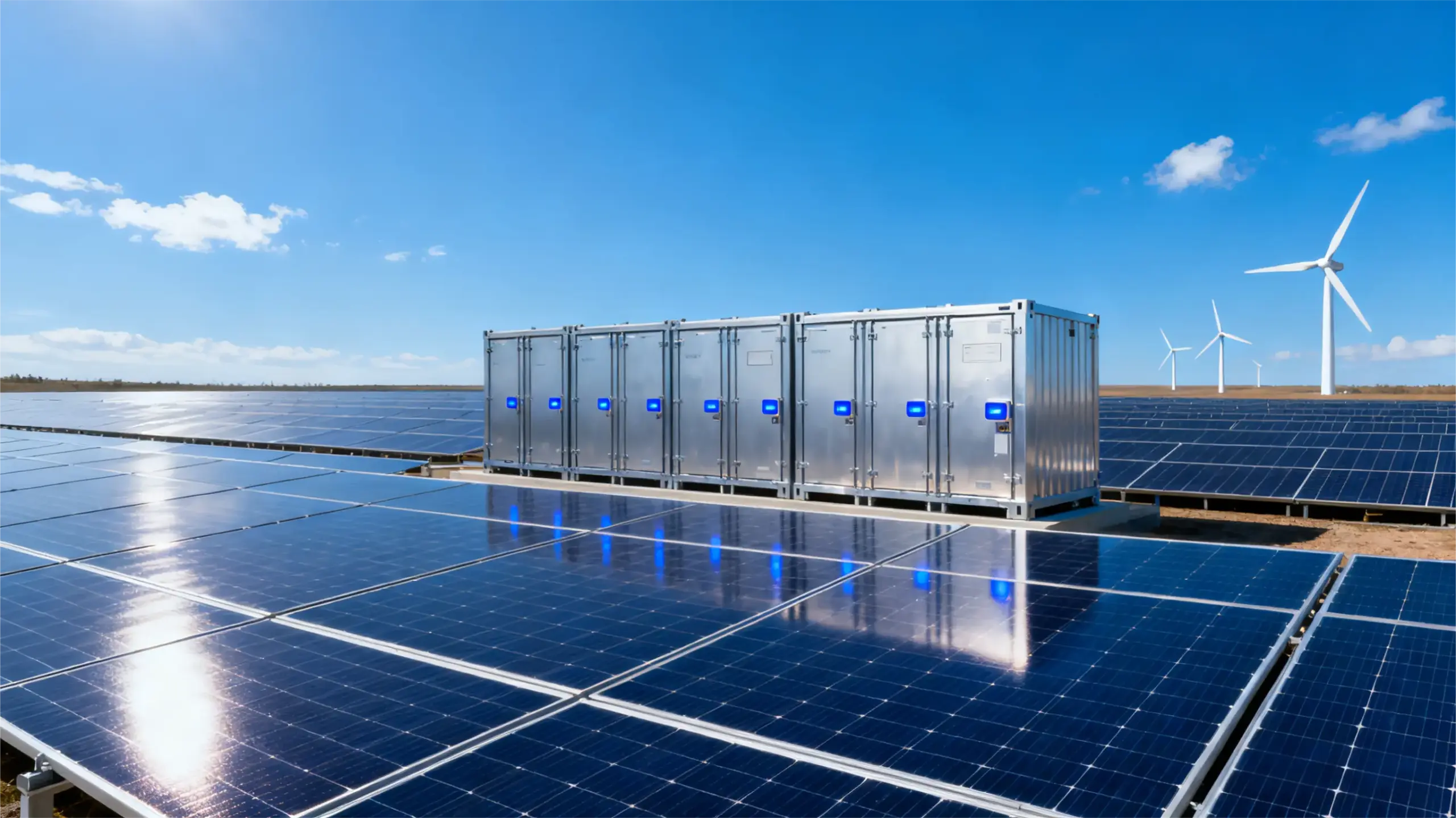
In modern power systems, Black Start capability is essential for ensuring grid resilience and rapid recovery after a power outage. Traditionally provided by diesel generators or large hydropower plants, Black Start is now increasingly supported by Battery Energy Storage Systems (BESS) thanks to their fast response, high reliability, and clean operation.
This article explains what Black Start is, why it matters for grid stability, and how energy storage has become an ideal solution for providing Black Start services.
What Is Black Start?
A Black Start refers to the process of restoring power to a portion of the electric grid without relying on the external transmission network.
In other words, it is the ability to “start from zero” after a major outage or blackout.
Under normal conditions, power plants rely on external electricity from the grid to start turbines, activate auxiliary systems, and ramp up generation.
But during a wide-scale outage, the grid has no power—so certain facilities must be able to restart independently.
Black Start capability ensures:
Rapid recovery after grid failures
Minimization of economic losses
Stabilization of critical infrastructure
Prevention of cascading failures
It is a fundamental part of grid resilience and disaster recovery planning.
How Traditional Power Plants Provide Black Start
Historically, Black Start has been delivered by:
Diesel generators
Simple and reliable but noisy, costly, and carbon-intensive.
Hydropower plants
They can start quickly but require geographic resources.
Gas turbines
Fast-starting but dependent on fuel supply.
These methods come with challenges:
Fuel dependency, high operating costs, long warm-up time, and increasing environmental restrictions.
Why Energy Storage Is a Game-Changer for Black Start
Battery Energy Storage Systems (BESS) have become a preferred Black Start asset for grid operators and large industrial users due to several advantages:
1. Instantaneous Start and Fast Response
BESS can deliver power within milliseconds, enabling instant energization of transformers, switchgear, and critical circuits.
2. High Reliability
No moving parts → lower failure rate, no need for fuel delivery, and minimal maintenance.
3. Clean and Silent Operation
Ideal for urban or environmentally sensitive locations.
4. Compatible with Renewable Energy
BESS can integrate with solar or wind to support a clean Black Start solution.
5. Flexible Deployment
Modular structure allows installation in substations, power plants, microgrids, and industrial sites.
How Energy Storage Provides Black Start Capability
The process of a BESS-enabled Black Start typically includes the following steps:
Step 1: Initial Energization
The BESS supplies power to energize the step-up transformer and auxiliary loads.
Step 2: Start of Critical Loads
It powers:
Control systems
Pumps
Cooling systems
Communication devices
These are necessary for a generator to restart.
Step 3: Synchronization with the Grid
Once the main generator is running, the BESS coordinates frequency and voltage to synchronize with the grid.
Step 4: Gradual Restoration of the Network
The BESS then provides:
Frequency regulation
Voltage support
Inrush current management
This stabilizes the system as transmission lines and substations come back online.
Key Technical Requirements for BESS Black Start
To qualify as a Black Start resource, a Battery Energy Storage System should meet:
Sufficient power capacity
To energize transformers and auxiliary systems.
Strong grid-forming inverter capability
Supports voltage and frequency during islanded operation.
Stable control strategy
Smooth transition from black start to grid synchronization.
Robust communication with EMS/SCADA
Ensures safe coordination with operators.
Reliable thermal management & BMS
Maintains stable operation under high power loads.
FFD POWER-type systems with advanced PCS, top-tier LFP cells, and intelligent EMS are well-suited for meeting such requirements.
Applications of BESS-Based Black Start
Thermal power plants
Restarting turbine auxiliaries.
Renewable energy plants
Supporting solar or wind during outages.
Data centers
Ensuring power continuity in isolated microgrids.
Industrial facilities
Maintaining essential operations during grid breakdowns.
Remote microgrids
Enabling full off-grid recovery without diesel generators.
Why BESS Will Lead the Future of Black Start
As global power systems move toward decarbonization and digitalization, BESS is becoming the preferred clean Black Start resource because:
It reduces dependence on fossil fuels
It improves grid resilience
It enhances the value stack of energy storage assets
It supports zero-emission power system planning
Black Start is no longer just an emergency function—it’s a strategic capability that showcases the flexibility and reliability of modern ESS technology.
Conclusion
Black Start is critical for fast and safe grid recovery after a major outage.
With advantages in reliability, speed, and sustainability, Battery Energy Storage Systems are rapidly replacing traditional diesel-based Black Start units.
Modern BESS equipped with:
High-quality LFP batteries
Grid-forming PCS
Intelligent EMS
Robust BMS
can deliver stable, efficient, and environmentally friendly Black Start services to both utilities and large industrial facilities.