
News
The Four Major Types of Energy Storage: Electrochemical, Mechanical, Thermal & Hydrogen
- October 16, 2025
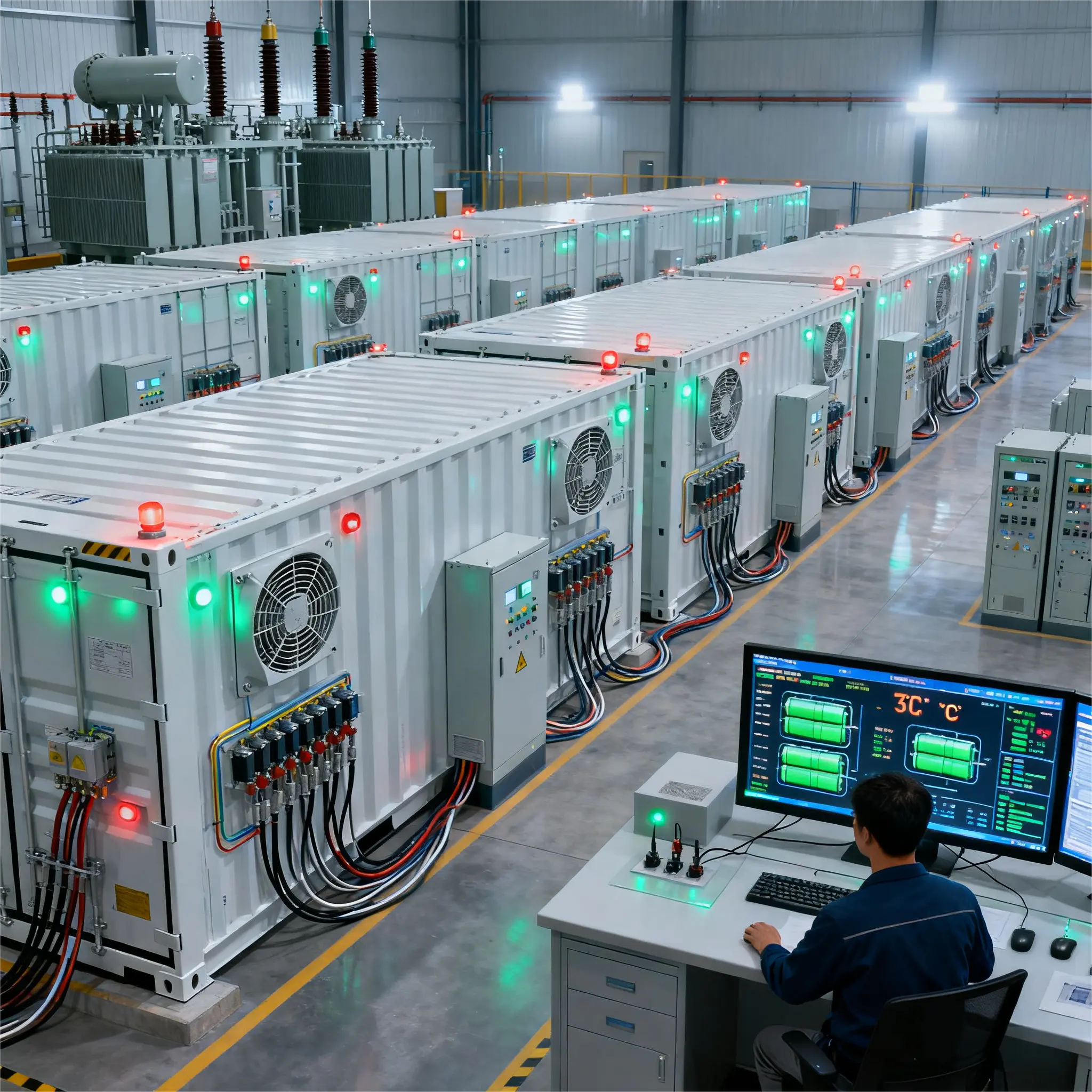
Energy storage is the backbone of a reliable, decarbonized energy system. Different use cases — from short bursts of grid balancing to days-long capacity for renewables — require different storage technologies. Broadly, storage solutions fall into four major categories: electrochemical, mechanical, thermal, and hydrogen (chemical). This article explains how each works, typical applications, advantages and limitations, performance characteristics, and how to choose the right type for a project.
Electrochemical Storage (Batteries)
What it is: Electrochemical storage converts electrical energy to chemical energy during charging and back to electricity during discharge. The most common commercial technology is lithium-ion batteries, with variants and alternatives including LFP (Lithium Iron Phosphate), NMC, lead-acid, flow batteries, and emerging sodium-ion.
How it works (short): Current drives chemical reactions inside cells; during discharge the reactions reverse to produce current.
Typical applications:
Residential and commercial solar + storage
Grid frequency regulation and fast response ancillary services
Commercial & industrial peak shaving and UPS/back-up power
Electric vehicle energy storage (mobile)
Key strengths:
High power density and fast response (seconds to sub-seconds)
Mature supply chain and falling costs for lithium-ion
Modular and scalable from kW to MW systems
Limitations:
Cycle life and degradation depend on chemistry and operating profile
Thermal management and fire-safety systems required
Costs and material sourcing considerations (e.g., critical minerals)
Performance notes: LFP systems are known for long cycle life and strong safety; typical round-trip efficiencies (system level) commonly range ~85–95% depending on inverters and balance-of-system.
Mechanical Storage
What it is: Mechanical storage uses physical processes to store energy — most widely used examples are pumped hydro storage (PHS) and compressed air energy storage (CAES). Other mechanical forms include flywheels and gravity storage systems.
How it works (short):
Pumped hydro: Pumps water uphill into a reservoir when excess electricity is available; releases water through turbines to generate power.
CAES: Compresses air into a storage cavern; on discharge, air is expanded through a turbine (often using some heat input).
Flywheels: Store kinetic energy by spinning a rotor at high speed and recover energy by slowing it down.
Typical applications:
Bulk, long-duration grid storage (PHS and advanced CAES)
Short-duration high-power smoothing and frequency support (flywheels)
Sites where geography permits reservoirs or caverns
Key strengths:
Very large capacity potential (hours to days) — excellent for bulk energy shifting
Long lifetimes and low marginal degradation (especially PHS)
Low operating cost per MWh once built
Limitations:
High upfront capital cost and site-specific constraints (topography, geology)
CAES may require fuel or heat integration; conventional CAES has lower RTE than batteries unless advanced adiabatic designs used
Flywheels are best for short-duration, high-power needs (not long-duration energy)
Performance notes: Pumped hydro is the most deployed large-scale storage globally. Typical round-trip efficiencies vary: PHS often ~70–85%; CAES depends on design (traditional ~40–70%, advanced adiabatic designs higher).
Thermal Energy Storage (TES)
What it is: Thermal storage stores energy as heat or cold for later use. TES can be sensible (store heat by raising temperature of a material), latent (store energy in phase change materials), or thermochemical (store energy in reversible chemical reactions).
How it works (short): Electricity or heat charges the TES (e.g., heating molten salt or charging a chilled-water tank). Later the stored thermal energy is used directly for heating/cooling or converted to electricity via a heat engine.
Typical applications:
Concentrated solar power (CSP) plants using molten salt to extend generation after sunset
District heating/cooling systems and industrial process heat
Building HVAC peak shifting and seasonal storage in some projects
Key strengths:
Very cost-effective for thermal needs (heating/cooling) and industrial processes
High storage duration potential and low self-discharge for sensible/latent TES
Can enable high renewable penetration where thermal loads are significant
Limitations:
Converting stored heat back to electricity has efficiency limits (heat engines) — lower RTE compared with batteries for electrical applications
Requires matching between stored thermal energy and end-use temperature requirements
Performance notes: TES for heat delivery is highly efficient for the intended thermal purpose; electrical round-trip via heat engines or thermochemical cycles tends to be less efficient than electrochemical storage.
Hydrogen Storage (Power-to-Gas / Chemical Storage)
What it is: Hydrogen storage is a chemical form of long-duration energy storage. Electricity (often excess renewable power) is used to produce hydrogen via electrolysis. Hydrogen can be stored as a gas or liquid, or converted to synthetic methane or other fuels (power-to-gas, e-fuels).
How it works (short): Renewable electricity → electrolysis → hydrogen → storage (tank, underground cavern) → reconversion (fuel cell or combustion turbine) when electricity is needed or used as feedstock or transport fuel.
Typical applications:
Seasonal and multi-day energy shifting at grid scale
Long-distance energy transport and industrial feedstock (steel, chemicals)
Decarbonizing hard-to-electrify sectors (heavy transport, industry)
Key strengths:
Excellent for very long durations and seasonal storage
Multi-sector value: electricity, transport fuel, industrial feedstock
Scalable via existing gas infrastructure in some regions
Limitations:
Lower well-to-power round-trip efficiency when reconverting to electricity (often <50% depending on pathway)
High capex for electrolysers and storage; hydrogen handling safety and infrastructure needs
Costs decreasing but currently higher than many alternatives for pure electrical RTE
Performance notes: Hydrogen is best seen as part of an integrated energy system where its unique advantages (long duration, sector coupling) outweigh lower electrical efficiency.
Choosing the Right Technology: a quick guide
Short, fast response (seconds–minutes): Electrochemical (batteries) and flywheels.
Hours of storage for daily shifting: Batteries (Li-ion, LFP), some CAES and TES depending on design.
Multi-day to seasonal storage: Hydrogen (power-to-gas), pumped hydro (where available).
Thermal needs or industrial heat: TES (sensible/latent/thermochemical) or direct electrification plus TES.
Large, long-lived bulk capacity: Pumped hydro (where topography allows) or large-scale CAES
Conclusion
No single storage solution fits every need. The four major categories — electrochemical, mechanical, thermal and hydrogen — each have distinct roles in a decarbonized grid. The best projects combine multiple technologies and intelligent controls (EMS/BMS) to deliver reliable, economical, and safe energy services. For many commercial and industrial applications, batteries (especially LFP) provide balanced performance, while mechanical and hydrogen storage unlock long-duration and bulk energy options.