News
Reactive Power Compensation and Power Quality Management in Inverters
- November 11, 2025
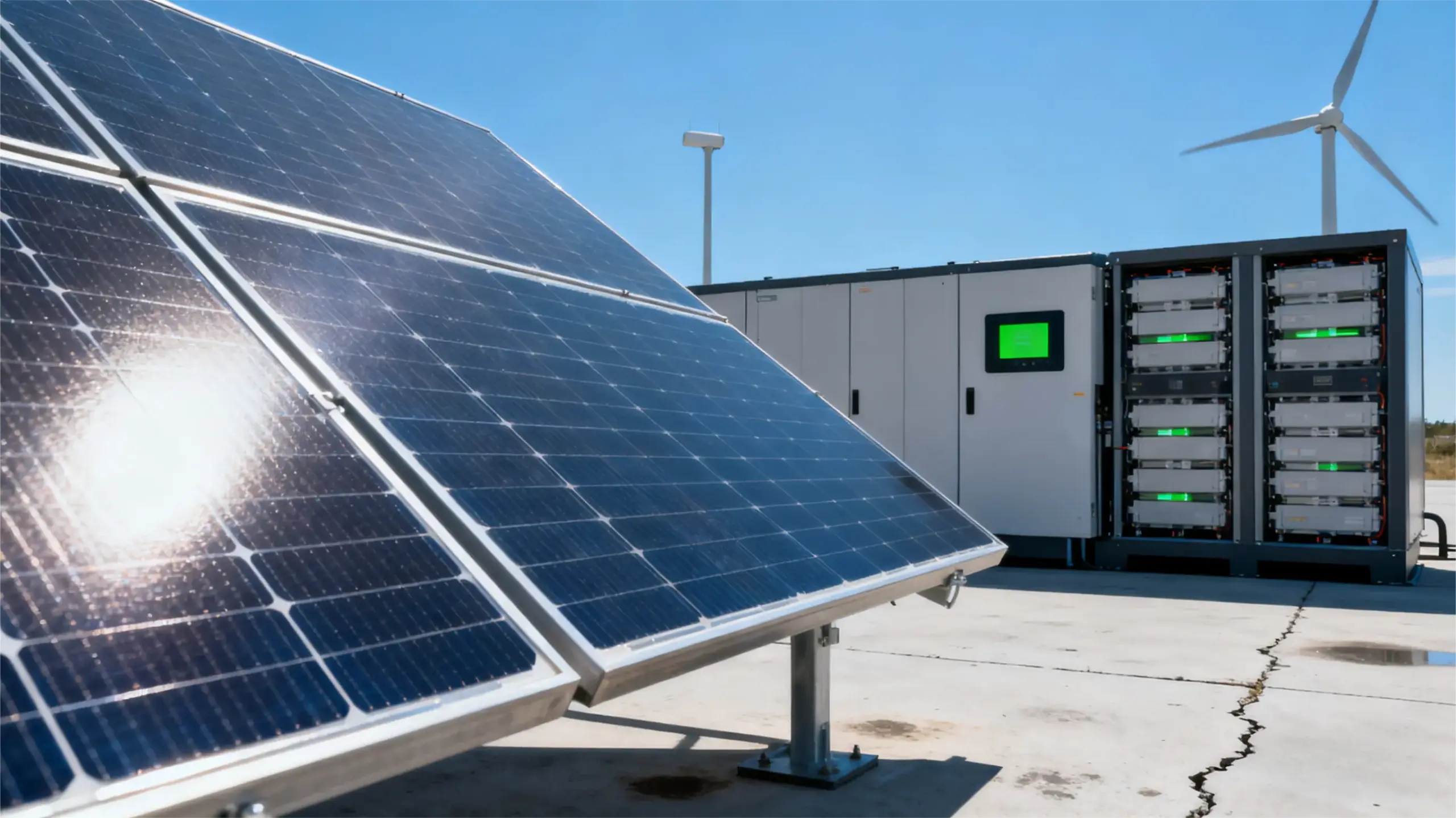
As renewable energy and energy storage systems (ESS) continue to expand, inverters have evolved far beyond their basic role of DC/AC power conversion.
Modern inverters are now equipped with reactive power compensation and power quality management functions — critical features for maintaining grid stability, energy efficiency, and equipment safety.
This article explores how these advanced inverter capabilities work, why they are essential for both on-grid and hybrid systems, and how they contribute to optimized power performance and compliance with global grid standards.
Understanding Reactive Power
To understand reactive power compensation, we first need to differentiate between active power (P) and reactive power (Q).
Active Power (P) – performs useful work, such as running motors or lighting systems.
Reactive Power (Q) – does not produce work but is required to establish magnetic fields in inductive loads (motors, transformers).
Without sufficient reactive power, voltage levels can drop, leading to unstable grid operation.
Conversely, excessive reactive power may cause voltage rise and reduce energy transmission efficiency.
Hence, maintaining the right power factor (the ratio between active and apparent power) is crucial for efficient and stable operation.
Role of the Inverter in Reactive Power Compensation
Modern inverters equipped with advanced control algorithms can dynamically regulate reactive power output, ensuring grid stability and compliance with voltage and frequency standards.
1. Reactive Power Control Modes
Inverters can operate in multiple reactive power control modes:
Constant Q Mode: The inverter delivers or absorbs a fixed amount of reactive power.
Voltage Control Mode (Volt-Var): The inverter adjusts reactive power according to grid voltage deviations.
Power Factor Control: Maintains a set power factor at the point of common coupling (PCC).
Automatic Mode Switching: Enables seamless transition between modes based on real-time grid conditions.
These modes allow ESS and PV inverters to support voltage stability, especially in regions with weak or unstable grids.
Benefits of Reactive Power Compensation
Voltage Stabilization:
Reactive power injection maintains voltage levels within acceptable limits, preventing undervoltage or overvoltage events.Reduced Power Losses:
By optimizing the power factor, current flow is minimized, which lowers transmission losses and improves efficiency.Enhanced Grid Reliability:
Inverters with reactive power support can prevent voltage collapse and improve grid resilience against load variations.Extended Equipment Lifespan:
Smooth voltage profiles reduce stress on transformers, cables, and connected loads, extending their operational life.Compliance with Grid Codes:
Most international standards (IEEE 1547, IEC 61850, EN 50549) require distributed generation units to provide reactive power capability and grid support functions.
Power Quality Management Functions
Beyond reactive power control, inverters play a vital role in power quality management — ensuring that energy delivered to the grid meets harmonic and voltage standards.
1. Harmonic Suppression
Modern inverters integrate active harmonic filtering (AHF) to detect and cancel harmonic distortion in real-time.
This minimizes Total Harmonic Distortion (THD) and prevents equipment overheating or malfunction.
2. Voltage and Frequency Regulation
In grid-connected mode, inverters can provide fast voltage support and frequency response to balance power fluctuations, improving overall system stability.
3. Flicker and Transient Mitigation
Through advanced control loops, inverters can smooth out voltage flicker and suppress transients caused by sudden load changes or renewable generation variability.
4. Phase Balancing
Inverters monitor and correct phase imbalances in three-phase systems, improving efficiency and reducing neutral current.
Integration with Energy Management Systems (EMS)
When integrated with an Energy Management System (EMS), reactive power control becomes predictive and adaptive.
Predictive Compensation: Using AI and data analytics, EMS forecasts load variations and adjusts inverter parameters proactively.
Coordinated Control: In multi-inverter or hybrid systems, reactive power sharing is optimized to minimize losses.
Dynamic Optimization: EMS dynamically balances active and reactive power to maximize system efficiency under varying solar irradiance or grid conditions.
This intelligent control transforms the inverter from a passive converter to an active grid-support device.
Compliance with International Standards
To ensure interoperability and grid safety, inverter systems must comply with leading global standards, such as:
IEEE 1547: Defines interconnection and reactive power requirements for distributed generation.
IEC 61850: Specifies communication protocols and control for substation automation.
EN 50549: European standard for grid connection of generating units.
GB/T 29319 (China): Establishes inverter performance and reactive control standards for renewable systems.
Compliance ensures consistent power quality and smooth grid interaction worldwide.
Future Trends
The future of reactive power and power quality management lies in AI-driven optimization, multi-level inverter architectures, and digital twin modeling.
These technologies will enable:
Self-learning reactive control algorithms
Real-time grid stability prediction
Coordinated voltage control among distributed assets
Such advancements will make inverters a core element of next-generation smart grids and AI-enabled ESS ecosystems.
Conclusion
Reactive power compensation and power quality management are no longer optional features — they are essential functions of modern inverters in both PV and ESS applications.
By providing dynamic voltage control, harmonic suppression, and intelligent power management, inverters enhance grid resilience, optimize efficiency, and ensure compliance with global standards.
As the energy transition accelerates, these capabilities will define the next generation of smart, stable, and sustainable power systems.