News
Power Quality Requirements for Grid-Connected Energy Storage Systems and IEC Compliance Guide
- November 5, 2025
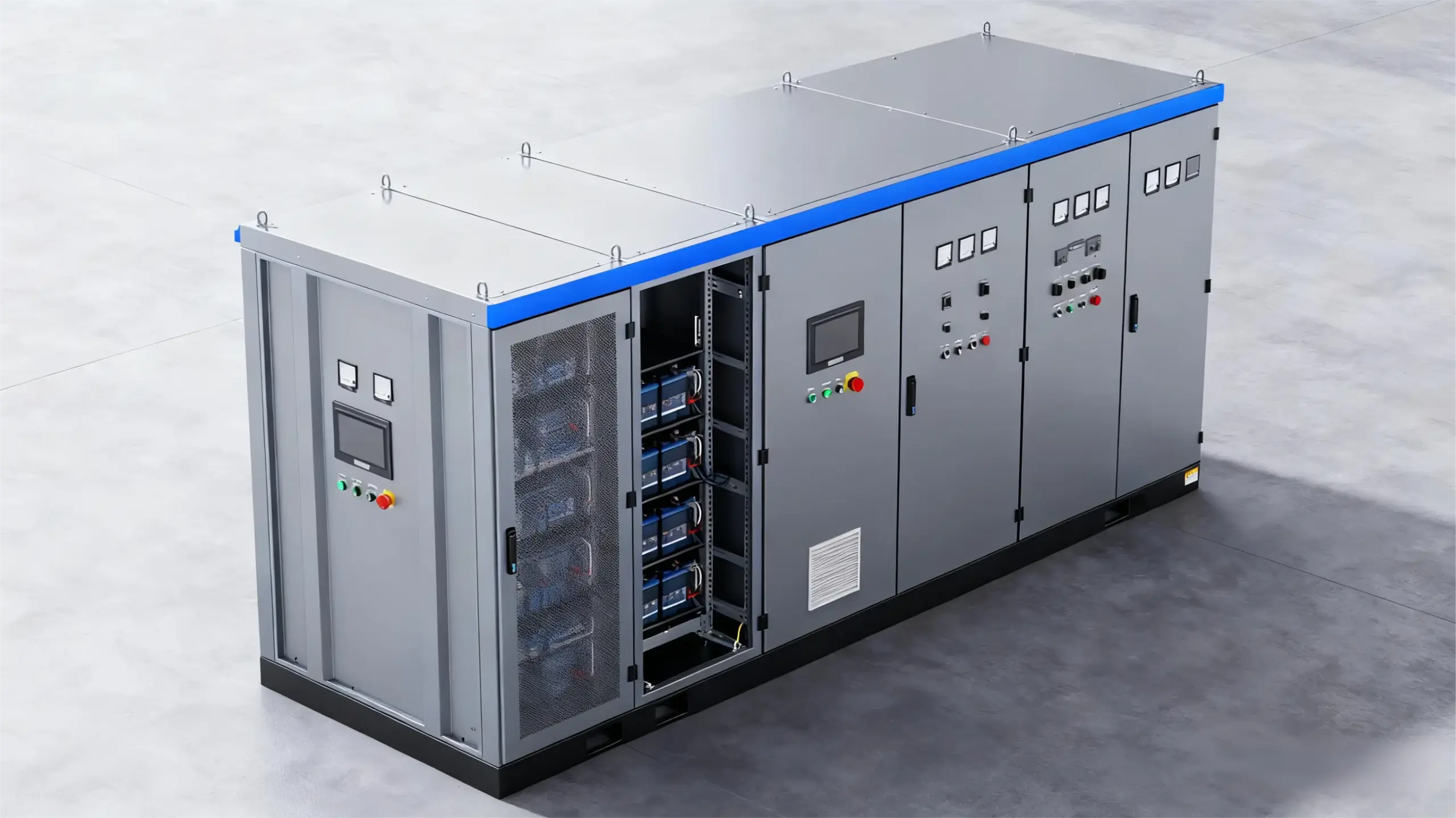
In modern power systems, energy storage systems (ESS) play a vital role in supporting grid stability, optimizing energy use, and enabling renewable integration. However, when connected to the public grid, ESS must comply with strict power quality requirements to ensure they do not disturb or degrade grid performance.
This article explores the key power quality parameters, relevant IEC standards, and practical engineering guidelines for achieving compliance.
Understanding Power Quality in Grid-Connected ESS
Power quality refers to the stability and cleanliness of the electrical waveform in voltage, current, and frequency.
A grid-connected ESS interacts dynamically with the grid—charging during low-demand periods and discharging during peak hours. During this bidirectional operation, maintaining high power quality is crucial to prevent grid instability, equipment malfunction, and energy losses.
The key indicators of power quality include:
Harmonic distortion (THD)
Voltage fluctuation and flicker
Frequency stability
Power factor
Unbalance in three-phase systems
Poor control or inadequate filtering can cause waveform distortion, leading to grid code violations and potential penalties for operators.
Key IEC Standards for Power Quality Compliance
To standardize performance and ensure interoperability, several IEC (International Electrotechnical Commission) standards define the acceptable limits, testing methods, and measurement procedures for power quality in grid-connected devices.
For harmonic emissions, standards such as IEC 61000-3-2 and IEC 61000-3-12 set limits on current harmonics for low- and high-power equipment respectively.
IEC 61000-3-3 and IEC 61000-3-11 specify the limits for voltage fluctuations and flicker, ensuring that grid-connected devices do not cause visible light flicker or voltage instability.
For measurement and evaluation, IEC 61000-4-7 and IEC 61000-4-13 define how harmonics and interharmonics should be measured, while IEC 61000-4-30 outlines standardized methods for monitoring power quality parameters such as voltage dips, frequency deviations, and transients.
When it comes to energy storage systems, IEC 62933-2-2 provides specific performance and testing requirements to verify grid compliance.
In addition, IEC 61000-6-3 and IEC 61000-6-4 address electromagnetic compatibility (EMC) and emission standards for both residential and industrial environments.
Together, these standards form a complete framework that ensures every ESS connected to the public grid operates safely, reliably, and without disturbing the power network.
Harmonic Control and THD Limits
Harmonics are voltage or current components at multiples of the fundamental frequency (50/60 Hz).
High Total Harmonic Distortion (THD) leads to overheating, power loss, and malfunction of sensitive equipment.
IEC and grid operators typically require:
Voltage THD < 5%
Current THD < 3% (for systems above 16A per phase)
To meet these limits, high-performance Power Conversion Systems (PCS) like those used by FFDPOWER employ:
Advanced PWM control for smoother waveform generation
LCL filters for harmonic suppression
Active power filtering via fast digital control loops
These techniques ensure the ESS injects clean, stable power into the grid, maintaining compliance and improving efficiency.
Voltage Fluctuations, Flicker, and Power Factor Control
In addition to harmonics, voltage fluctuation and flicker must be tightly controlled.
IEC 61000-3-3 specifies that short-term flicker (Pst) must remain below 1.0, and long-term flicker (Plt) below 0.8.
Modern ESS systems achieve this through:
Fast dynamic response of the PCS, enabling real-time compensation
Grid-friendly ramp rate control to smooth power transitions
Reactive power compensation, maintaining power factor close to unity (≥0.98)
FFDPOWER’s systems are designed to meet or exceed these criteria, ensuring compatibility with demanding utility grid codes.
Practical Engineering Guidelines for IEC Compliance
To ensure consistent compliance and high performance, engineers should consider the following best practices:
Design with compliance in mind – Include EMC and harmonic suppression early in the design phase.
Use certified PCS and EMS platforms – Ensure all components meet IEC and local grid standards.
Perform pre-connection simulation – Use tools like MATLAB/Simulink or PSCAD for harmonic and transient analysis.
Conduct field verification – Measure THD, flicker, and power factor under various load conditions.
Implement continuous monitoring – Use cloud-based EMS platforms for real-time power quality supervision and automatic alerts.
FFDPOWER integrates intelligent EMS systems capable of continuous IEC-standard power quality monitoring, ensuring long-term stability and compliance.
FFD POWER’s Commitment to Grid Stability
At FFD POWER, power quality is not just a compliance target—it’s a core performance metric.
Through advanced PCS design, AI-based EMS algorithms, and rigorous IEC testing, FFDPOWER ensures every grid-connected ESS delivers clean, stable, and reliable power.
Our engineering teams continually update designs to align with the latest IEC 61000 and IEC 62933 standards, guaranteeing that our products remain at the forefront of global grid compatibility.
Conclusion
Maintaining excellent power quality is essential for the successful integration of energy storage into modern grids.
By aligning system design and testing with IEC standards, ESS manufacturers and operators can ensure both technical compliance and operational excellence.
FFD POWER remains committed to providing IEC-compliant, high-performance energy storage systems that support grid stability, efficiency, and sustainability worldwide.