News
On-Grid, Off-Grid, and Hybrid Energy Storage Systems: Applications, Benefits, and How to Choose the Right Solution
- October 7, 2025
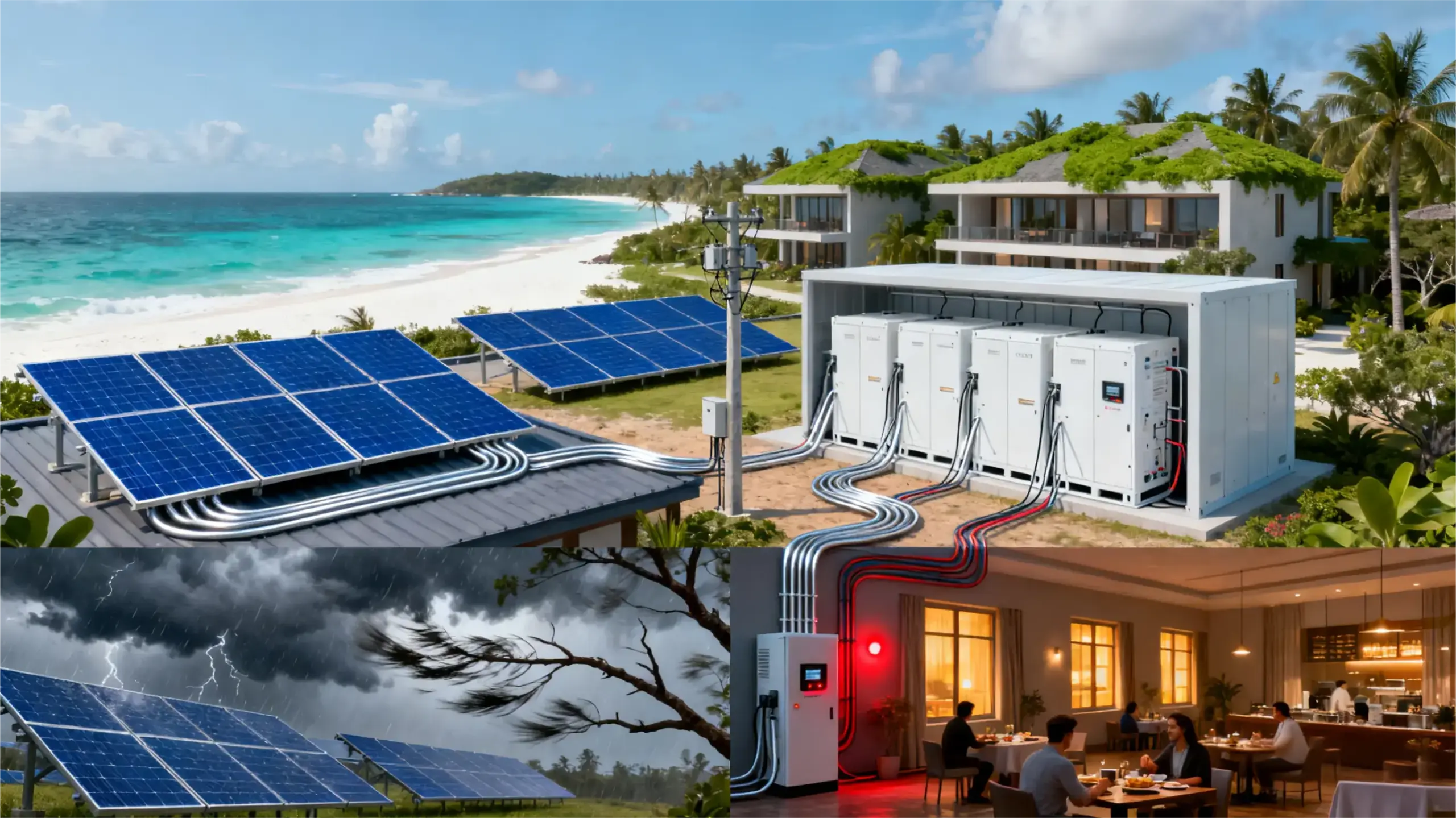
As the global energy landscape shifts toward renewable energy, businesses and communities increasingly rely on energy storage systems (ESS) to improve efficiency, reduce costs, and ensure reliability. Intermittent generation from solar and wind creates challenges for consistent power supply, making ESS essential for both grid-connected and remote applications.
The three main types of ESS—On-Grid, Off-Grid, and Hybrid systems—each serve unique purposes. Understanding their applications and benefits helps organizations select the right solution for their energy needs.
On-Grid Energy Storage Systems
On-Grid ESS connects directly to the public electricity grid, allowing energy to flow in both directions. These systems store electricity during low-demand periods and release it during peak hours or when grid prices are high.
Applications:
Peak shaving and load management: Reduce electricity costs by discharging stored energy during peak demand periods.
Solar self-consumption optimization: Store excess solar energy during the day and use it at night to maximize renewable usage.
Grid support services: Contribute to frequency regulation, voltage stability, and other ancillary services.
Benefits:
Cost savings via Time-of-Use (TOU) arbitrage.
Enhanced renewable energy integration.
Potential revenue by selling stored energy back to the grid.
Case Study:
A European commercial building installed a 1 MWh on-grid ESS with rooftop solar panels. By discharging during peak hours, the building reduced electricity demand charges by 30% annually, achieving ROI within 4 years.
Off-Grid Energy Storage Systems
Off-Grid ESS operates independently of the main electricity grid, storing energy from local sources such as solar or wind. These systems are essential for remote locations and critical facilities.
Applications:
Remote communities: Provide reliable electricity in rural areas, islands, or deserts.
Critical infrastructure backup: Support hospitals, data centers, or emergency facilities.
Renewable energy microgrids: Enable fully autonomous energy systems.
Benefits:
Complete energy independence.
Reliable power even during grid outages.
Maximizes use of clean, renewable energy sources.
Case Study:
A data center in the Sahara Desert deployed an off-grid solar + battery system, maintaining 24/7 operation while eliminating diesel generators. The solution handled extreme temperatures and reduced operating costs by 40%.
Hybrid Energy Storage Systems
Hybrid ESS combines the advantages of on-grid and off-grid solutions. It operates connected to the grid under normal conditions but can switch to off-grid mode during outages.
Applications:
Commercial and industrial facilities: Ensure continuous power while optimizing energy costs.
Microgrids and smart communities: Integrate multiple renewable sources with storage for stability.
Disaster resilience: Maintain critical operations during grid failures or natural disasters.
Benefits:
Flexibility to operate both on-grid and off-grid.
Optimized energy efficiency and cost savings.
Enhanced reliability for critical applications.
Case Study:
A Mediterranean supermarket integrated a 1 MW rooftop solar system with 8 units of 233 kWh hybrid ESS, enabling seamless on-grid operation and backup off-grid capability, reducing electricity costs by 25% annually.
How to Choose the Right Energy Storage System
Choosing the right ESS depends on your energy goals, operational requirements, and site conditions.
On-Grid ESS is ideal for cost optimization and maximizing renewable energy use. It suits commercial and industrial sites connected to the grid, offering peak shaving, TOU tariff savings, and self-consumption optimization.
Off-Grid ESS is best for remote or critical applications requiring complete energy independence. It provides reliable power for locations without stable grid access or where uninterrupted operation is essential.
Hybrid ESS is perfect for facilities needing both cost efficiency and energy resilience. It operates on-grid under normal conditions and switches to off-grid mode during outages, supporting continuous operations and maximizing renewable energy usage.
By carefully evaluating your energy independence, cost goals, and reliability requirements, you can select the ESS type that ensures long-term savings, operational efficiency, and sustainability.
Conclusion
Understanding the differences between On-Grid, Off-Grid, and Hybrid energy storage systems is key to selecting the right solution for your energy needs. Integrating advanced battery energy storage with intelligent energy management systems (EMS) enhances efficiency, reduces costs, and improves resilience.
Whether optimizing energy costs, ensuring reliable power in remote locations, or maintaining operations during outages, modern ESS solutions are essential for a sustainable, low-carbon energy future.