
News
Model-Based Fault Diagnosis and Predictive Maintenance in Energy Storage Systems (ESS)
- November 8, 2025
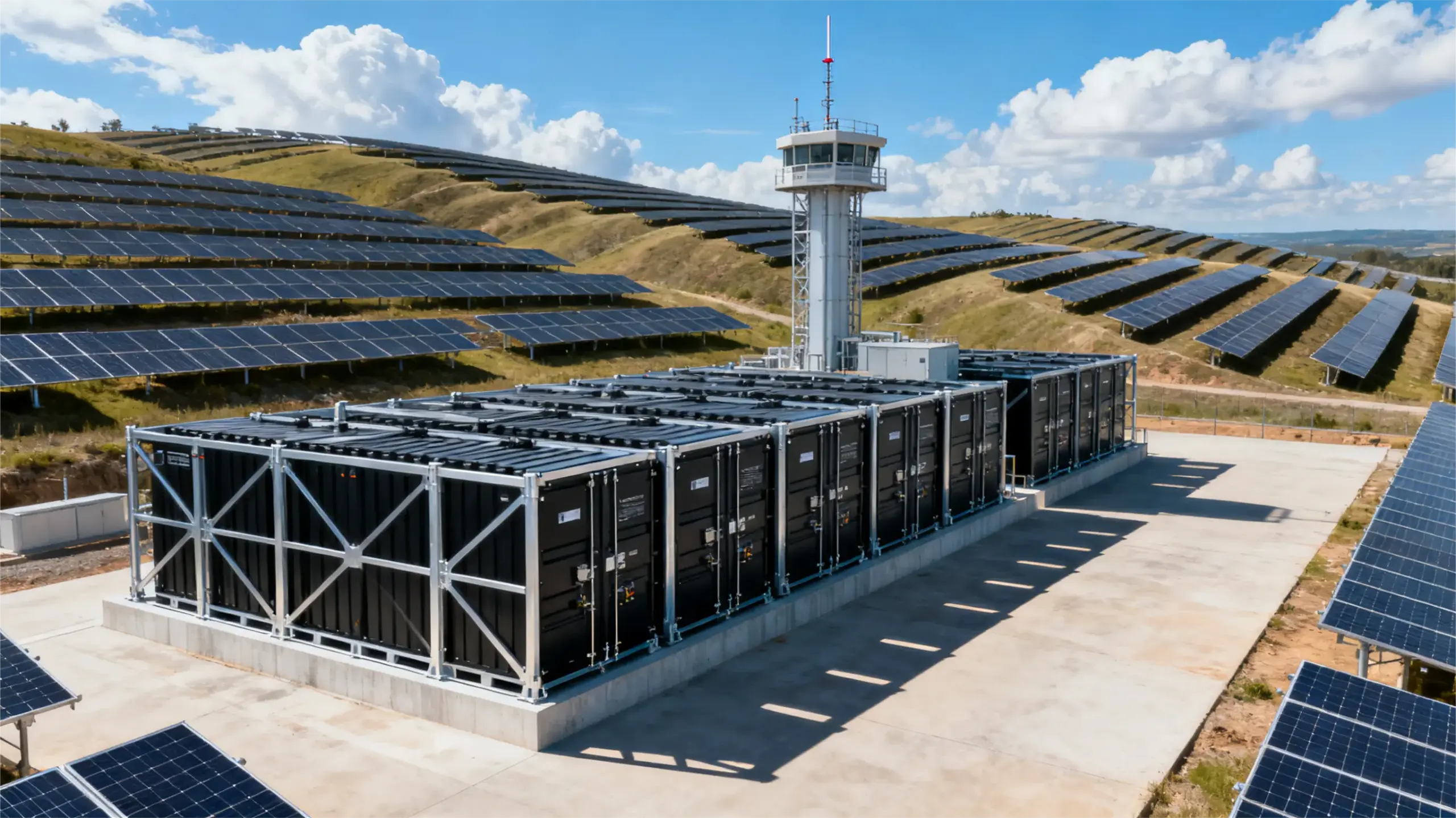
As energy storage systems (ESS) become essential components of modern power infrastructure, ensuring their long-term reliability and safety has become a top priority. Model-based fault diagnosis and predictive maintenance technologies are emerging as core tools for achieving these goals.
By integrating digital modeling, system analytics, and real-time data, these approaches enable early fault detection, root cause identification, and proactive maintenance — minimizing downtime and extending system lifespan.
Importance of Fault Diagnosis in Energy Storage Systems
Energy storage systems consist of multiple critical subsystems: battery modules, battery management systems (BMS), power conversion systems (PCS), and thermal management units.
Failures in any of these can cause performance degradation or even catastrophic events such as thermal runaway.
Traditional maintenance methods are often reactive, addressing issues only after failures occur.
In contrast, model-driven diagnostic systems use mathematical or data-driven models to continuously monitor ESS performance, detect anomalies early, and predict potential failures before they escalate.
Key benefits include:
Improved system availability and reduced unplanned outages
Enhanced battery health and lifecycle management
Early detection of abnormal conditions such as overvoltage, overtemperature, or cell imbalance
Lower operation and maintenance (O&M) costs through predictive intervention
The Principles of Model-Based Fault Diagnosis
Model-based fault diagnosis relies on comparing the expected behavior of the system (derived from models) with actual sensor data.
When deviations exceed a predefined threshold, the system flags potential faults.
There are two main categories of models used:
a. Physics-Based Models
These are derived from electrochemical and thermal equations that describe how batteries behave under different conditions.
They provide high interpretability and can identify the physical root causes of faults.
Commonly used for cell-level fault detection, such as internal short circuits or capacity fade.
b. Data-Driven Models
Built using machine learning or statistical methods, these models analyze historical and real-time data to recognize fault patterns.
Ideal for large-scale systems with complex dynamics.
They can be continuously optimized as more data becomes available.
Hybrid Approach
Combining physical models with data-driven models creates a hybrid diagnostic framework, enhancing both accuracy and adaptability.
This allows ESS operators to benefit from physics-informed AI, which combines engineering knowledge with the predictive power of artificial intelligence.
Predictive Maintenance through Model-Based Analytics
Predictive maintenance uses diagnostic insights to forecast when a component is likely to fail, enabling proactive servicing.
Instead of adhering to fixed maintenance schedules, model-based predictive systems recommend condition-based interventions — only when the system truly needs them.
Key predictive indicators include:
Battery State of Health (SOH) and State of Charge (SOC) trends
Temperature gradients across modules
Voltage deviation and internal resistance changes
Cycle count and degradation patterns
These parameters are continuously fed into the model, which estimates Remaining Useful Life (RUL) for each subsystem.
Maintenance teams can then plan service activities with precision, avoiding both premature replacements and unexpected failures.
Implementation in Modern ESS Platforms
Leading energy storage providers now integrate model-based fault diagnosis and predictive maintenance into their Energy Management Systems (EMS) and cloud platforms.
Key implementation aspects include:
Real-time data collection via IoT sensors and edge devices
Cloud-based digital twins for dynamic ESS modeling
Machine learning algorithms for pattern recognition and fault prediction
Automated alerts and maintenance scheduling through EMS dashboards
This intelligent, model-driven approach transforms ESS maintenance from reactive to predictive, significantly improving operational reliability.
Case Example: Digital Twin-Based Battery Monitoring
A large industrial ESS project implemented a digital twin model to replicate battery and PCS operations in real time.
By continuously comparing simulated and actual performance, the system successfully detected minor thermal anomalies before they developed into serious faults.
This proactive intervention reduced maintenance costs by 30% and extended the system’s operational life by over 20% — demonstrating the tangible benefits of model-based predictive maintenance.
The Future: From Diagnostics to Self-Healing ESS
The evolution of model-based diagnostics is leading toward self-healing energy storage systems, where predictive algorithms not only detect but also autonomously adjust operating parameters to prevent failures.
With advancements in AI, edge computing, and digital twins, ESS will gain the ability to self-optimize, ensuring continuous safe and efficient operation even in complex grid environments.
Conclusion
Model-based fault diagnosis and predictive maintenance represent a major step forward in the evolution of energy storage systems.
By combining engineering models with AI-powered analytics, ESS operators can achieve higher safety, efficiency, and longevity.
As the global demand for reliable and intelligent energy storage grows, model-driven intelligence will be the foundation of next-generation ESS management and operation.