
News
Islanding Detection and Fast Switching Mechanisms in Hybrid Energy Storage Systems (On-Grid / Off-Grid Transition)
- November 4, 2025
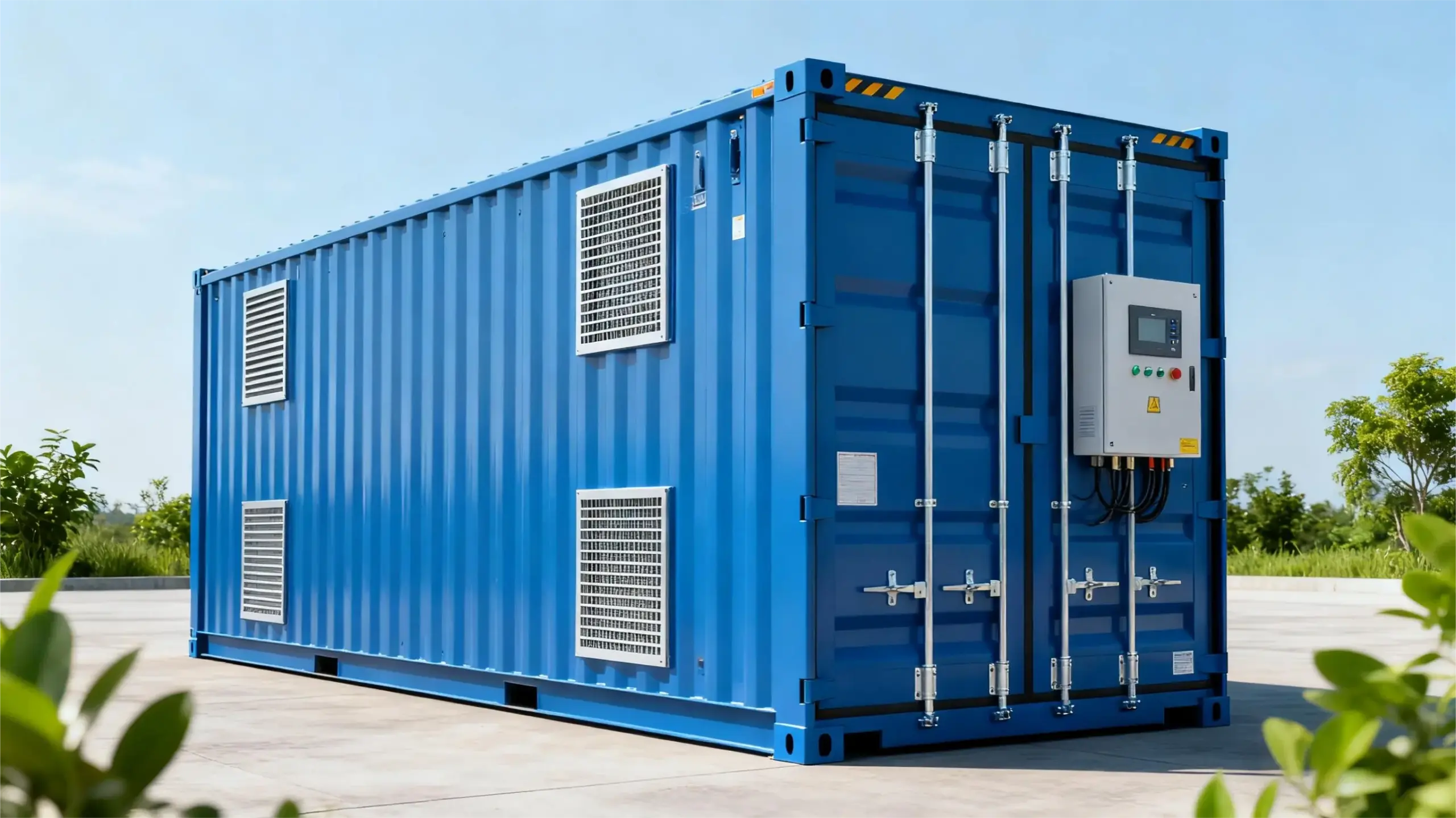
In modern energy storage systems, especially hybrid ESS that operate in both on-grid and off-grid modes, islanding detection and fast switching mechanisms play a pivotal role. When a grid failure or disturbance occurs, the system must instantly detect the disconnection (islanding) and seamlessly transition into off-grid operation to maintain uninterrupted power supply.
This transition capability defines not only the stability and reliability of the energy storage system but also its applicability in critical facilities such as factories, data centers, and supermarkets — scenarios where even a second of power interruption can lead to substantial losses.
What is Islanding in Grid-Tied Systems?
In a grid-connected energy storage or solar-plus-storage system, islanding occurs when the utility grid goes down, but the local generation (such as PV and ESS) continues to power local loads independently.
While this may sound beneficial, unintentional islanding is dangerous. If the grid is re-energized while the local system is still active, it can cause severe voltage fluctuations, equipment damage, and even pose safety hazards to utility workers.
Therefore, islanding detection is mandatory in all grid-tied systems — ensuring the system disconnects from the grid immediately upon fault detection.
Islanding Detection Techniques
Modern Power Conversion Systems (PCS) employ multiple detection techniques, classified as passive, active, and hybrid methods.
(1) Passive Methods
These techniques monitor grid parameters such as voltage, frequency, and phase angle.
Common methods include:
Under/Over Voltage Detection (UV/OV)
Under/Over Frequency Detection (UF/OF)
Rate of Change of Frequency (ROCOF)
Phase Jump Detection (PJD)
✅ Advantages: Simple, low-cost, no grid disturbance.
⚠️ Limitation: Cannot detect subtle islanding events (non-detection zone).
(2) Active Methods
Active methods inject a small disturbance signal into the grid and monitor the system’s response.
Common techniques:
Active Frequency Drift (AFD)
Sandia Frequency Shift (SFS)
Impedance Measurement Method
✅ Advantages: High sensitivity, effective even in weak grids.
⚠️ Limitation: Slightly increases system complexity and may impact power quality.
(3) Hybrid Methods
Hybrid islanding detection combines both passive monitoring and active disturbance injection, achieving both accuracy and stability.
FFDPOWER’s PCS integrates an AI-enhanced hybrid detection algorithm, allowing real-time adjustment of detection sensitivity based on grid conditions — ensuring both safety and continuity.
Fast Switching Between On-Grid and Off-Grid Modes
Once an islanding condition is detected, the ESS must perform fast mode switching:
From On-Grid → Off-Grid (Islanding mode)
From Off-Grid → On-Grid (Resynchronization mode)
This transition must be seamless — ideally within milliseconds — to ensure power supply continuity for sensitive equipment.
(1) On-Grid to Off-Grid Switching
When the grid fails:
The PCS immediately detects the loss of grid voltage or frequency.
The system isolates itself electrically from the grid.
The ESS enters grid-forming mode, providing voltage and frequency reference for local loads.
The EMS reallocates power flow to ensure balanced load and stable frequency.
FFD POWER’s PCS achieves switching times under 10 ms, ensuring no visible power flicker or equipment restart even under sudden disconnection.
(2) Off-Grid to On-Grid Reconnection
When the grid recovers:
The system continuously monitors the grid voltage, frequency, and phase.
It performs synchronization control to match these parameters with its own output.
Once alignment is achieved, the system reconnects and resumes grid-tied operation smoothly.
This soft synchronization avoids inrush current and voltage shock, extending equipment life and ensuring safety.
Core Technologies Behind Seamless Switching
FFD POWER’s hybrid energy storage systems integrate the following advanced control technologies:

 AI-Driven Adaptive Control: Predicts grid behavior and optimizes detection thresholds in real time.
 VSG (Virtual Synchronous Generator) Control: Ensures stable frequency and voltage formation during islanding.
 Dynamic Phase-Locked Loop (dPLL): Enables ultra-fast synchronization with minimal transient deviation.
 Bidirectional PCS Architecture: Provides instantaneous power response for smooth transitions.
 FFD Cloud EMS: Monitors grid stability data, enabling remote diagnosis and predictive switching.
Real-World Applications
In hybrid microgrids — such as industrial parks, remote data centers, and off-grid commercial complexes — fast islanding detection and switching ensures:
Zero-interruption power supply during grid outages
Smooth transition between renewable and grid power
Extended equipment lifespan
Improved overall system reliability
For instance, FFD POWER’s hybrid storage solutions deployed in a Mediterranean supermarket enable instant off-grid operation during grid fluctuations, maintaining refrigeration stability and uninterrupted customer operations.
Conclusion
In the era of smart and resilient energy systems, islanding detection and fast switching are no longer optional — they are mission-critical capabilities that define the performance of every hybrid ESS.
FFD POWER’s advanced PCS and EMS platforms deliver:
<10 ms seamless switching
AI-enhanced detection algorithms
Grid-forming control with high reliability
Secure reconnection with zero instability
These technologies empower businesses to achieve uninterrupted operations, maximum energy autonomy, and higher return on investment — even in the face of unpredictable grid conditions.