
News
Industrial & Commercial Energy Storage ROI: Key Metrics and Investment Insights
- October 9, 2025
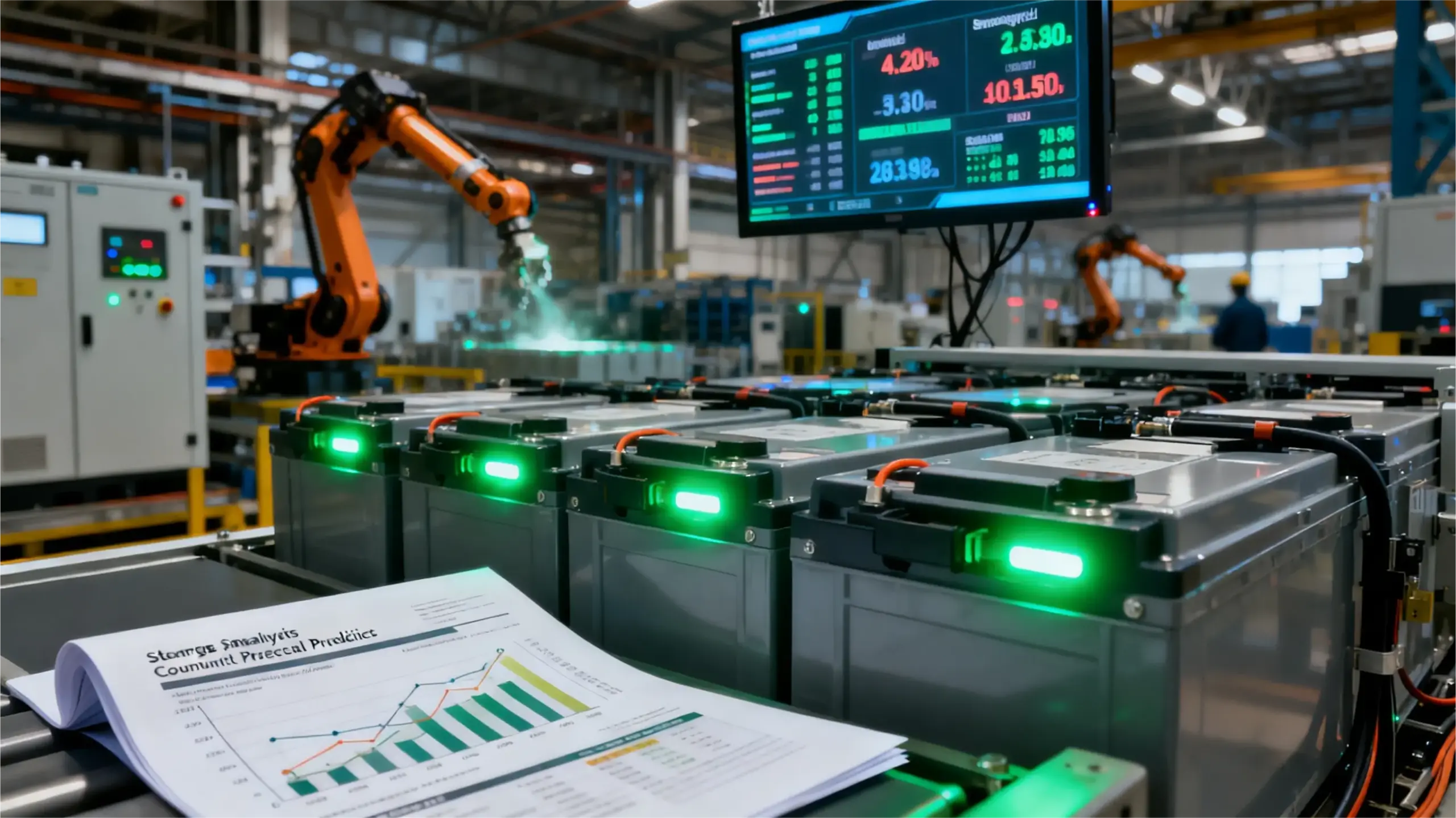
Investing in industrial and commercial energy storage (ESS) has become a strategic necessity. Energy storage is no longer just a tool for sustainability; it’s a financial asset that can reduce operational costs, generate additional revenue, and improve energy resilience.
However, without a data-driven ROI analysis, even technically sound systems can fail to deliver expected financial benefits. Understanding the key performance metrics and modeling their impact on returns is essential before committing capital.
1. Capital Expenditure (CAPEX): The Starting Point of ROI
CAPEX is the initial investment cost of the ESS and includes:
Battery modules (LFP, NCM, or other chemistries)
Battery Management System (BMS)
Power Conversion System (PCS)
Installation, commissioning, and integration
Balance-of-plant equipment (cabling, transformers, etc.)
Impact on ROI:
Higher CAPEX → longer payback period
Low CAPEX but low-quality components may reduce lifespan and increase maintenance cost
Tip: Choose a solution balancing initial cost, long-term performance, and safety. For industrial applications, LFP batteries are often preferred due to long cycle life and high safety.
2. Cycle Life: Maximizing Lifetime Returns
Cycle life defines how many full charge-discharge cycles a battery can perform while maintaining acceptable capacity (SOH ≥ 80%).
ROI Implications:
Longer cycle life → more revenue over system lifespan
Reduces Levelized Cost of Storage (LCOS)
Supports strategies like daily arbitrage, peak shaving, and demand response without degrading battery prematurely
Case Example:
A 1 MWh LFP battery with 6000 cycles and 80% DoD can last over 10 years, delivering predictable energy cost savings annually.
3. Depth of Discharge (DoD): Unlocking Usable Capacity
DoD is the percentage of battery capacity utilized per cycle.
ROI Implications:
Higher usable capacity → more energy to dispatch during peak periods
Directly impacts revenue generation from peak shaving or TOU arbitrage
Practical Tip:
Avoid consistently discharging beyond recommended DoD to preserve cycle life
Some ESS allow dynamic DoD adjustment for balancing revenue vs. lifespan
4. Round-Trip Efficiency (RTE): Energy Output Matters
RTE measures the percentage of energy returned during discharge relative to energy stored.
Why it’s critical:
Higher efficiency → more usable energy, higher operational revenue
Reduces energy loss and electricity purchase costs
Impacts ROI by increasing the financial yield per kWh stored
Example:
An ESS with 95% RTE returns 950 kWh for every 1000 kWh stored, maximizing utilization and profitability.
5. Operational Strategy & Energy Management
An ESS is only as profitable as its operational strategy. Advanced Energy Management Systems (EMS) enable:
Peak shaving: Reducing demand charges during high-cost periods
Time-of-Use (TOU) arbitrage: Storing low-cost energy and discharging during peak prices
Backup and resilience: Protecting critical loads and ensuring business continuity
Ancillary services: Frequency regulation, voltage support, or grid participation
ROI Impact:
Dynamic EMS allows algorithmic optimization to extract maximum financial and operational value
Enables multi-service monetization, boosting overall project ROI
6. Additional Factors Affecting ROI
a) Electricity Tariffs and Incentives
TOU rates, demand charges, and government incentives significantly affect ROI
Example: Reducing peak demand by 50 kW can save thousands of dollars annually
b) Maintenance & Lifecycle Costs
Predictive maintenance reduces downtime
Lower operational expenses → shorter payback and higher ROI
c) System Scalability
Modular ESS designs allow future capacity expansion, ensuring ROI grows with energy demand
d) Financing & Depreciation
Interest rates, loan structure, and depreciation schedules impact net ROI
Financial modeling should include NPV (Net Present Value) and IRR (Internal Rate of Return)
7. Real-World Insights
Industrial facilities implementing ESS typically achieve:
Payback period: 3–6 years, depending on tariffs and energy costs
Annual energy savings: 15–40%
Additional revenue streams: Grid services, demand response programs
Projects with AI-driven EMS often outperform static systems by 10–15% ROI due to smarter dispatch and predictive maintenance.
Conclusion: ROI Starts with Metrics & Strategy
A successful industrial or commercial ESS investment requires:
Understanding CAPEX, cycle life, DoD, RTE, and operational strategy
Modeling tariffs, incentives, and maintenance
Using AI-driven EMS for multi-service optimization
FFD POWER provides customized ROI analysis reports and ESS solutions, helping clients make informed, profitable, and safe investments.