News
Hospitals and Energy Storage: The Lifeline Behind Critical Loads
- October 9, 2025
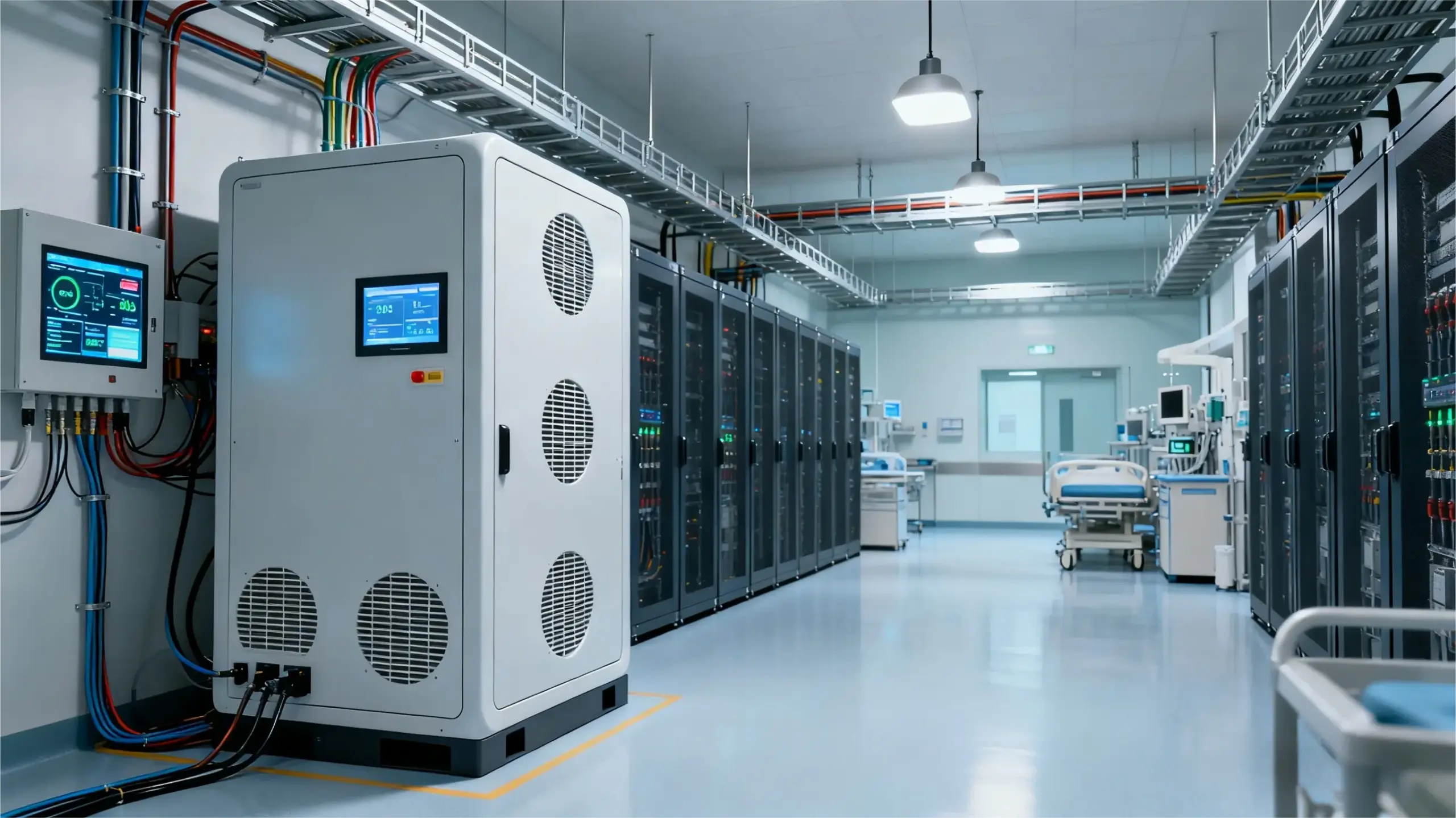
In a hospital, every second matters. From operating rooms and intensive care units to vaccine refrigeration and data centers, electricity is the invisible lifeline that sustains modern healthcare operations. Any power interruption — even for a few seconds — can put lives at risk.
Traditionally, hospitals rely on diesel generators and uninterruptible power supplies (UPS) to ensure continuity. However, as healthcare facilities modernize and energy costs rise, hospitals are increasingly adopting advanced battery energy storage systems (BESS) to secure their power supply, enhance resilience, and lower operational costs.
The Role of Energy Storage in Healthcare Facilities
A hospital energy storage system acts as a reliable bridge between renewable generation, the utility grid, and hospital loads. By storing and releasing power when needed, the system ensures uninterrupted electricity for all critical functions — even during grid failures or unstable supply conditions.
🔋 Key Benefits:
Critical Power Backup:
During outages, the storage system instantly supplies power to essential loads, ensuring that life-support equipment, surgical lighting, and medical refrigeration remain operational.Grid Stabilization:
Hospitals experience fluctuating energy demand. BESS smooths these peaks, maintaining voltage and frequency stability within the facility.Integration with Renewable Energy:
Coupled with rooftop solar PV, battery storage allows hospitals to utilize clean energy efficiently — reducing both carbon emissions and dependency on diesel backup.Cost Optimization:
Through peak shaving and time-of-use arbitrage, hospitals can significantly lower their electricity bills by storing energy during off-peak hours and discharging it during peak demand.Improved Power Quality:
Advanced Power Conversion Systems (PCS) maintain steady voltage and frequency, protecting sensitive medical equipment from electrical fluctuations.
Why Traditional Backup Systems Are No Longer Enough
While diesel generators remain common, they have notable drawbacks:
Start-up delay — even a few seconds can be fatal during surgeries.
Maintenance cost and emissions — frequent testing, fuel storage, and pollution compliance increase operational burdens.
Limited flexibility — they cannot provide peak management or participate in energy optimization strategies.
Battery energy storage systems overcome these challenges by delivering instant response, zero-emission operation, and intelligent energy management through digital control platforms.
FFDPOWER’s Hospital Energy Storage Solution
At FFDPOWER, we design and deploy high-reliability, AI-driven energy storage systems tailored for healthcare facilities. Our solutions integrate four layers of protection to ensure uninterrupted and safe operation:
Premium LFP Cells:
Long cycle life, thermal stability, and superior safety performance.Robust BMS (Battery Management System):
The intelligent “brain” that monitors every cell’s temperature, voltage, and health in real time.High-Efficiency PCS:
Enables seamless transition between grid and battery, ensuring power continuity without interruption.Advanced EMS (Energy Management System):
Provides predictive control, dynamic load optimization, and real-time monitoring — turning the energy system into a smart, responsive infrastructure.
Combined, these layers create a Four-in-One Safety Framework, transforming traditional backup systems into a fully intelligent, automated, and self-healing power ecosystem for hospitals.
Real-World Impact
Hospitals equipped with modern energy storage solutions have reported:
100% uptime for critical departments during grid outages.
20–30% reduction in energy costs through optimized energy management.
Significant reduction in diesel usage, contributing to green certification and ESG compliance.
With global healthcare infrastructure expanding rapidly, battery energy storage for hospitals is no longer optional — it is essential to ensure patient safety, operational stability, and sustainability.
Conclusion: Powering the Future of Healthcare
In healthcare, reliability is non-negotiable. As hospitals evolve into smarter, greener, and more connected facilities, the integration of energy storage becomes the foundation of their energy resilience.
FFDPOWER is committed to providing safe, intelligent, and future-ready energy storage systems that protect lives and power the next generation of healthcare infrastructure.