News
High Voltage vs Low Voltage Energy Storage Systems: Technical Differences and Application Choices
- October 28, 2025
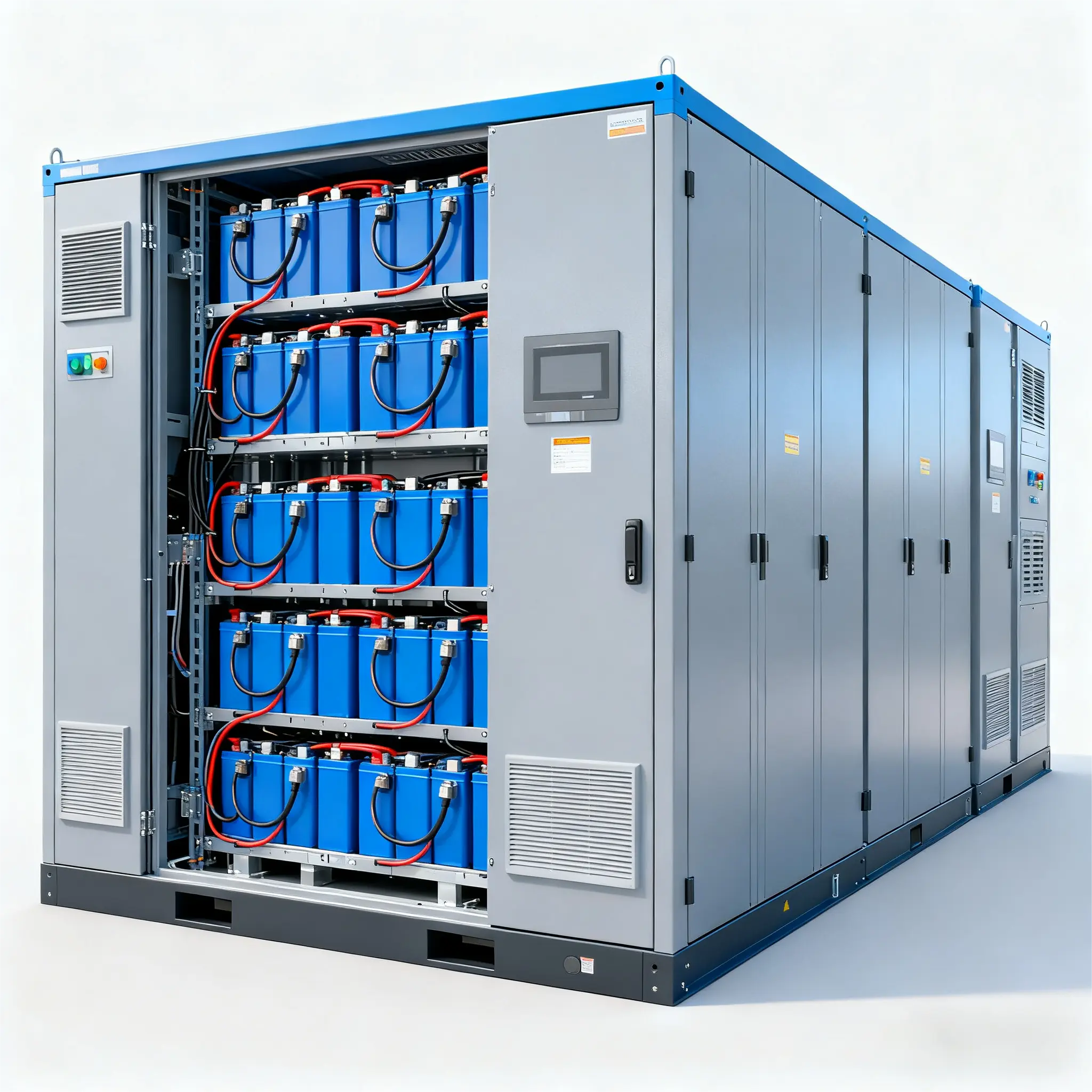
In the design of an Energy Storage System (ESS), one of the most important engineering decisions lies in whether to adopt a high-voltage or low-voltage architecture.
This choice directly determines the system’s efficiency, safety, scalability, and application suitability.
Understanding these two architectures is crucial to achieving the optimal balance between performance, cost, and reliability.
What Defines High and Low Voltage ESS?
In simple terms:
Low Voltage ESS (LV-ESS): operates below approximately 100–150 V DC
High Voltage ESS (HV-ESS): operates above 200 V, typically up to 1000 V or higher
The difference in voltage affects the current flow, power conversion efficiency, cable sizing, and safety strategy—all key aspects of system design.
Electrical and System Design Differences
High-voltage energy storage systems (HV-ESS) generally operate between 200V and 1500V DC, while low-voltage systems (LV-ESS) typically run from 48V to 150V DC.
Because HV-ESS uses higher voltage, it can deliver the same power with lower current, which allows for thinner cables, lower conduction losses, and higher overall efficiency. In contrast, LV-ESS requires higher current for the same power, leading to thicker cables and slightly higher energy losses.
In terms of safety, HV-ESS demands stricter insulation, more robust protection systems, and advanced PCS design, while LV-ESS is inherently safer, easier to install, and simpler to maintain.
Cost-wise, HV-ESS may require more expensive PCS and protection equipment, but the efficiency gains and reduced cable size can offset some of the cost in large-scale applications. LV-ESS typically has lower installation costs and is more suitable for residential, off-grid, or small commercial applications.
Finally, typical applications differ: HV-ESS is ideal for commercial, industrial, and grid-connected projects, whereas LV-ESS works best for residential energy storage, off-grid systems, and backup power.
Technical Analysis
(1) Efficiency
High-voltage systems reduce current for the same power level, which minimizes conduction losses (I²R) and improves overall system efficiency.
For industrial and commercial applications, this leads to better round-trip efficiency (RTE) and lower operating costs.
(2) Safety
Low-voltage systems are inherently safer due to lower electric shock risk.
They are easier to install and maintain, making them ideal for residential and small commercial applications.
Modern high-voltage systems integrate multi-layered safety designs, including advanced insulation, intelligent monitoring, and rapid isolation mechanisms.
(3) System Complexity
High-voltage systems require complex protection circuits, insulation coordination, and high-performance PCS.
Low-voltage systems offer simpler installation and wiring, but may require more modules in parallel to reach the same capacity.
(4) Thermal Performance
Higher voltage reduces resistive heating due to lower current, contributing to better thermal stability.
This makes HV systems more suitable for long-duration, high-power applications.
Application Scenarios
High Voltage ESS
Commercial & Industrial Energy Storage
Grid-Connected Applications
Solar-Plus-Storage for Factories
Utility-Scale and Microgrid Systems
Advantages:
High efficiency and low energy loss
Compact cabling and smaller footprint
Suitable for long-duration, high-power usage
Low Voltage ESS
Residential Energy Storage
Telecommunication Backup
Off-Grid or Remote Power Systems
Portable and Modular Energy Storage
Advantages:
Safer and easier to maintain
Flexible modular expansion
Cost-effective installation
Hybrid Voltage Systems — The Future of Flexibility
Modern designs increasingly adopt hybrid voltage architectures, combining the benefits of both:
High-voltage side for efficient energy conversion and PCS integration
Low-voltage side for safer local distribution or modular redundancy
FFD POWER’s advanced Galaxy Series employs such hybrid designs, optimized through AI-driven Energy Management Systems (EMS) that dynamically balance efficiency, safety, and lifetime performance.
Safety and Control Strategies
For High-Voltage Systems
Multi-level insulation design
Automatic fault isolation
AI-based real-time voltage and temperature monitoring
Active discharge and balancing control
For Low-Voltage Systems
Simplified BMS architecture
Passive balancing mechanisms
Enhanced modular redundancy
FFD POWER integrates all these within its Four-in-One Safety Philosophy — combining high-quality LFP cells, intelligent BMS, efficient thermal management, and automated fire protection — ensuring both passive prevention and active response.
Choosing the Right System
When selecting between high-voltage and low-voltage energy storage systems, consider project type, safety, efficiency, and scalability.
Residential projects: Low-voltage ESS is preferred due to its safety, simplicity, and lower cost.
Commercial projects: High-voltage ESS is ideal for higher efficiency and scalability.
Industrial projects: High-voltage ESS works best because it supports high power density and PCS integration.
Off-grid or backup systems: Low-voltage ESS provides modular flexibility and reliable operation.
Utility-scale projects: High-voltage ESS ensures maximum efficiency and reduced transmission losses.
In short, choose high-voltage systems when your priority is efficiency, compact design, and compatibility with high-power PCS, and choose low-voltage systems when safety, simplicity, and modularity are the top priorities.
Conclusion: Balancing Power, Safety, and Efficiency
Both high and low voltage systems have their own strengths.
The true optimization lies not in choosing one over the other, but in matching system voltage design to the application.
At FFDPOWER, we leverage years of engineering expertise and AI-powered system optimization to deliver ESS solutions that maximize efficiency, ensure safety, and deliver long-term reliability — whether at 48V or 1000V.