
News
High-Reliability Design of Off-Grid Energy Systems: N+1 Redundancy, Islanded Operation, and Dynamic Load Management
- November 26, 2025
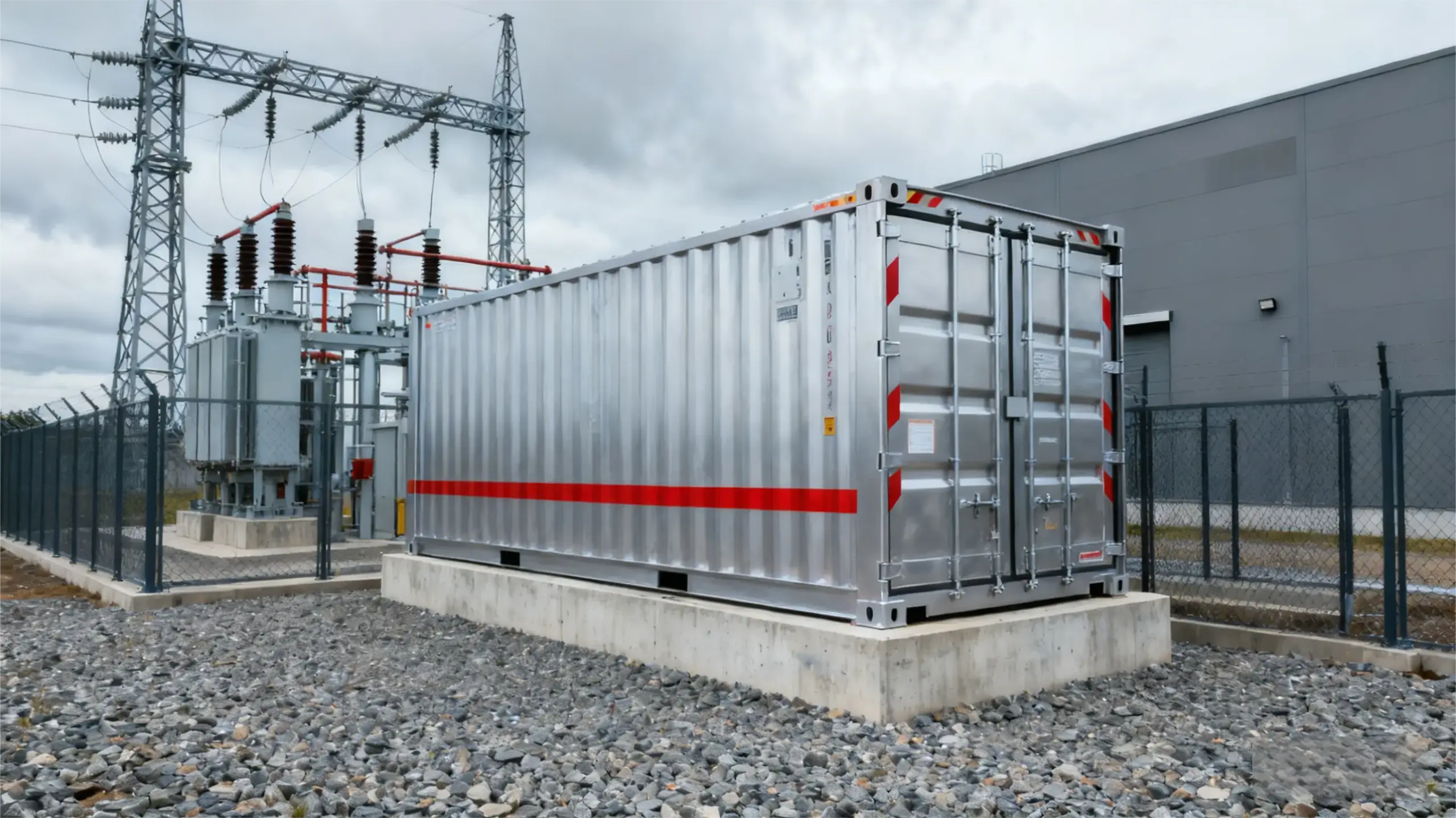
As global demand for energy resilience grows, off-grid energy systems—powered by solar PV, battery storage, and backup generators—are becoming essential for remote communities, industrial sites, data centers, and critical infrastructure.
The challenge: off-grid systems must operate with extremely high reliability, without support from the utility grid.
This article explores the three key pillars of high-reliability off-grid design:
N+1 redundancy
Stable islanded (isolated) operation
Dynamic load management
These engineering strategies ensure uninterrupted power, equipment protection, and long-term system robustness.
What Defines a High-Reliability Off-Grid Power System?
A high-reliability off-grid system is built to operate 24/7 independently while maintaining:
Continuous power supply
Stable voltage and frequency
Protection against overloads or equipment failure
Smooth integration of solar, storage, and generators
Intelligent load prioritization
Achieving this requires both hardware and control-level redundancy.
N+1 Redundancy: The Foundation of Reliability
What Is N+1 Redundancy?
N+1 means:
If “N” components are needed to run the system, one additional backup unit (+1) is installed.
If any component fails, the system still works seamlessly.
Where N+1 Applies in Off-Grid Systems
Power Conversion System (PCS) redundancy
If an off-grid system requires 3 PCS units (N=3), install 4 units (3+1).
Guarantees uninterrupted AC power even if one PCS fails.
Battery cluster redundancy
Extra battery strings ensure stable voltage and capacity during faults.
Generator redundancy (if applicable)
One additional genset ensures reliable backup during low solar periods.
Communication & control redundancy
Dual EMS communication paths
Backup controllers for microgrid stability
Benefits of N+1 Redundancy
Prevents total system shutdown
Extends equipment life (due to load sharing)
Increases fault tolerance
Enables maintenance without downtime
Stable Islanded Operation: Ensuring Power Quality Without the Grid
Off-grid systems operate in island mode permanently.
This means they play the role of the utility grid:
Forming voltage
Stabilizing frequency
Handling load spikes
Absorbing PV fluctuations
Because there is no external grid reference, the PCS and EMS must maintain grid-forming capability.
Key Technologies for Stable Islanded Operation
(1) Grid-Forming PCS
A grid-forming PCS provides:
Voltage regulation
Frequency generation
Fast response to load changes (10–50 ms)
Black-start capability
This is essential for microgrids with heavy loads such as motors, compressors, and data center equipment.
(2) Droop Control for Multi-Unit Coordination
Droop control allows multiple PCS units to share power proportionally without oscillations.
Benefits:
Eliminates circulating current
Enables stable multi-machine operation
Supports N+1 redundancy seamlessly
(3) Fast Dynamic Response
Off-grid loads fluctuate sharply: pumps starting, refrigerators cycling, motors accelerating.
The PCS must react instantly to prevent:
Voltage sag
Frequency drops
Equipment tripping
(4) Black-Start Capability
If the entire microgrid collapses, a high-reliability system can restart without external power.
Dynamic Load Management: Keeping the Microgrid Balanced
Dynamic load management ensures the total load never exceeds the available power from PV, battery, and generators.
Why It Matters
In off-grid scenarios:
Solar power fluctuates with clouds
Battery power is finite
Peak loads may exceed instantaneous supply
Without load management, outages or system collapse can occur.
Three Levels of Dynamic Load Management
(1) Critical Load Segmentation
Divide loads into:
Priority loads (always-on): servers, medical equipment, lighting
Secondary loads: refrigeration, HVAC
Deferrable loads: EV charging, irrigation pumps
This ensures power is always available for critical operations.
(2) Real-Time Power Balance Control
EMS continuously monitors:
Available PV power
Battery SOC
PCS output limits
Genset availability
When supply dips, EMS automatically:
Reduces lower-priority loads
Limits EV charging
Delays heavy equipment startup
(3) Predictive Load Management (AI-Driven)
Using forecasting algorithms, the EMS predicts:
Solar output
Load curves
Battery SOC trends
This allows proactive decisions:
Charging before a cloudy period
Pre-cooling loads
Scheduling pumps during PV peaks
Integrated Architecture: Combining N+1, Island Mode, and Load Management
A truly high-reliability system integrates all three pillars:
Hardware Reliability
PCS N+1
Battery string redundancy
Dual communications
Redundant EMS controllers
Control-Level Reliability
Grid-forming control
Droop-based power sharing
Fast response algorithms
Operational Reliability
AI-based forecasting
Dynamic load shedding
Automatic fault recovery
This architecture ensures continuous power—even under faults, fluctuations, or equipment failure.
Typical Use Cases
Off-grid high-reliability systems are ideal for:
Remote mines and industrial sites
Desert data centers
Island communities
Military bases
Off-grid supermarkets or cold chain facilities
Large-scale farms and irrigation systems
Disaster relief and emergency microgrids
Conclusion
Designing a high-reliability off-grid energy system requires more than solar panels and batteries.
It demands engineering-level redundancy, grid-forming control, and intelligent load management.
When combined, N+1 redundancy, stable islanded operation, and dynamic load management create:
Uninterrupted power
Higher system reliability
Longer equipment lifespan
Lower operating costs
Greater energy independence
This is the foundation of next-generation off-grid microgrids powered by renewable energy and advanced energy storage systems.