News
Harmonic Suppression and Grid Stability Optimization in Energy Storage Systems
- November 11, 2025
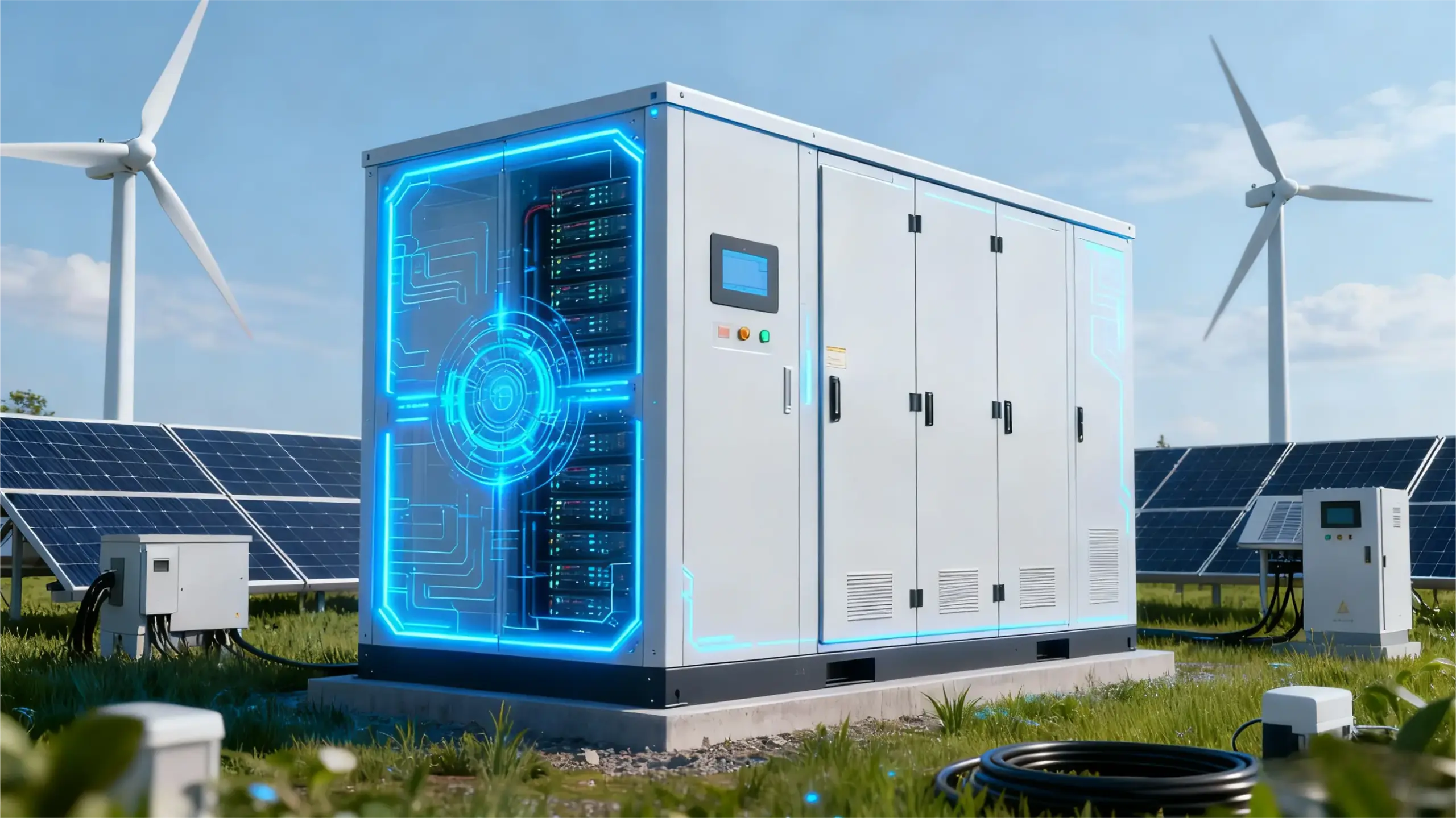
As the penetration of renewable energy and energy storage systems (ESS) continues to rise, maintaining power quality and grid stability has become a crucial engineering challenge. Among the key factors that threaten grid performance are harmonics, voltage fluctuations, and frequency deviations — all of which can lead to inefficiencies, overheating, or even equipment damage.
Effective harmonic suppression and grid stability optimization technologies are therefore essential to ensure the safe, reliable, and efficient operation of on-grid ESS.
Understanding Harmonics in Power Systems
Harmonics are unwanted high-frequency components superimposed on the fundamental AC waveform. They are typically caused by nonlinear loads such as inverters, variable frequency drives, and switching converters within energy storage systems.
When harmonics propagate through the grid, they can cause:
Transformer and cable overheating
Reduced efficiency of power conversion systems
Malfunction of protection devices
Voltage distortion and resonance issues
According to IEEE 519 and IEC 61000 standards, harmonic distortion must be kept within defined limits to ensure system stability and protect sensitive equipment.
Sources of Harmonics in Energy Storage Systems
In an ESS, harmonics mainly originate from:
Bidirectional PCS (Power Conversion System) — during AC/DC conversion and switching operations.
Battery Management System (BMS) interactions — where digital switching introduces high-frequency ripple.
Parallel operation of multiple inverters, creating complex harmonic coupling.
Partial load conditions, which may amplify low-order harmonics.
Identifying the harmonic sources through spectral analysis is the first step toward implementing an effective suppression strategy.
Harmonic Suppression Techniques
1. Passive Filtering
Passive filters use inductors, capacitors, and resistors to block or absorb specific harmonic frequencies.
They are simple, cost-effective, and reliable — making them suitable for systems with relatively stable load conditions.
However, passive filters are less flexible when harmonic spectra change dynamically.
2. Active Power Filtering (APF)
Active Power Filters use power electronic converters to generate counteracting harmonic currents in real-time.
They offer excellent dynamic performance and can adapt to varying load conditions.
Modern ESS often integrates APF directly into the PCS control algorithm, combining reactive power compensation and harmonic suppression functions.
3. Hybrid Filtering
A hybrid filter combines passive and active components to achieve broad-spectrum harmonic mitigation with high efficiency.
This approach balances cost, response speed, and filtering performance — especially suitable for industrial or high-power ESS applications.
4. Advanced Control Algorithms
Intelligent control algorithms based on AI, model predictive control (MPC), or adaptive compensation dynamically identify harmonic components and apply targeted suppression.
This software-defined approach allows continuous optimization without additional hardware, improving both harmonic filtering and overall power quality.
Grid Stability Optimization Strategies
Harmonics are only part of the grid stability equation. To ensure stable grid-connected operation, energy storage systems must also regulate voltage, frequency, and reactive power in real time.
1. Voltage and Frequency Regulation
Through PQ (Power Control) or VF (Voltage-Frequency Control) modes, the ESS can provide fast-response support to stabilize local grid voltage and frequency fluctuations — especially important in weak grids or renewable-heavy regions.
2. Virtual Synchronous Generator (VSG) Control
VSG technology emulates the inertia characteristics of conventional generators, enhancing system damping and reducing frequency oscillations.
This approach significantly improves transient stability and is becoming a standard feature in advanced PCS designs.
3. Dynamic Reactive Power Compensation
By managing reactive power dynamically, the ESS can maintain power factor and voltage stability, reducing stress on transformers and improving energy transfer efficiency.
4. AI-Based Predictive Control
AI-driven models forecast grid disturbances and optimize ESS response strategies in advance.
This predictive mechanism transforms the ESS from a passive compensator into an active stabilizer, improving both grid resilience and energy efficiency.
Standards and Compliance Frameworks
To ensure harmonics and stability management meet international requirements, ESS design and operation should comply with the following standards:
IEEE 519 — Harmonic limits and power quality requirements
IEC 61000 series — Electromagnetic compatibility and harmonic emission standards
IEC 62933 — Safety and performance of grid-connected energy storage systems
EN 50160 — Voltage characteristics in public electricity networks
Compliance with these standards ensures interoperability, safety, and long-term reliability in various grid environments.
Conclusion
As renewable energy integration deepens, harmonic suppression and grid stability optimization have become critical to the next generation of smart grids.
By combining advanced filtering, adaptive control, and AI-driven optimization, energy storage systems can achieve superior power quality and operational stability — ensuring safe, efficient, and sustainable grid interaction.
FFD POWER continues to develop and implement intelligent harmonic suppression and grid control technologies, helping customers achieve safer, cleaner, and more efficient energy systems.