News
Grid-Forming Energy Storage: From “Follower” to “Enabler” – How VSG Technology Provides Inertia and Damping for High-Renewable Grids
- November 3, 2025
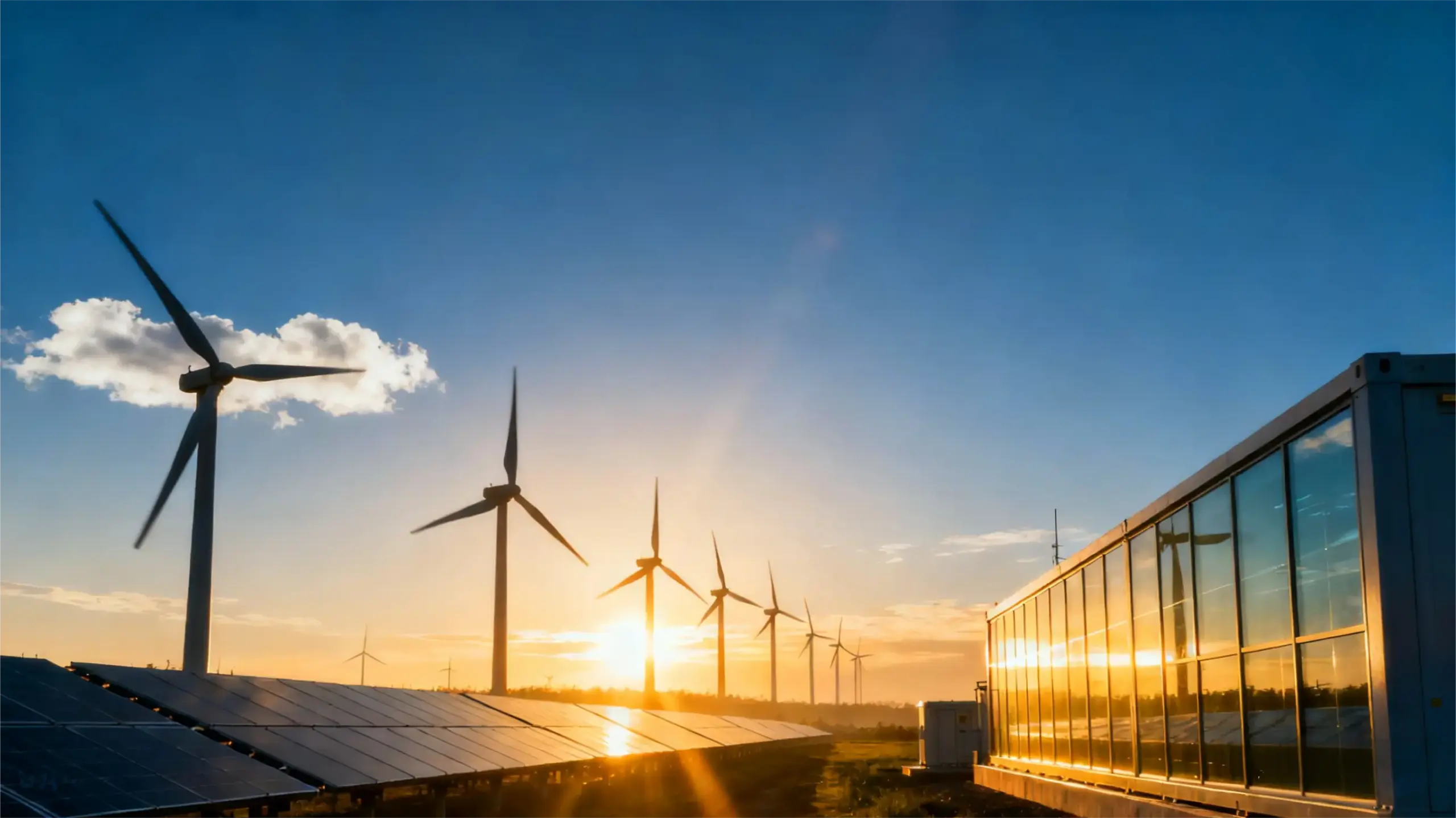
As renewable energy sources such as solar and wind grow, traditional synchronous generators are gradually being replaced, reducing the rotational inertia that historically stabilized the grid. This leads to challenges such as:
Frequency instability
Reduced system damping
Higher risk of blackouts during disturbances
Traditional energy storage systems act as grid-following units, injecting or absorbing power based on the existing grid voltage and frequency. While effective for peak shaving or energy arbitrage, these systems cannot actively stabilize the grid under high renewable penetration.
Enter Grid-Forming Energy Storage (GFES).
From Follower to Enabler: What is Grid-Forming Storage?
Unlike conventional grid-following storage, grid-forming energy storage systems can actively set the grid voltage and frequency. Acting like a Virtual Synchronous Generator (VSG), they mimic the behavior of conventional synchronous machines by providing:
Inertia to resist sudden frequency changes
Damping to suppress oscillations
Fast response to grid disturbances
This shift transforms energy storage from a passive follower into a proactive enabler of grid stability.
VSG Technology: Mimicking Synchronous Generators
Virtual Synchronous Generator (VSG) technology allows power electronics-based storage systems to emulate the dynamic characteristics of traditional generators:
Synthetic Inertia:
By controlling the power output based on frequency deviations, VSGs provide a buffer against rapid frequency changes caused by renewable fluctuations.Grid Damping:
VSGs introduce virtual damping to stabilize oscillations and prevent large power swings.Voltage Support:
Grid-forming storage can regulate voltage locally, supporting weak grids and microgrids.
Together, these capabilities ensure that high-renewable grids remain stable, resilient, and responsive.
Benefits of Grid-Forming Storage with VSG
1. Enhanced Frequency Stability
GFES can rapidly inject or absorb power during frequency excursions, acting like a virtual flywheel. This reduces the risk of load shedding and helps maintain continuous operation in high-renewable scenarios.
2. Improved Oscillation Damping
VSG-enabled storage mitigates oscillations between generators or renewable sources, preventing instability in weak grids or during transitions.
3. Seamless Integration of Renewables
By providing synthetic inertia and damping, grid-forming storage enables higher penetration of solar and wind, allowing utilities to decarbonize without compromising reliability.
4. Black-Start Capability
Grid-forming energy storage can start a dead grid independently, providing voltage and frequency references, which is crucial for microgrids and isolated systems.
5. Flexible Control and Scalability
Advanced control algorithms allow GFES systems to dynamically adjust inertia and damping parameters based on grid conditions, making them suitable for utility-scale and distributed applications.
Applications in Modern Power Grids
High-Renewable Transmission Grids:
Ensures grid stability when conventional generators are offline.Industrial Microgrids:
Supports sensitive loads with stable frequency and voltage.Off-Grid Renewable Systems:
Enables fully renewable operation without synchronous machines.
Conclusion: Transforming Energy Storage into a Grid Enabler
Grid-Forming Energy Storage equipped with VSG technology shifts energy storage systems from passive grid followers to active grid enablers. By providing synthetic inertia, damping, voltage support, and black-start capability, these systems are critical for maintaining stability in high-renewable grids, supporting the global energy transition.
For utilities and industrial operators seeking reliable, resilient, and flexible renewable integration, VSG-enabled grid-forming storage is the key technology for the next generation power grid.