News
Grid-Connected Control Strategies for Energy Storage Systems: PQ, VF, and VSG Control
- November 7, 2025
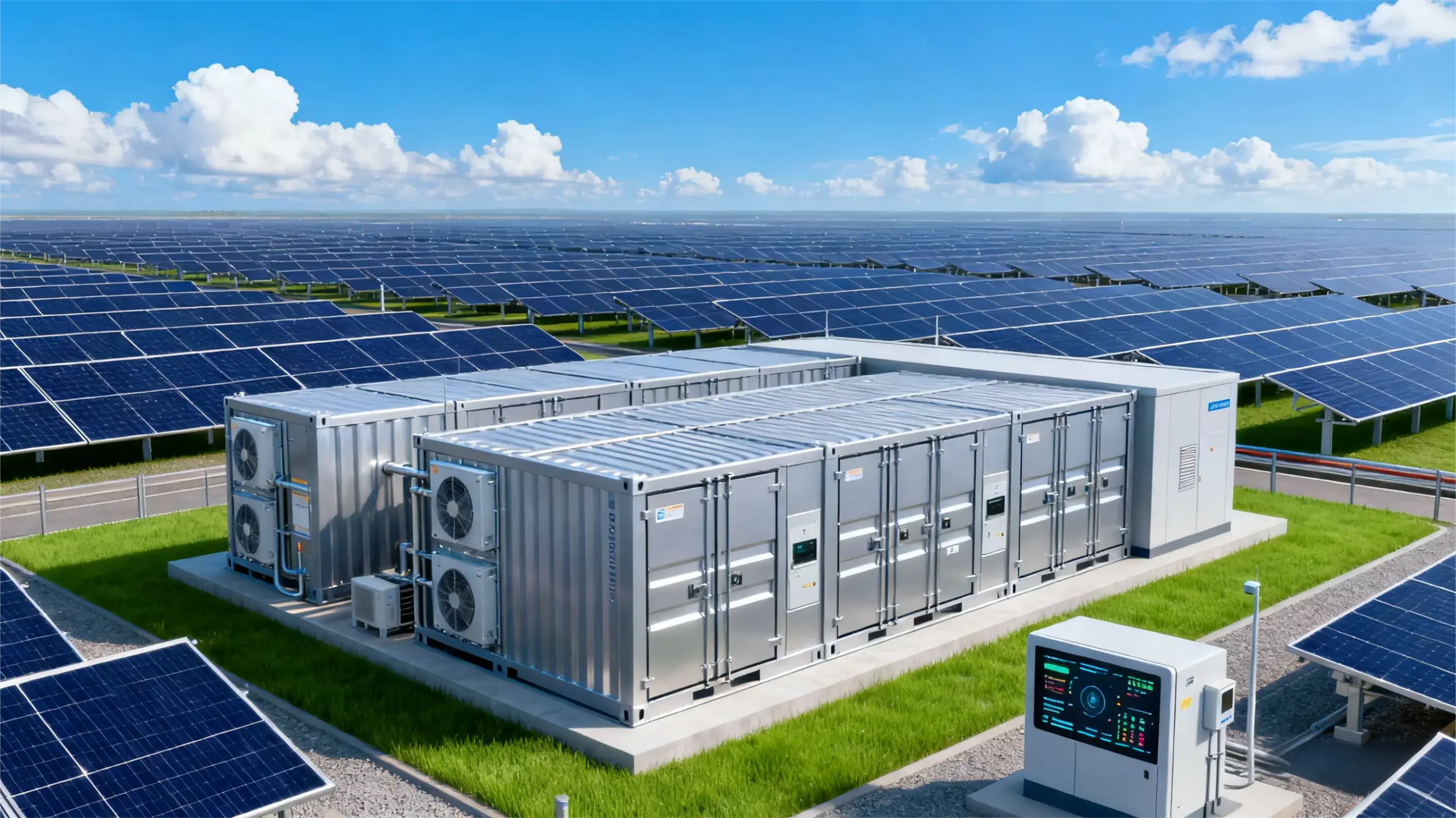
As the penetration of renewable energy grows, energy storage systems (ESS) are increasingly used to stabilize the grid, improve power quality, and support flexible operation. One of the most critical aspects of an ESS is its grid-connected control strategy, which determines how the system interacts with the grid under different operating conditions.
Three widely adopted control strategies for grid-connected ESS are: PQ control, VF control, and Virtual Synchronous Generator (VSG) control. Each strategy has unique characteristics, benefits, and suitable application scenarios.
PQ Control (Active and Reactive Power Control)
PQ control is one of the most common strategies for ESS connected to the grid. It focuses on controlling the active power (P) and reactive power (Q) output of the ESS independently.
Key Features:
Regulates active power to support grid load and energy management.
Controls reactive power to improve voltage stability and power factor.
Supports grid services such as peak shaving, load leveling, and reactive power compensation.
Advantages:
Simple and effective for energy arbitrage and grid support.
Fast response to power reference changes.
Compatible with standard grid codes.
Typical Applications:
Commercial and industrial energy storage systems.
On-grid solar and storage systems for peak shaving.
Utility-scale ESS providing reactive power support.
VF Control (Voltage-Frequency Control)
VF control is primarily used in islanded or microgrid scenarios where there is no main grid reference. The ESS operates as a grid-forming unit, regulating the local voltage (V) and frequency (F) to supply connected loads.
Key Features:
Maintains stable voltage and frequency in microgrid or islanded operation.
Automatically adjusts output based on load changes.
Provides system inertia and enhances microgrid stability.
Advantages:
Ideal for off-grid or isolated microgrid operation.
Ensures seamless transition between grid-connected and islanded modes.
Improves power quality and reduces voltage/frequency fluctuations.
Typical Applications:
Remote microgrids with high renewable penetration.
Critical facilities requiring reliable off-grid operation.
Hybrid systems integrating PV, wind, and energy storage.
VSG Control (Virtual Synchronous Generator Control)
Virtual Synchronous Generator (VSG) control emulates the behavior of a synchronous generator by adding virtual inertia and damping to the ESS. It provides a grid-supporting function similar to conventional generators but with faster response and flexible control.
Key Features:
Mimics synchronous generator dynamics for grid stabilization.
Provides virtual inertia to mitigate frequency fluctuations.
Supports both grid-following and grid-forming operation modes.
Advantages:
Enhances grid stability during high renewable penetration.
Improves short-term frequency and voltage regulation.
Enables ESS to participate in ancillary services like spinning reserve.
Typical Applications:
Utility-scale ESS supporting weak grids.
Renewable energy-dominated grids requiring inertia support.
Microgrids with high dynamic load variation.
Comparative Overview of PQ, VF, and VSG Control
The three main grid-connected control strategies—PQ control, VF control, and VSG control—have distinct roles, operating modes, and applications in energy storage systems.
PQ Control:
Operates in a grid-following mode, meaning the ESS adjusts its output according to the existing grid voltage and frequency.
Its primary role is to manage active power (P) and reactive power (Q).
This strategy is widely applied in commercial and industrial ESS, as well as on-grid solar plus storage systems, where energy optimization and reactive power support are needed.
VF Control:
Functions as a grid-forming strategy, enabling the ESS to regulate voltage (V) and frequency (F) independently.
It is especially useful in islanded microgrids or off-grid scenarios where there is no main grid reference.
VF control ensures stable voltage and frequency, making it ideal for microgrids with high renewable penetration or critical off-grid facilities.
VSG Control:
Operates in a grid-forming or grid-supporting mode by emulating the dynamics of a synchronous generator.
It provides virtual inertia and damping, enhancing grid stability during frequency and voltage fluctuations.
VSG control is commonly used in weak grids, renewable-heavy networks, and dynamic microgrids, where both stability and fast response are required.
Summary:
PQ control is simple, efficient, and ideal for energy management in well-established grid systems.
VF control ensures reliable operation in islanded or isolated microgrids by maintaining voltage and frequency stability.
VSG control provides virtual inertia, bridging the gap between traditional synchronous generators and modern renewable-rich grids, improving short-term dynamic performance.
The choice of control strategy depends on grid conditions, application scenario, and required grid services, allowing ESS designers to balance efficiency, stability, and flexibility.
Engineering Practice and Future Trends
At FFD POWER, our ESS solutions integrate adaptive PQ, VF, and VSG control algorithms to maximize grid stability and operational efficiency. Advanced control strategies allow seamless transitions between grid-connected and islanded modes, enabling:
High-quality power output
Fast dynamic response to grid disturbances
Participation in ancillary services
Optimized renewable integration
Future Trends:
Hybrid control strategies combining PQ, VF, and VSG for flexible operation.
Intelligent control using AI to predict load/renewable fluctuations.
Enhanced grid-forming capabilities for weak and microgrid-dominated grids.
Conclusion
Grid-connected control strategies are the backbone of modern energy storage systems.
PQ control manages active and reactive power for energy optimization and grid services.
VF control ensures voltage and frequency stability in islanded or microgrid operation.
VSG control provides virtual inertia to enhance grid stability in renewable-heavy networks.
Selecting the appropriate control strategy is crucial for achieving efficient, reliable, and flexible ESS operation, aligning with FFD POWER’s mission of delivering high-performance energy solutions.