News
From Hardware to Algorithms: The Second Wave of Intelligence in the Energy Storage Industry
- October 8, 2025
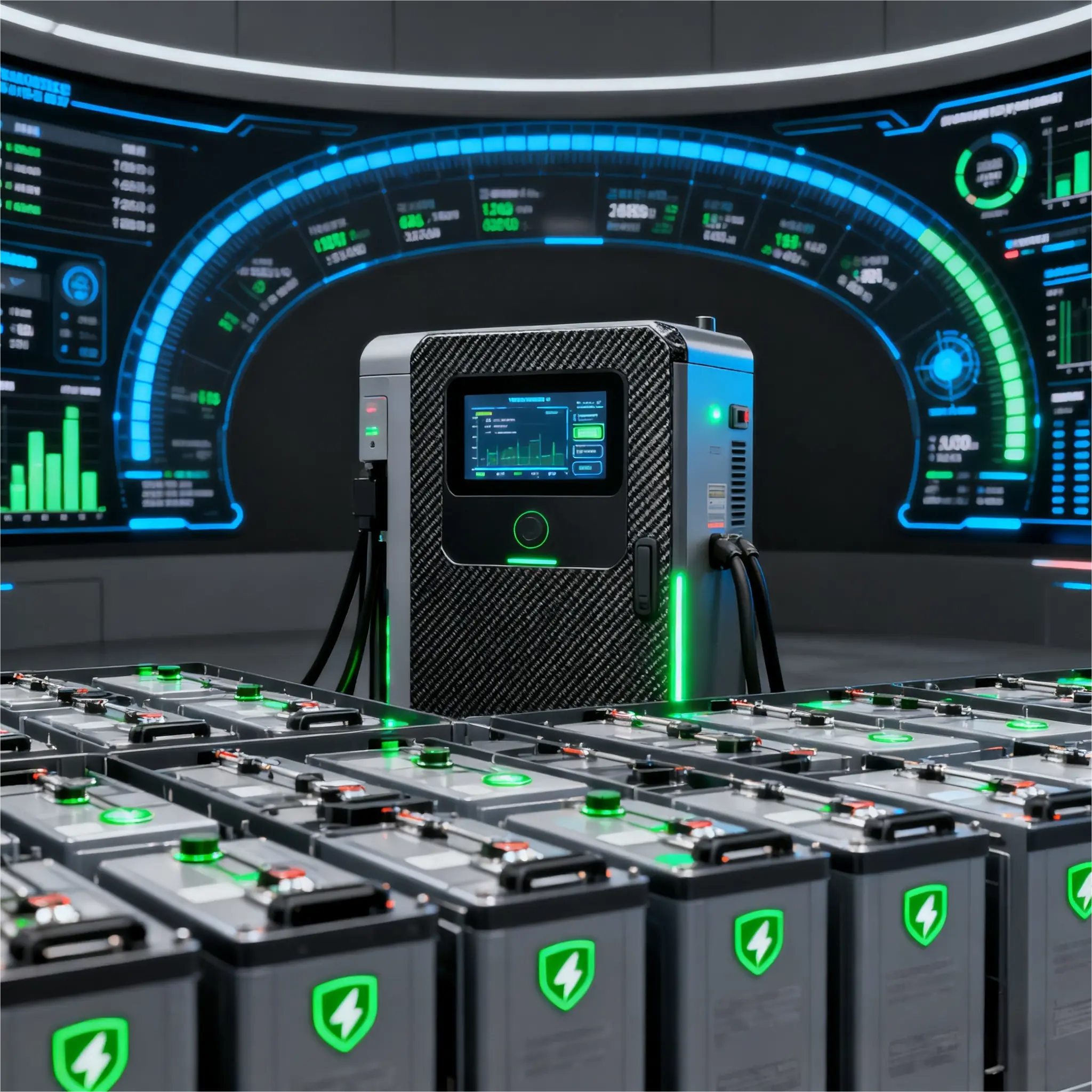
Over the past decade, the energy storage industry has experienced its first wave of intelligence, primarily focused on hardware evolution. Advancements in Lithium Iron Phosphate (LFP) chemistry, high-efficiency PCS (Power Conversion Systems), and modular system design have significantly improved the safety, stability, and scalability of energy storage systems (ESS).
Companies like FFD POWER have played a leading role in this stage—developing integrated all-in-one solutions that ensure reliability, performance, and safety through rigorous engineering and high-quality materials.
However, while this hardware foundation remains essential, the next transformation is already underway — one driven not by components, but by data and intelligence.
The Second Wave: From Physical Assets to Digital Intelligence
The second wave of intelligent energy storage is defined by the integration of algorithms, artificial intelligence (AI), and cloud-based analytics into every layer of system operation.
Today, energy storage systems are evolving from static, preprogrammed devices into dynamic, self-optimizing assets that can:
Predict load fluctuations and renewable generation,
Optimize charge–discharge behavior in real time, and
Prevent safety incidents before they occur.
This digital transformation represents a paradigm shift — one where the ESS is no longer a passive energy device, but an active participant in a smart, adaptive energy network.
1. AI-Powered EMS: The New Brain of Energy Storage
At the heart of this transformation is the Energy Management System (EMS) — now enhanced by AI-driven analytics and machine learning algorithms.
Key Innovations Include:
Load Forecasting Algorithms: Predicting short-term and long-term energy demand patterns based on historical and real-time data.
Dynamic Optimization: Continuously adjusting charge/discharge schedules according to electricity price signals, renewable output, and system health.
Multi-Objective Control: Balancing cost savings, battery life, and grid stability simultaneously.
FFD POWER’s cloud-based EMS platform embodies this new generation of intelligence — turning raw operational data into actionable insights for maximum efficiency and profitability.
2. Predictive Maintenance: Extending System Life Through Data
Traditional maintenance is reactive — problems are fixed after they occur.
Predictive maintenance, powered by AI and big data, turns this model upside down.
By continuously monitoring thousands of parameters — such as cell voltage deviation, temperature distribution, and internal resistance — advanced algorithms can predict component degradation and alert operators before faults occur.
This not only prevents costly downtime but also extends the cycle life and return on investment (ROI) of the system.
Example Predictive Insights:
Early detection of battery imbalance trends, preventing accelerated aging.
Identification of thermal anomalies, avoiding thermal runaway risks.
Forecasting Remaining Useful Life (RUL) for key components.
For FFD POWER, predictive maintenance represents a core principle of proactive safety — combining intelligent software with robust hardware protection.
3. Intelligent Safety: From Passive Protection to Active Prevention
Safety has always been the cornerstone of energy storage.
But as systems become larger and more complex, software-defined safety becomes essential.
FFD POWER integrates AI-based safety algorithms that analyze data streams in real time, enabling early-stage detection of irregularities such as:
Abnormal voltage behavior,
Rapid temperature rise,
Internal short-circuit signals,
Gas or pressure anomalies.
Once detected, the system can automatically trigger mitigation actions — from isolating modules to activating fire suppression — creating a true “active prevention” ecosystem.
4. Optimization Beyond the Battery: Grid and Market Integration
The second wave of intelligence also expands the role of energy storage beyond the battery system itself.
By combining real-time market data, renewable generation forecasting, and grid frequency analysis, AI-driven EMS systems can participate in:
Energy arbitrage (buy low, sell high),
Demand response programs,
Frequency and voltage regulation, and
Virtual Power Plant (VPP) networks.
This intelligent coordination enables ESS operators to maximize economic returns while supporting grid stability and decarbonization goals.
5. The FFD POWER Approach: Intelligence as a Multiplier
FFD POWER believes that AI is the multiplier that unlocks the full potential of energy storage.
By integrating advanced algorithms with high-quality hardware, the company achieves a holistic system that is:
Safer — through predictive safety mechanisms;
Smarter — via dynamic energy optimization;
More Profitable — by maximizing efficiency and asset life.
FFD POWER’s intelligent EMS and BMS platforms are already being deployed across commercial, industrial, and off-grid projects worldwide — leading the second intelligent revolution in energy storage.
Conclusion: The Future Belongs to Intelligent Energy Systems
The shift from hardware innovation to algorithmic intelligence marks a new era for the global energy storage industry.
While strong hardware remains the foundation, data, AI, and intelligent management will define competitiveness in the decade ahead.
As the industry enters this second wave of intelligence, FFD POWER continues to pioneer the integration of AI, safety, and system optimization, ensuring that every unit of stored energy delivers maximum performance, safety, and value.