News
Four-Quadrant Operation: Why Energy Storage Can Regulate Both Active and Reactive Power
- November 22, 2025
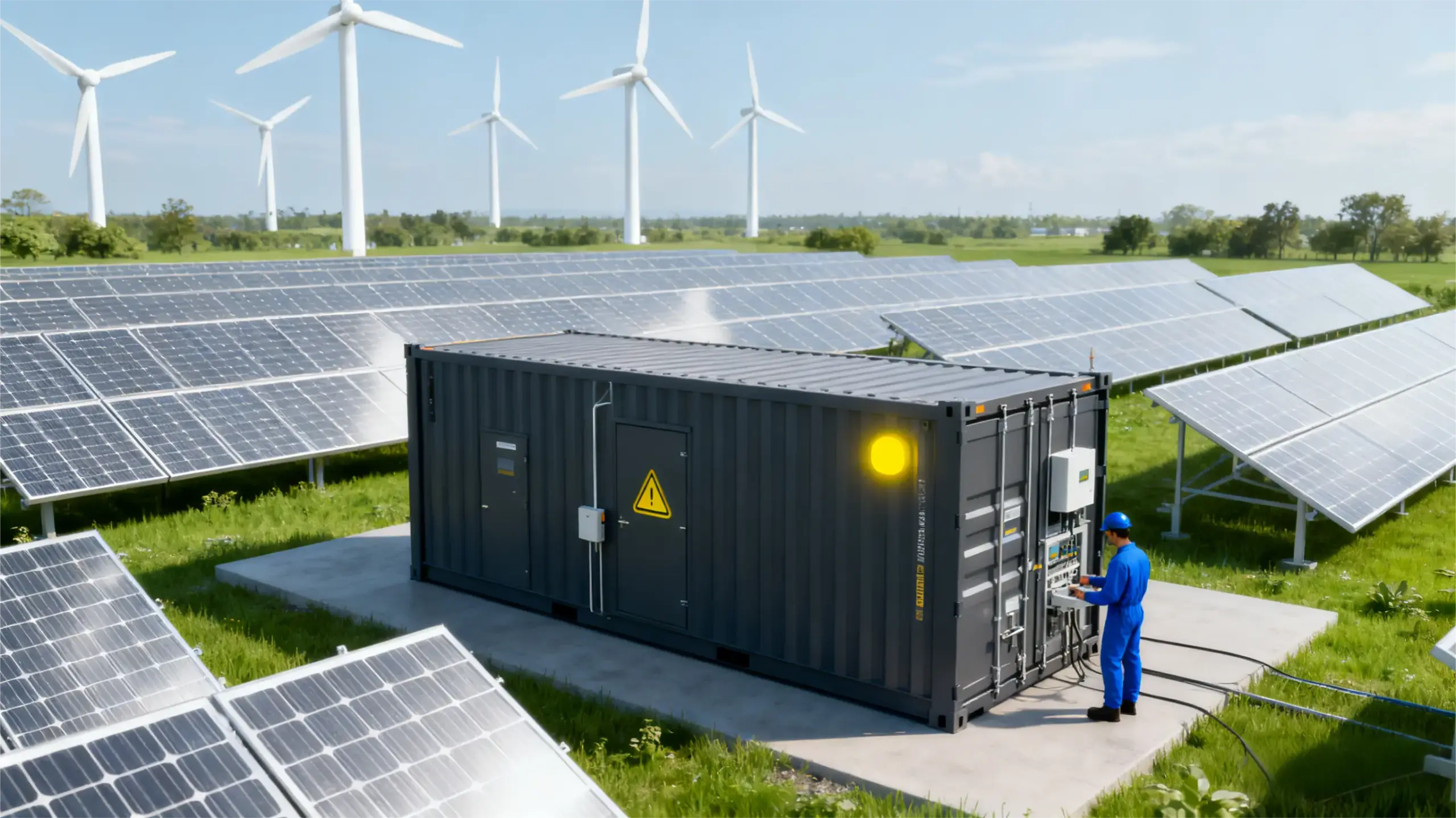
In modern power systems, energy storage is no longer just a “battery that charges and discharges.” Thanks to advanced power electronics—especially the PCS (Power Conversion System)—energy storage systems can operate in all four quadrants, meaning they can independently or simultaneously regulate active power (P) and reactive power (Q). This capability makes energy storage a powerful tool for grid stability, efficiency, and power quality management.
What Are the Four Quadrants?
The term “four-quadrant operation” comes from the P-Q coordinate plane used in power engineering:
Active Power (P): Real energy that performs work (kW).
Reactive Power (Q): Energy that supports voltage (kVar).
The four quadrants reflect combinations of charging/discharging (P+/P–) and absorbing/providing reactive power (Q+/Q–).
Energy Storage Can:
Discharge + Provide reactive power
Discharge + Absorb reactive power
Charge + Provide reactive power
Charge + Absorb reactive power
In other words, energy storage can support the grid’s needs at any moment—whether improving voltage, balancing frequency, or optimizing power flow.
Why Energy Storage Can Regulate Both P and Q
1. PCS Enables Independent Control of P and Q
The PCS is essentially the “heart” of power conversion. Modern PCS systems use fully controllable IGBT or SiC-based inverters that allow:
High-precision P control (charge/discharge)
Fast, seamless Q control (voltage support)
Decoupled P–Q control, meaning they can operate simultaneously without interference
This makes energy storage function similarly to STATCOM devices while still providing energy.
2. Instant Response to Grid Conditions
Compared with traditional mechanical generators, energy storage responds extremely fast—typically within milliseconds. This allows:
Voltage stabilization
Power factor correction
Suppression of flicker
Improved power quality for industrial users
Even during charging, the system can inject reactive power to support the grid.
3. Enhancing Grid Flexibility
Four-quadrant operation expands the role of energy storage from simple energy management to grid support, enabling:
Frequency regulation through active power
Voltage regulation through reactive power
Power smoothing for renewable energy
Better integration of solar and wind
Peak shaving + power quality services simultaneously
This multi-functional capability maximizes the economic value of ESS assets.
Real-World Use Cases
Industrial Users
Improve power factor, reduce penalty fees
Stabilize voltage for sensitive equipment
Support the plant while performing energy arbitrage
Solar + Storage Projects
Smooth solar output fluctuations
Maintain inverter voltage stability
Deliver both energy shifting and grid support
Utility-Scale ESS
Provide ancillary services such as VAR control
Improve grid stability during disturbances
Support weak grids with high renewable penetration
Conclusion
Four-quadrant operation is one of the most important capabilities of modern energy storage systems. By regulating both active and reactive power simultaneously, ESS not only stores and delivers energy but also acts as a flexible, fast-responding grid stabilizer.
With advanced PCS and intelligent control strategies, energy storage becomes a true multi-value asset—improving reliability, optimizing economic performance, and enabling a smarter, cleaner energy future.