News
Energy Storage Fire Protection: Water, Gas, Dry Powder, Fire Ball – Which Is Optimal?
- October 20, 2025
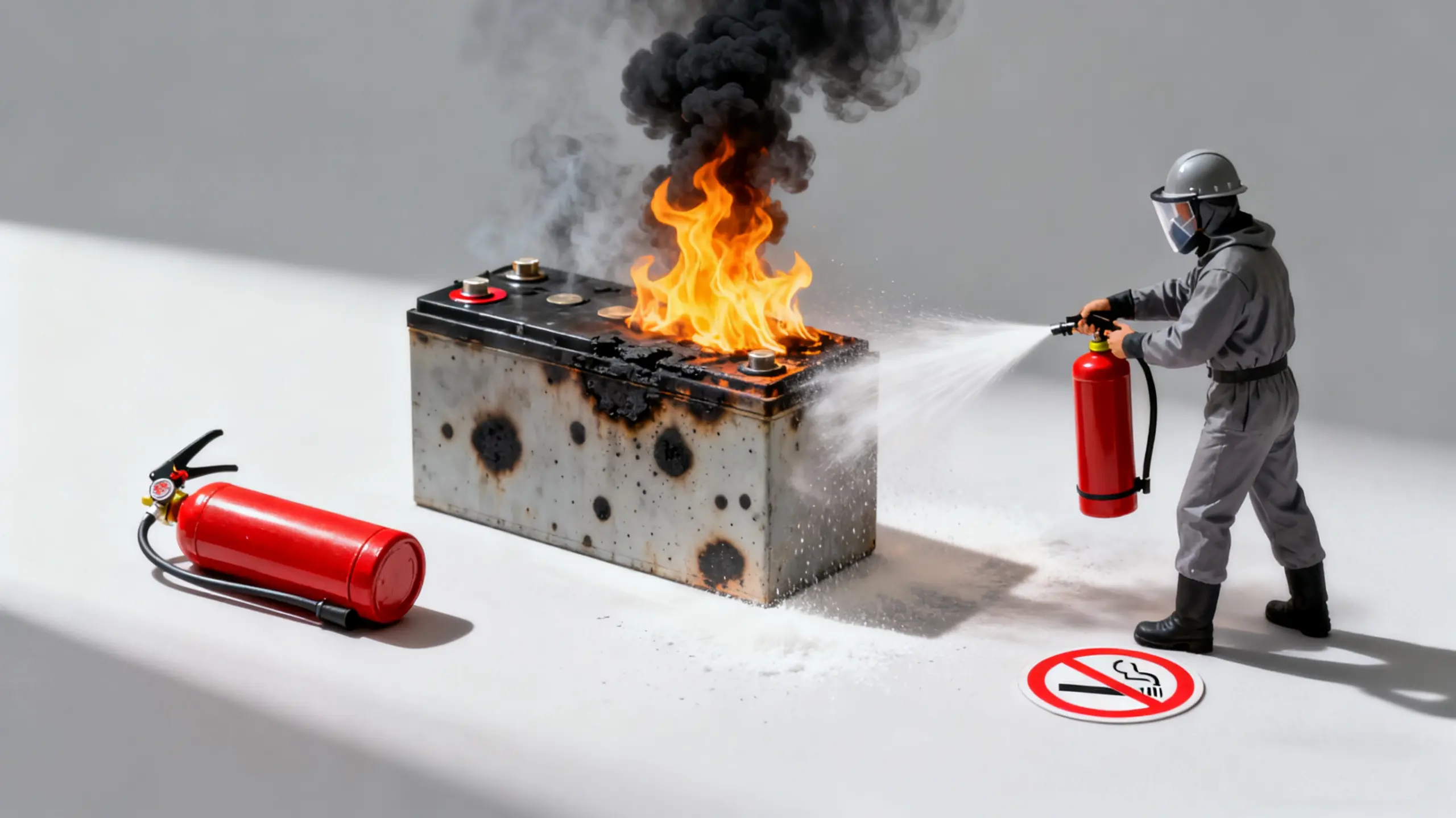
As energy storage systems (ESS) rapidly expand in residential, commercial, and industrial sectors, fire safety has become one of the most critical concerns. Batteries, especially lithium-ion types, carry inherent fire risks due to thermal runaway, short circuits, or external factors. Selecting the right fire suppression solution is essential to protect people, assets, and investments.
In this guide, we compare the main fire protection methods used in ESS – water-based, gas-based, dry powder, and fire balls – and provide practical recommendations for developers, operators, and integrators. FFD POWER, a leader in energy storage solutions, implements multi-layered fire safety strategies to ensure system reliability, compliance, and bankability.
Why Fire Protection is Critical for ESS
Lithium-ion battery fires are notoriously difficult to control due to:
Thermal runaway: One cell failure can trigger a chain reaction in adjacent cells.
High energy density: Even small battery modules can release significant heat and flames.
Toxic and flammable gases: Venting gases during thermal events can cause explosions.
Without proper fire protection, ESS projects risk severe property damage, operational downtime, and regulatory non-compliance. Therefore, choosing the optimal fire suppression system is as important as battery quality and BMS design.
Common ESS Fire Suppression Methods
A. Water-based Systems
Description: Water sprinklers or deluge systems cool batteries and suppress flames.
Advantages:
Effective cooling, reduces thermal runaway propagation.
Widely used in industrial ESS applications.
Limitations:
Conductive water may damage electrical components.
Risk of corrosion and secondary damage.
Less suitable for enclosed or off-grid ESS containers.
Best for: Large-scale stationary ESS with fire-rated containment and proper electrical insulation.
B. Gas-based Systems
Description: Inert gases (e.g., nitrogen, argon) or CO₂ displace oxygen to suppress fires.
Advantages:
No water, safe for electrical systems.
Can penetrate enclosed spaces quickly.
Limitations:
Limited effectiveness for high-energy lithium-ion fires.
Requires airtight compartments for optimal performance.
May not prevent re-ignition after thermal runaway.
Best for: Small to medium enclosed ESS with good airtight design.
C. Dry Powder Systems
Description: Chemical powders (e.g., ABC powder) absorb heat and interrupt combustion.
Advantages:
Fast suppression and high fire-extinguishing efficiency.
Effective for lithium-ion battery thermal events.
Compatible with electrical equipment.
Limitations:
Residue cleanup is required.
Re-ignition risk exists if battery continues to overheat.
Best for: ESS modules or racks with concentrated battery arrays.
D. Fire Balls
Description: Fire-extinguishing spheres release chemicals automatically when a fire is detected, ideal for small enclosures.
Advantages:
Automatic activation with minimal human intervention.
Non-conductive, safe for sensitive electronics.
Compact and easy to install.
Limitations:
Limited coverage; may require multiple units for large rooms.
Not suitable for large-scale industrial ESS alone.
Best for: Battery cabinets, small ESS containers, and early-stage fire suppression.
Fire Suppression Method Comparison
To make the differences clearer, here is a text-based comparison of all four fire suppression methods:
Water-based Systems
Advantages: Effective cooling, widely used in industrial ESS.
Limitations: Conductive, risk of corrosion, secondary damage.
Best Application: Large-scale ESS with fire-rated containment and electrical insulation.
Gas-based Systems
Advantages: Safe for electronics, fast penetration in enclosed spaces.
Limitations: Limited for high-energy lithium fires, requires airtight compartments, may not prevent re-ignition.
Best Application: Medium-sized enclosed ESS.
Dry Powder Systems
Advantages: Fast, high efficiency, safe for electrical equipment.
Limitations: Residue cleanup required, risk of re-ignition if battery remains hot.
Best Application: Battery racks and modules.
Fire Balls
Advantages: Automatic, non-conductive, compact, easy installation.
Limitations: Limited coverage, multiple units needed for large rooms, not suitable alone for large-scale ESS.
Best Application: Small cabinets, early-stage suppression.
Integrated Fire Safety Strategy for ESS
No single solution is perfect for all scenarios. FFD POWER advocates a multi-layered fire protection strategy:
Battery-level protection: BMS early detection, thermal sensors.
Rack-level suppression: Dry powder or gas-based systems.
Room-level safety: Water sprinklers or inert gas systems as a backup.
Emergency tools: Fire balls for localized, early-stage intervention.
This layered approach ensures prevention, early warning, and active suppression, minimizing fire impact and meeting global compliance standards.
Key Considerations for Choosing Fire Protection
When selecting a fire suppression system, consider:
Battery chemistry and energy density
Installation environment (indoor, containerized, outdoor)
Regulatory requirements (NFPA, UL9540A, local fire codes)
Maintenance and operational costs
System scalability and reliability
Why FFD POWER Systems are Safer
FFD POWER integrates advanced fire safety into its ESS:
High-quality LFP batteries with low thermal runaway risk
Intelligent BMS with predictive alerts
Multi-layer fire suppression systems tailored to installation type
Compliance with UL9540A, NFPA855, IEC standards
Our approach ensures that ESS projects are safe, reliable, and bankable, protecting both assets and people.
Conclusion
Choosing the right fire protection solution for energy storage systems requires understanding the trade-offs between water, gas, dry powder, and fire balls.
Large industrial ESS: Water + dry powder + gas integration
Medium enclosed ESS: Gas + dry powder combination
Small cabinets or localized protection: Fire balls + dry powder
By implementing a layered fire protection strategy, developers can minimize risk, comply with global safety standards, and safeguard their investments.
FFD POWER delivers energy storage solutions that integrate multi-layered fire safety, ensuring smarter, safer, and globally compliant ESS deployments.