News
Distributed Energy Storage: Business Model Innovation and Future Opportunities
- October 8, 2025
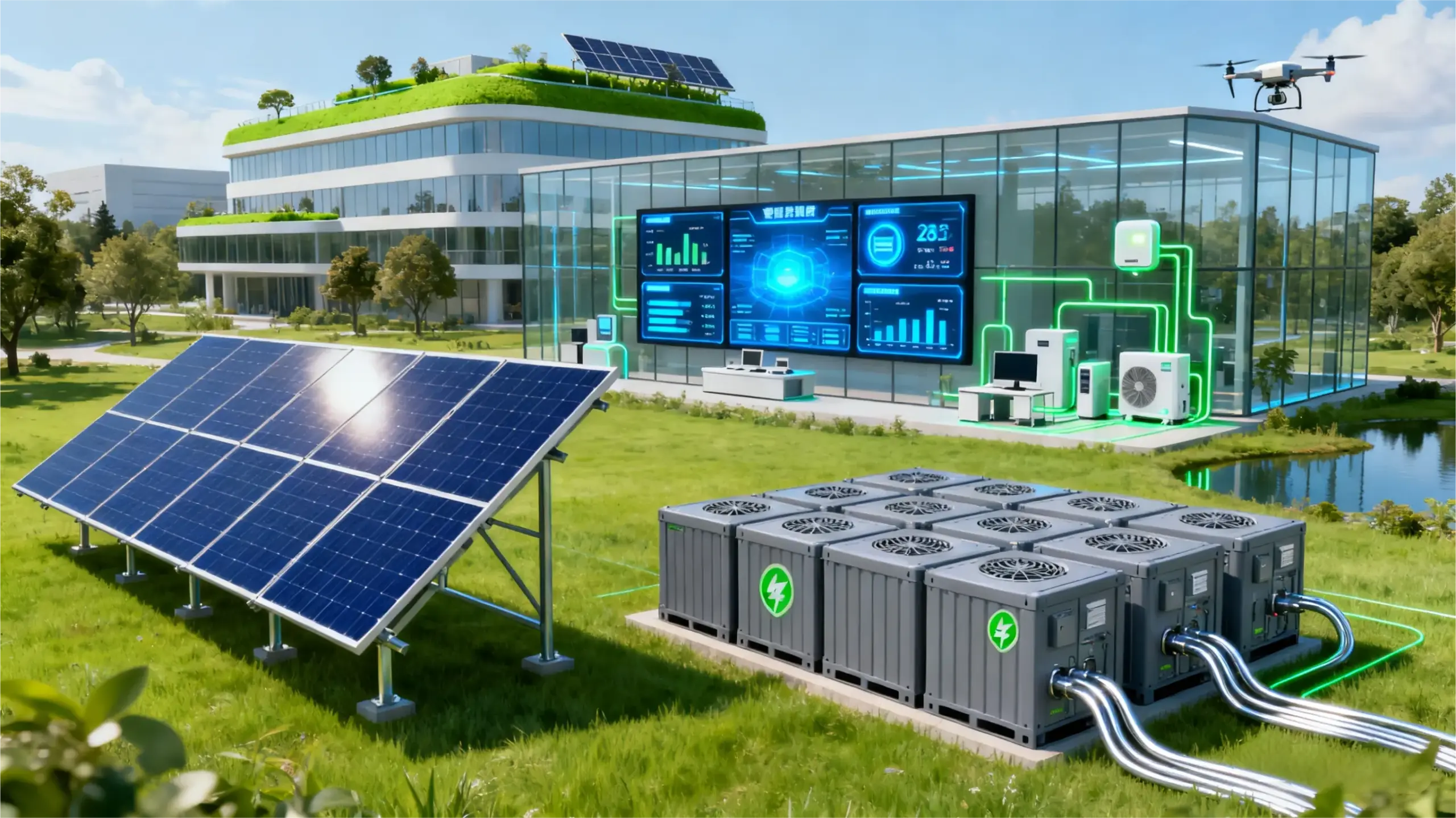
As renewable energy integration accelerates worldwide, distributed energy storage (DES) has emerged as a key enabler for a resilient, flexible, and efficient energy ecosystem. Unlike centralized storage, distributed energy storage systems are installed closer to the point of consumption—residential, commercial, or industrial sites—allowing localized energy optimization, grid support, and economic benefits.
The rapid evolution of smart grids, AI-driven energy management systems (EMS), and advanced battery technologies is reshaping the energy market. Companies are exploring innovative business models that unlock new revenue streams, cost savings, and sustainable energy solutions.
Understanding Distributed Energy Storage
Distributed energy storage refers to small- to medium-scale battery installations connected to local energy systems, often paired with renewable energy sources like solar PV or wind. Key characteristics include:
Decentralization: Energy storage is installed close to load centers.
Flexibility: Can operate independently or in coordination with the grid.
Multi-functionality: Provides peak shaving, load shifting, frequency regulation, backup power, and renewable self-consumption optimization.
These features make DES a crucial component for future-proof energy infrastructure.
Innovative Business Models for Distributed Energy Storage
1. Energy Arbitrage
Energy arbitrage leverages time-of-use electricity pricing:
Charge batteries when electricity prices are low (valley periods).
Discharge when prices are high (peak periods).
DES enables prosumers to monetize stored energy while reducing operational costs.
2. Virtual Power Plants (VPPs)
A VPP aggregates multiple distributed energy storage systems to act as a single controllable unit for the grid. Benefits include:
Participation in energy markets.
Grid balancing and ancillary services.
Optimized utilization of distributed batteries for revenue generation.
3. Demand Response Participation
DES can adjust consumption patterns in response to grid signals:
Reduces peak demand charges for commercial and industrial users.
Provides flexibility services to utilities.
Creates new revenue streams through incentive programs.
4. Energy-as-a-Service (EaaS)
EaaS allows third-party companies to deploy, operate, and maintain energy storage systems for end-users:
Users pay a subscription or service fee.
Eliminates high upfront capital costs.
Provides guaranteed performance and efficiency through intelligent EMS and predictive maintenance.
5. Renewable Self-Consumption Optimization
For solar and wind-powered installations:
DES maximizes onsite renewable energy use.
Reduces reliance on grid electricity.
Increases ROI for distributed renewable systems by storing excess generation and releasing it during peak load times.
Future Opportunities in Distributed Energy Storage
1. Grid Services and Ancillary Markets
As grids become more decentralized, DES can provide:
Frequency regulation
Voltage support
Black start capabilities
Grid congestion management
2. Electrification and Decarbonization
DES accelerates the transition to low-carbon energy systems.
Supports electric vehicle charging networks and microgrids.
Enables carbon emission reduction through optimized renewable energy utilization.
3. AI-Driven Optimization
Advanced EMS powered by AI and cloud computing enables:
Predictive maintenance
Optimal charge-discharge scheduling
Load forecasting and dynamic pricing optimization
Maximized RTE (Round-Trip Efficiency) and cost savings
4. Energy Trading and Peer-to-Peer (P2P) Models
DES can participate in peer-to-peer energy trading:
Prosumer communities trade surplus stored energy.
Promotes localized energy resilience and decentralized market participation.
5. Hybrid Systems Integration
Combining DES with solar, wind, and backup generators creates hybrid systems.
Offers economic benefits of grid-connected systems while providing off-grid resilience.
Key Drivers for Business Model Innovation
Technological advancements: LFP batteries, advanced PCS, and intelligent BMS enable high-performance storage.
Policy and regulatory support: Incentives for renewable integration, grid support, and carbon reduction.
Market demand: Increasing electricity costs and the need for grid reliability.
AI and IoT integration: Optimized energy management, predictive maintenance, and dynamic load control.
FFD POWER is actively developing distributed storage solutions with intelligent EMS and cloud-based optimization to help businesses and utilities unlock new revenue streams and operational efficiency.
Conclusion: A Transformative Era for Distributed Energy Storage
Distributed energy storage is not just a technical solution—it is a catalyst for new business models, grid flexibility, and renewable integration.
Innovative approaches like EaaS, VPPs, demand response, and energy arbitrage, combined with AI-driven optimization, are shaping the future energy landscape.
Companies like FFD POWER are at the forefront, integrating high-quality LFP batteries, intelligent BMS, and cloud EMS to create profitable, efficient, and sustainable distributed energy storage systems.