News
Differences and Application Scenarios of Bidirectional DC/DC and Bidirectional PCS
- November 7, 2025
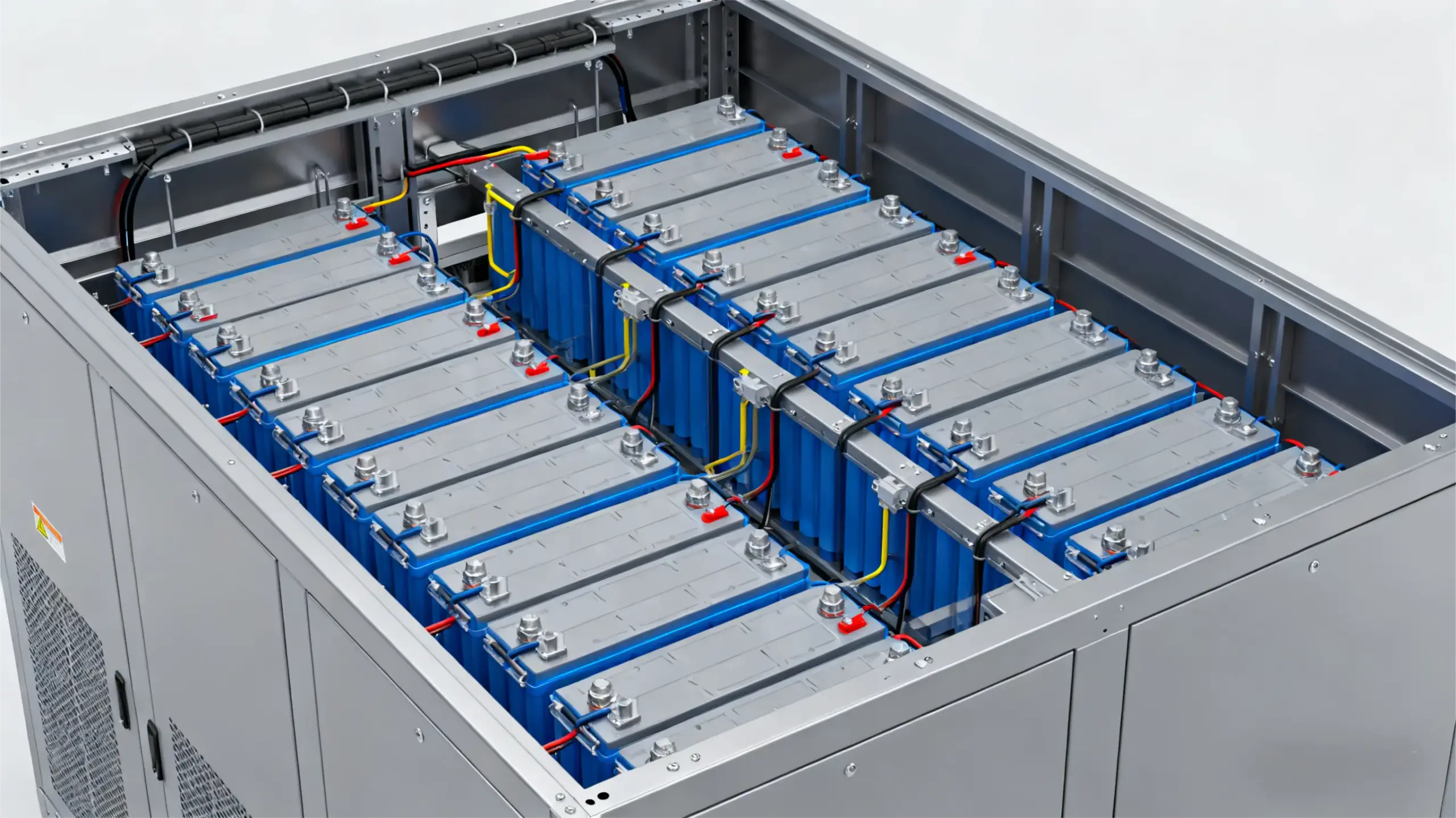
As the energy storage industry evolves, system architectures require precise coordination between components to achieve maximum performance. Among these, Bidirectional DC/DC converters and Bidirectional Power Conversion Systems (PCS) play critical roles in managing energy flow between batteries, loads, and the grid.
Although both support two-way energy transfer, their functions, topologies, and application scenarios differ significantly. Understanding these differences is key to designing efficient, safe, and flexible Energy Storage Systems (ESS).
Overview of Bidirectional DC/DC Converter
A Bidirectional DC/DC converter manages energy flow between two DC buses — typically the battery pack and the DC bus.
It performs voltage conversion, isolation, and current control, ensuring optimal battery charging and discharging while maintaining system stability.
Key Functions:
DC Voltage Regulation: Converts between different DC voltage levels (e.g., 48V to 750V).
Battery Charge/Discharge Management: Controls current flow efficiently.
Isolation and Safety: Often designed with galvanic isolation.
Power Flow Control: Enables bidirectional energy transfer based on demand.
Advantages:
High efficiency (typically >97%).
Precise battery voltage and current control.
Compact design, ideal for modular ESS or hybrid architectures.
Typical Applications:
DC-coupled solar + storage systems
EV fast charging infrastructure
Hybrid energy storage (battery + supercapacitor)
DC microgrids and data center power systems
Overview of Bidirectional PCS
A Bidirectional PCS is the interface between the DC bus (battery side) and the AC grid (utility side).
It converts DC ↔ AC bidirectionally, enabling both grid charging and discharging operations.
Key Functions:
AC/DC Conversion: Manages energy exchange between grid and battery.
Grid Compliance: Supports voltage/frequency regulation and reactive power control.
Microgrid Operation: Enables smooth transition between on-grid and off-grid modes.
Power Quality Control: Reduces harmonics, improves power factor, ensures stable AC output.
Advantages:
Full AC grid compatibility.
Supports grid services like peak shaving and demand response.
Integrated protection and communication functions.
Typical Applications:
On-grid and off-grid ESS
Commercial and industrial storage
Microgrids and backup power
Virtual Power Plants (VPP) and grid services
Core Differences Between Bidirectional DC/DC and Bidirectional PCS
While both Bidirectional DC/DC converters and Bidirectional PCS enable two-way power flow, they serve different roles in an Energy Storage System (ESS).
The Bidirectional DC/DC converter operates within the DC domain, controlling voltage and current between the battery and DC bus. It provides high efficiency, precise current control, and often includes galvanic isolation. It is mainly used in DC-coupled systems, hybrid ESS, and EV charging stations.
The Bidirectional PCS connects the DC side to the AC grid, performing DC-AC conversion with grid synchronization, frequency regulation, and power quality management. It supports AC-coupled and grid-tied applications, ensuring stable and compliant operation.
In short, DC/DC converters optimize internal energy flow, while PCS units manage external grid interaction. Together, they form the foundation of efficient, safe, and flexible FFD POWER energy storage systems.
Application Scenarios in Modern ESS
a. DC-Coupled Energy Storage Systems
In DC-coupled systems, the Bidirectional DC/DC converter connects solar PV arrays, batteries, and loads on a common DC bus.
This minimizes conversion losses, improves system efficiency, and allows better PV-battery coordination — ideal for hybrid solar-storage systems.
b. AC-Coupled Energy Storage Systems
In AC-coupled systems, the Bidirectional PCS manages the interface between the grid and the battery.
It provides strong grid interaction, supports grid-tied services, and allows independent operation even if the PV inverter is disconnected.
c. Hybrid Systems with Both DC/DC and PCS
Advanced ESS architectures often combine both — DC/DC for internal energy flow optimization and PCS for external grid interaction.
This hybrid approach delivers the best of both worlds: higher efficiency, flexible operation, and robust grid compatibility.
Future Trends and FFD POWER’s Engineering Practice
At FFD POWER, we integrate high-efficiency Bidirectional DC/DC converters and intelligent PCS units to ensure optimal energy management and long-term reliability.
Our solutions are engineered for high conversion efficiency, stable grid performance, and adaptive control algorithms, meeting global standards for safety and grid compliance.
As grids become more decentralized and digitalized, the synergy between DC/DC and PCS will define the next generation of energy storage innovation — achieving higher stability, efficiency, and economic value for users.
Conclusion
While both Bidirectional DC/DC and Bidirectional PCS enable two-way energy transfer, their roles differ fundamentally.
The DC/DC converter focuses on internal voltage and current optimization, while the PCS bridges the DC-AC interface for grid interaction.
Together, they form the foundation of modern, flexible, and intelligent energy storage architectures.