News
Cloud Brain: Technical Architecture of FFD POWER’s Intelligent Energy Management System
- October 8, 2025
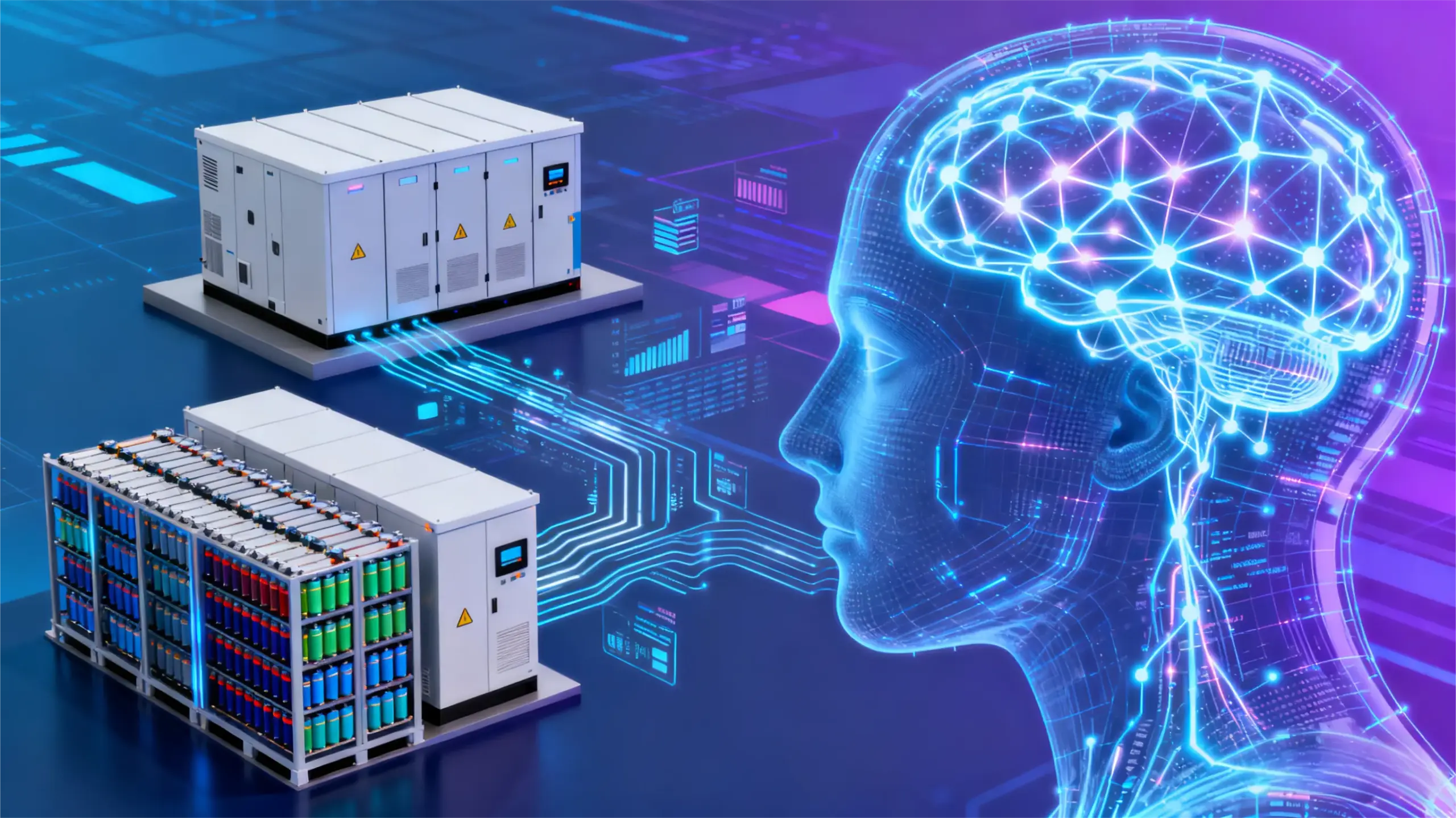
As the energy storage industry evolves, intelligent Energy Management Systems (EMS) have become the cornerstone of modern energy solutions.
FFD POWER’s Cloud Brain represents a cutting-edge cloud-based EMS that integrates AI algorithms, big data analytics, IoT connectivity, and predictive intelligence, enabling energy systems to operate smarter, safer, and more profitably.
This article provides an in-depth technical overview of FFD POWER’s EMS architecture, illustrating how real-time data, predictive algorithms, and cloud intelligence work together to optimize energy storage operations.
Core Concept: The Cloud-Enabled EMS
FFD POWER’s EMS is built around a cloud-first architecture, which provides centralized control, dynamic optimization, and predictive analytics for distributed energy systems.
Key Advantages
Scalability: Seamlessly supports single-site installations, multi-site microgrids, and enterprise-scale energy networks.
Real-Time Data Processing: Collects, processes, and analyzes operational data from batteries, PCS, inverters, and renewable sources continuously.
Remote Management: Enables operators to monitor, control, and optimize energy systems securely from any location.
By leveraging cloud computing, FFD POWER transforms the EMS from a traditional monitoring tool into a “Cloud Brain”, capable of dynamic decision-making and system-wide intelligence.
Technical Architecture Layers
FFD POWER’s intelligent EMS consists of four core layers, each playing a critical role in enabling real-time intelligence.
Data Acquisition Layer
This layer focuses on capturing high-fidelity operational data from all energy assets.
IoT Sensors & Devices: Monitor voltage, current, temperature, State of Charge (SOC), and other battery metrics with high accuracy.
Communication Protocols: Supports Modbus, CANbus, TCP/IP, and other industry-standard protocols to ensure reliable, low-latency data transfer.
Edge Preprocessing: Filters and preprocesses raw data at the edge to reduce cloud bandwidth usage and enable near-real-time analytics.
Example: High-frequency temperature readings from each battery module are aggregated at the edge, detecting abnormal thermal patterns before sending alerts to the cloud.
Data Management & Storage Layer
The cloud serves as the central repository and analytics engine.
Big Data Infrastructure: Handles terabytes of operational data securely and efficiently.
Time-Series Analytics: Maintains historical performance data for trend analysis, energy forecasting, and life-cycle optimization.
Data Security: Multi-layer encryption, user authentication, and access control protect sensitive energy data.
Example: Historical voltage deviations across multiple battery packs are analyzed to identify patterns that may indicate aging or imbalanced cells.
AI & Algorithm Layer
The intelligence core of the EMS, where all predictive and optimization calculations occur.
Core Modules
Predictive Maintenance: Algorithms analyze cell voltage, internal resistance, temperature gradients, and usage cycles to forecast SOH (State of Health) and RUL (Remaining Useful Life). Early fault detection prevents thermal runaway and battery degradation.
Energy Optimization: Dynamic load balancing between batteries, solar, and grid. Real-time pricing signals and demand forecasts are incorporated to maximize economic benefits. AI models simulate multiple scenarios to select the optimal charge/discharge strategy.
Fault Detection & Safety Algorithms: Detect anomalies in voltage, current, or temperature patterns. Automatically triggers preventive safety protocols, e.g., isolating modules or activating fire suppression systems.
Machine Learning & Self-Learning: Continuously learns from historical and real-time data to improve forecasting accuracy and optimization efficiency over time. Supports predictive energy management strategies for complex hybrid energy systems.
Visualization & Control Layer
This layer provides user interfaces, control mechanisms, and reporting tools.
Dashboards: Visualize real-time performance metrics, historical trends, and predictive alerts.
Remote Control Interface: Operators can manage batteries, PCS, inverters, and microgrid systems from the cloud.
Automated Reporting: Generates energy consumption, efficiency, cost savings, and ROI reports for business and operational decision-making.
Example: A commercial microgrid operator can view predicted peak demand and adjust battery dispatch in advance to reduce energy costs.
Data Flow and System Integration
Data moves through the system as follows:
Data Collection: IoT devices measure operational parameters at high resolution.
Edge Preprocessing: Filters noise, performs initial analysis, and sends preprocessed data to the cloud.
Cloud Storage & Analytics: Historical and real-time data are stored, indexed, and analyzed using AI algorithms.
Optimization & Decision Making: AI models compute charge/discharge schedules, fault predictions, and maintenance alerts.
Action Execution: Commands are sent to battery packs, PCS, or microgrid controllers to execute optimized strategies.
Visualization & Feedback: Dashboards present actionable insights and report outcomes for continuous improvement.
Key Features and Benefits
Intelligent Energy Management: Maximizes efficiency and ROI by dynamically optimizing energy usage based on real-time conditions and forecasts.
Predictive Maintenance & Safety: Prevents downtime, reduces maintenance costs, and extends battery lifespan through AI-based predictions.
Flexible System Integration: Supports solar, wind, grid-tied, off-grid, and hybrid energy storage systems, enabling seamless integration into diverse energy ecosystems.
Data-Driven Decisions: Operators leverage AI insights for load forecasting, tariff arbitrage, system planning, and energy market participation.
Use Cases
Commercial Buildings: Optimize rooftop solar and battery dispatch for cost savings.
Industrial Microgrids: Predict peak load, avoid downtime, and maximize energy arbitrage profits.
Off-Grid Systems: Ensure resilience and reliability with AI-driven scheduling and predictive maintenance.
Conceptual Architecture Diagram
Layer 1: IoT Sensors → Edge preprocessing
Layer 2: Cloud Storage & Data Management → Time-series & historical analytics
Layer 3: AI Algorithms → Predictive maintenance, fault detection, energy optimization
Layer 4: Visualization & Control → Dashboard, reporting, remote management
Conclusion: The Future of Cloud-Intelligent Energy Storage
FFD POWER’s Cloud Brain EMS represents the next generation of intelligent energy management, transforming raw operational data into actionable insights.
By combining cloud computing, AI algorithms, IoT, and predictive intelligence, FFD POWER enables energy systems to operate smarter, safer, and more profitably, leading the industry toward fully intelligent energy storage solutions.