
News
CFD Simulation in Battery Compartment Thermal Optimization: Engineering Applications for Energy Storage Systems
- November 4, 2025
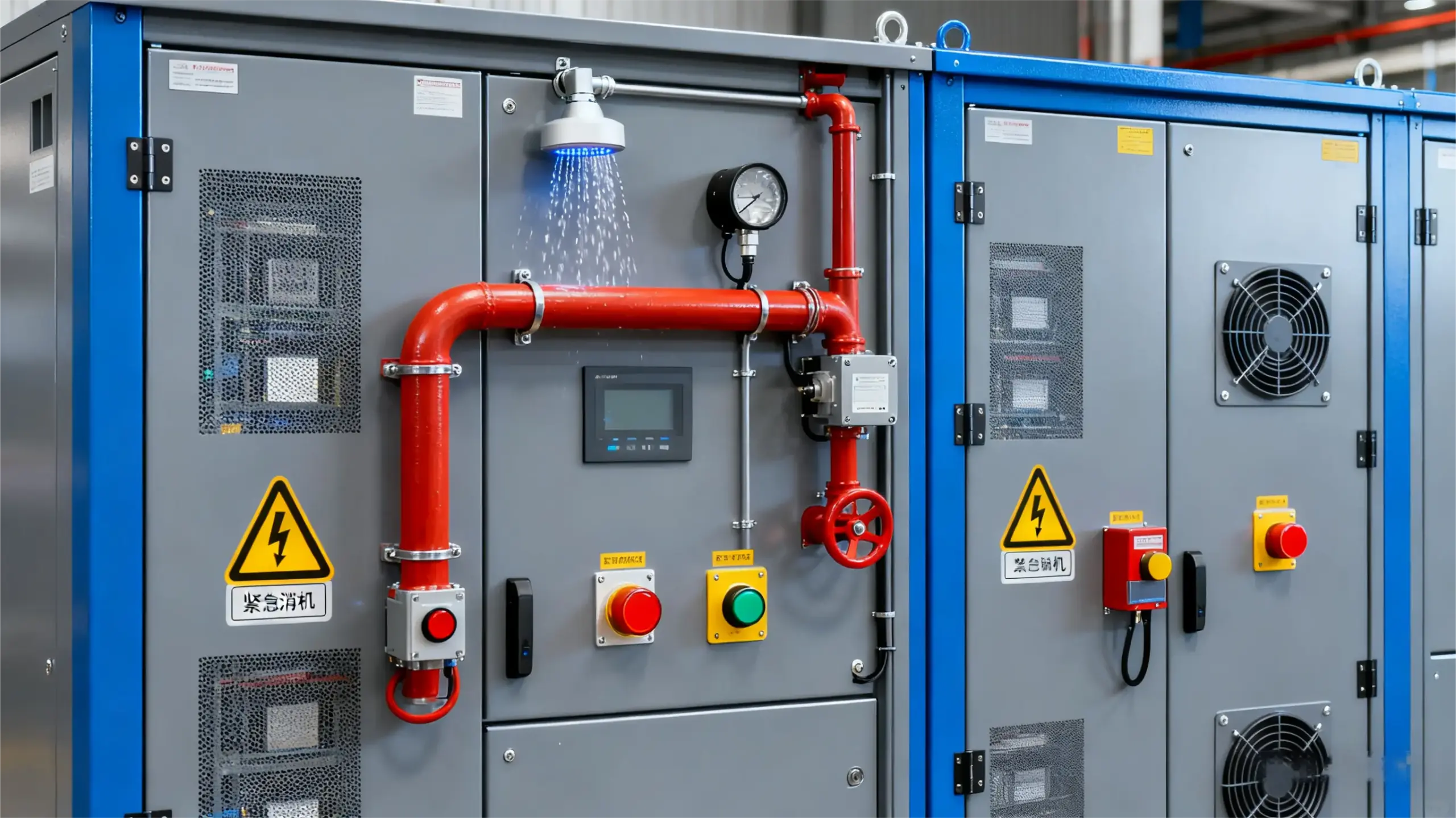
As energy storage systems (ESS) evolve toward higher capacity and energy density, thermal management has become a decisive factor in ensuring system safety, reliability, and long-term performance.
The battery compartment — which houses and protects lithium-ion battery modules — must maintain stable and uniform temperature distribution, achieve efficient heat dissipation, and avoid localized hotspots under both steady and transient load conditions.
Computational Fluid Dynamics (CFD) simulation has become a key engineering tool for analyzing, predicting, and optimizing thermal performance within battery enclosures. By modeling airflow, heat transfer, and material conduction, CFD allows engineers to validate and refine designs virtually, reducing the need for costly trial-and-error prototyping.
This article explores how CFD simulation is applied to optimize the thermal design of battery compartments, focusing on engineering methods, real-world applications, and best practices.
The Role of Thermal Management in Energy Storage Systems
Efficient thermal control plays a vital role in:
Battery safety, by preventing local overheating and thermal runaway.
Performance consistency, by maintaining uniform cell temperatures and ensuring even charge/discharge behavior.
Extended lifespan, by minimizing thermal stress and reducing degradation rates.
System reliability, by ensuring stable operation across different environmental conditions.
In contrast, poor thermal design can lead to uneven temperature distribution, accelerated cell aging, and even safety risks such as venting or fire. CFD simulation provides quantitative insight into these issues, helping engineers design solutions that balance performance, cost, and safety.
What is CFD Simulation?
Computational Fluid Dynamics (CFD) is a numerical approach that simulates how fluids (air, coolant) and heat interact with solid materials inside a system.
In the context of battery compartments, CFD models include:
Heat generation within battery cells, based on electrical load profiles.
Convection and airflow from fans, ducts, or natural ventilation.
Conduction through cell casings, modules, and structural components.
These models are solved using physics-based algorithms that predict temperature fields, flow velocity, and pressure distribution — enabling engineers to evaluate multiple design options virtually and identify the optimal cooling strategy.
CFD Simulation Workflow for Battery Compartment Design
Step 1: Geometry and Meshing
A detailed 3D model of the battery compartment is created, including modules, ducts, heat sinks, and airflow paths. The model is then divided into a computational mesh — fine enough for accuracy but efficient enough for computation.
Step 2: Boundary Conditions
Thermal and fluid boundary conditions are defined, such as:
Ambient and inlet air temperature
Cell heat generation rate
Fan flow rate or coolant velocity
Material properties (thermal conductivity, specific heat, density)
Step 3: Simulation and Solving
The CFD solver (e.g., ANSYS Fluent, STAR-CCM+, COMSOL Multiphysics) calculates airflow, pressure, and temperature distributions throughout the model, accounting for conduction, convection, and radiation.
Step 4: Post-Processing and Analysis
Simulation results include temperature contours, velocity streamlines, and hotspot maps. These insights guide engineers to optimize duct shapes, adjust fan configurations, or modify module layouts for better thermal balance.
CFD-Based Design Optimization Techniques
(1) Air-Cooled Systems
In air-cooled ESS designs, CFD helps engineers optimize duct geometry to ensure uniform airflow and minimize dead zones where hot air accumulates. Adjustments to air inlets, fan speeds, and baffle structures can reduce peak temperature by 5–8°C, improving both reliability and energy efficiency.
(2) Liquid-Cooled Systems
For high-power or containerized ESS, liquid cooling provides superior heat removal. CFD allows engineers to simulate coolant flow distribution, pressure drops, and temperature gradients, enabling design of efficient cooling channels and manifolds. This ensures that each module receives adequate cooling while minimizing pump energy consumption.
(3) Phase-Change Material (PCM) Cooling
CFD can also be used to simulate phase-change materials, which absorb latent heat during operation. These models help predict the melting front and optimize PCM thickness, providing passive thermal regulation without complex mechanical components.
Engineering Benefits of CFD Simulation
The application of CFD simulation brings multiple tangible engineering benefits to ESS thermal design.
First, it improves design accuracy by predicting real-world temperature distribution before any physical prototype is built. Engineers can visualize how heat propagates through the system and identify potential hotspots early in the design phase.
Second, CFD reduces development costs and time. By validating multiple design alternatives virtually, engineers can avoid repetitive trial manufacturing and shorten the iteration cycle. This leads to faster project delivery and better resource utilization.
Third, it enhances system performance by providing deep insights into how airflow, material conductivity, and geometric configurations interact. Through these insights, designers can achieve better cooling uniformity, higher thermal efficiency, and greater system stability.
Fourth, CFD supports safety validation. By simulating extreme scenarios — such as high ambient temperature, fan failure, or high C-rate discharging — engineers can confirm that the system remains within safe operating limits.
In summary, CFD empowers engineers with a data-driven design process, turning complex thermal phenomena into actionable design decisions that improve product safety, reliability, and performance.
Case Example: CFD-Driven Optimization in a 500kWh ESS Project
In a recent FFD POWER industrial ESS project, a 500 kWh containerized system experienced high temperature buildup at the rear battery modules during continuous high-load operation.
Using CFD thermal simulation, engineers identified that airflow distribution in the rear section was insufficient due to non-uniform duct geometry.
After redesigning the air channels and adjusting fan placement, the temperature deviation between modules decreased by 35%, reducing the maximum temperature difference to under 3°C.
The improved design not only stabilized the system under 40°C ambient conditions but also extended module lifespan and ensured safe operation. This case highlights how CFD-driven optimization can prevent costly field issues and improve long-term ESS reliability.
Integration with AI and Digital Twin Technology
Modern engineering workflows now integrate CFD simulation with AI algorithms and digital twin systems to create a closed-loop optimization framework.
CFD provides high-fidelity virtual thermal data.
AI analyzes results and automatically fine-tunes key parameters like duct size, fan speed, or flow distribution.
Digital twins continuously collect data from real-world ESS operations and feed it back into CFD models for ongoing validation.
This integration enables real-time thermal management, predictive maintenance, and autonomous system optimization — advancing the future of intelligent energy storage.
Conclusion
CFD simulation has become an indispensable engineering tool for battery compartment thermal optimization in modern energy storage systems.
By combining physics-based modeling with virtual testing, it allows engineers to design with greater confidence, ensuring:
More uniform temperature control
Higher safety margins
Longer battery lifespan
Lower cost and faster product development
At FFD POWER, CFD simulation is embedded throughout the product development cycle — from conceptual design to final validation — ensuring every ESS solution achieves maximum safety, efficiency, and reliability.