Seamless Power Continuity with Solar Utilization —
Project Overview
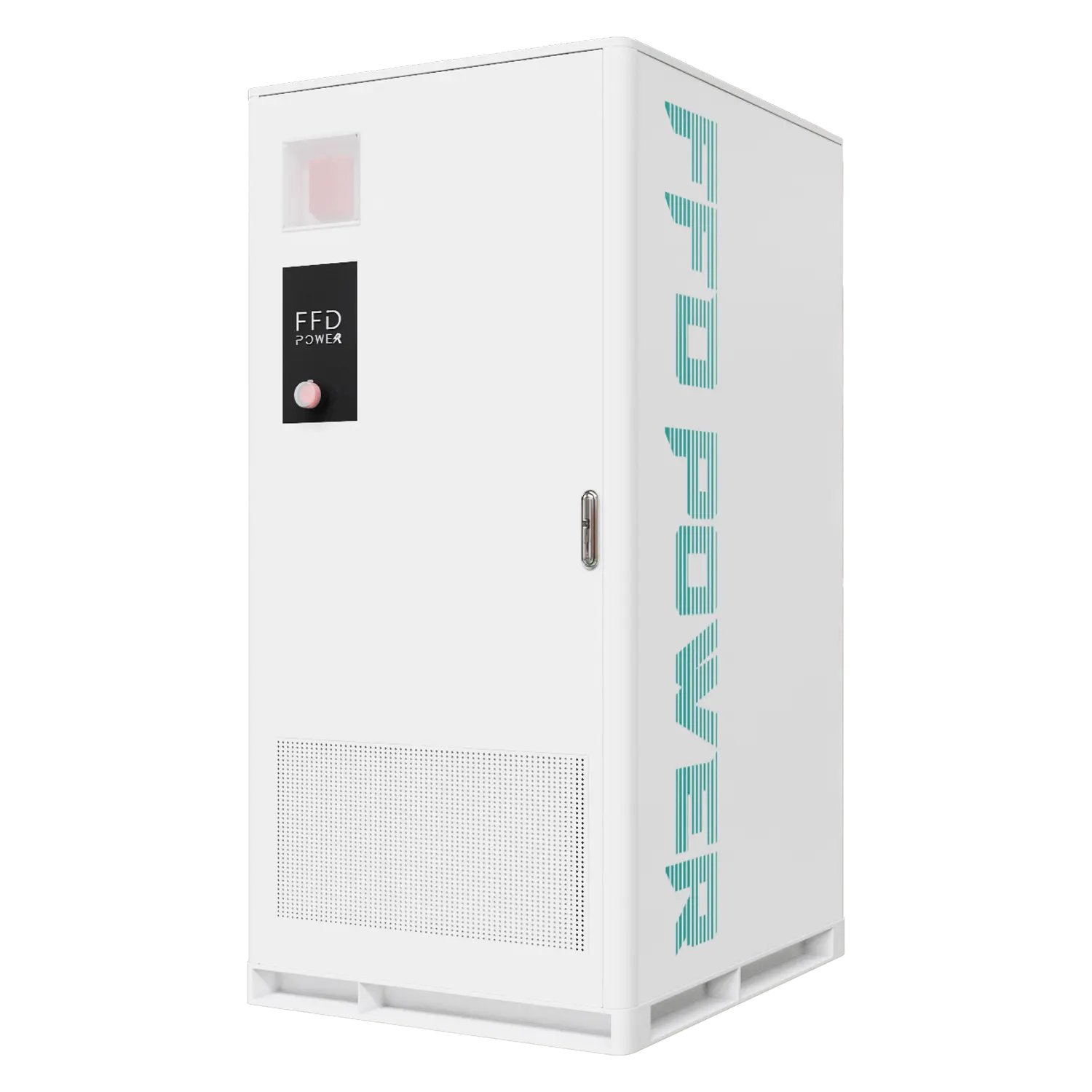
BESS for PV Self-Consumption with STS in Italy demonstrates how a 105kW/215kWh cabinet battery system can increase on-site solar self-use while supporting fast transfer between power sources via an STS. For commercial sites that value both cost reduction and continuity, the BESS time-shifts PV energy and stabilizes load profiles, while the STS enables near-instant source transfer during disturbances. The EMS coordinates PV-priority charging, backup reserve management, and transfer-ready operating states to keep critical loads supported without sacrificing daily energy savings.
Project Background
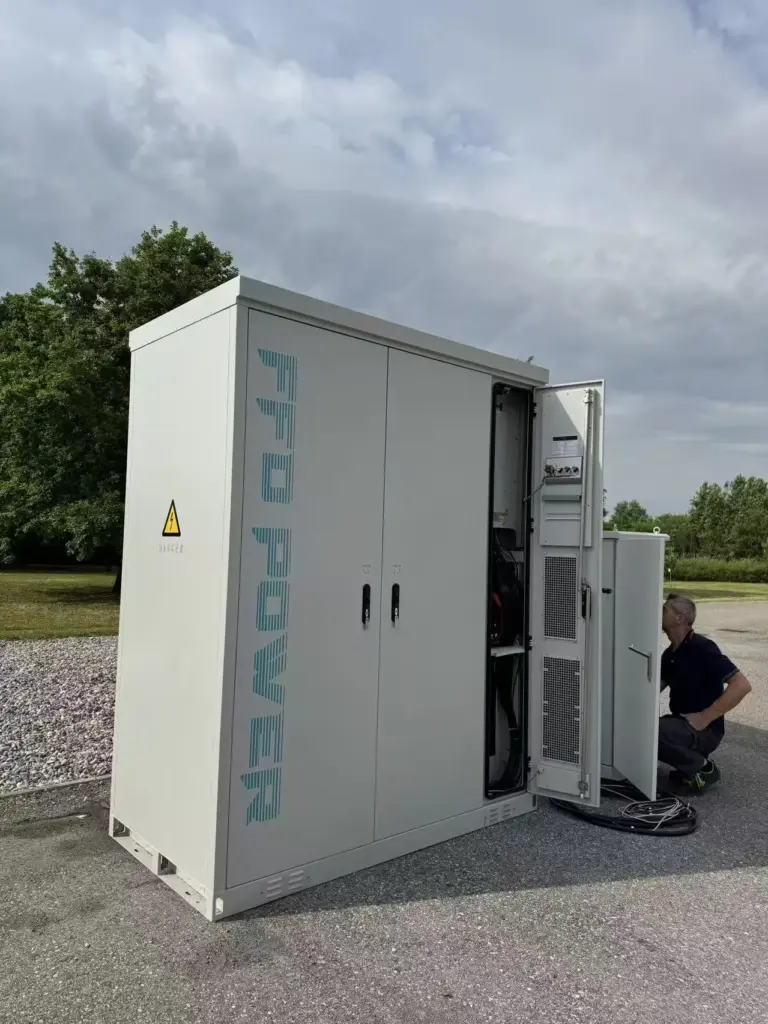
Across Italy, many commercial and light-industrial sites are adding rooftop PV to offset rising electricity costs. However, PV alone cannot guarantee continuity during upstream disturbances or source switching events. A BESS combined with an STS provides a practical hybrid: it maximizes PV self-consumption in normal operation, and can maintain critical loads through fast source transfer events by ensuring the battery is in a ready state. This project deploys a compact cabinet system to deliver both operational savings and higher power quality resilience.
Project Challenge
- Dual Objectives (Savings + Continuity): Maximize PV self-consumption while preserving SOC reserve for transfer/backup readiness.
- Transfer-Ready Control: Keep the PCS/BESS in a stable operating state so the STS can perform fast source transfers without nuisance trips.
- Site Power Quality Variability: Handle load steps and grid disturbances with controlled ramping and protection coordination across PV, BESS, and STS.
FFD POWER Solution
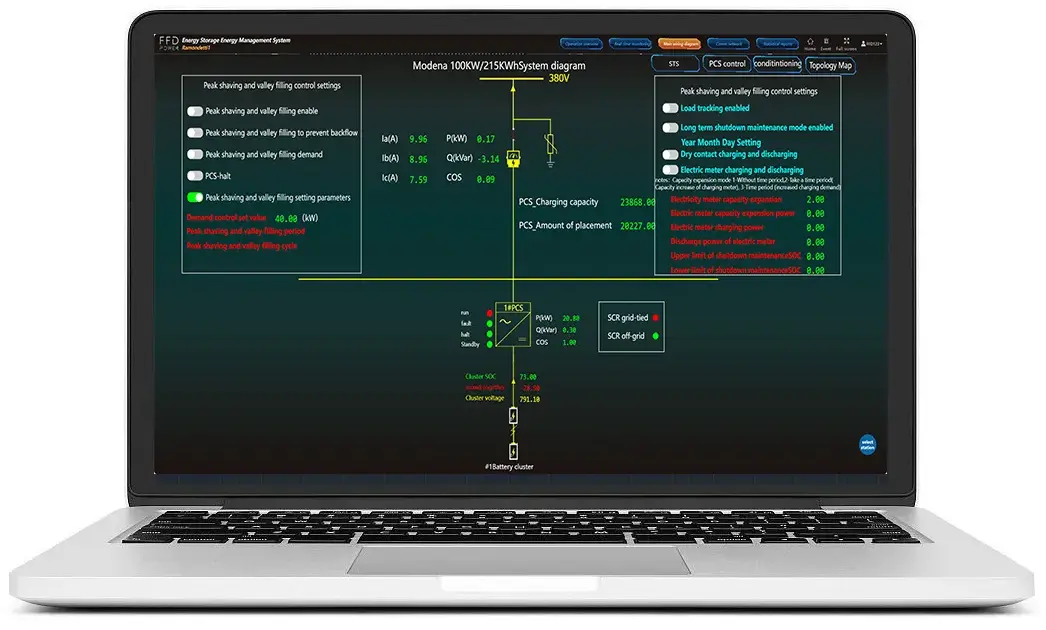
FFD POWER delivered a 105kW/215kWh all-in-one BESS cabinet integrated into a PV + STS architecture. The EMS prioritizes PV charging to store surplus solar energy and reduce grid import, while enforcing a reserve policy that guarantees minimum SOC for continuity needs. During abnormal grid conditions or transfer events, the system shifts to a transfer-ready mode with tightened ramp limits and protection coordination, ensuring stable operation and rapid recovery.
System Specifications
- BESS POWER : 105 KW
- BESS capacity : 215 KWH
- Product used : Galaxy 215 Cabinet-type all-in-one BESS
- Application : PV self-consumption + STS-supported continuity
- Architecture: EMS with PV priority + reserve SOC + transfer-ready mode (STS coordination)
Operational Logic: PV Self-Use + Reserve + STS Coordination
The EMS logic balances daily savings with continuity requirements by managing SOC and operating states:
- PV-Priority Charging: charges from PV surplus to reduce export and maximize on-site utilization, within SOC and power limits
- Reserve SOC Policy: maintains a minimum SOC threshold dedicated to continuity/transfer support; limits discretionary discharge when reserve is at risk.
- Transfer-Ready Mode: on grid disturbance or STS transfer command, applies fast stabilization (ramp limits, setpoint freeze/hold-last-safe) and ensures PCS stays synchronized and protected during the transfer window.