News
Active vs Passive Balancing: Which BMS Is Right for Your Energy Storage System?
- October 29, 2025
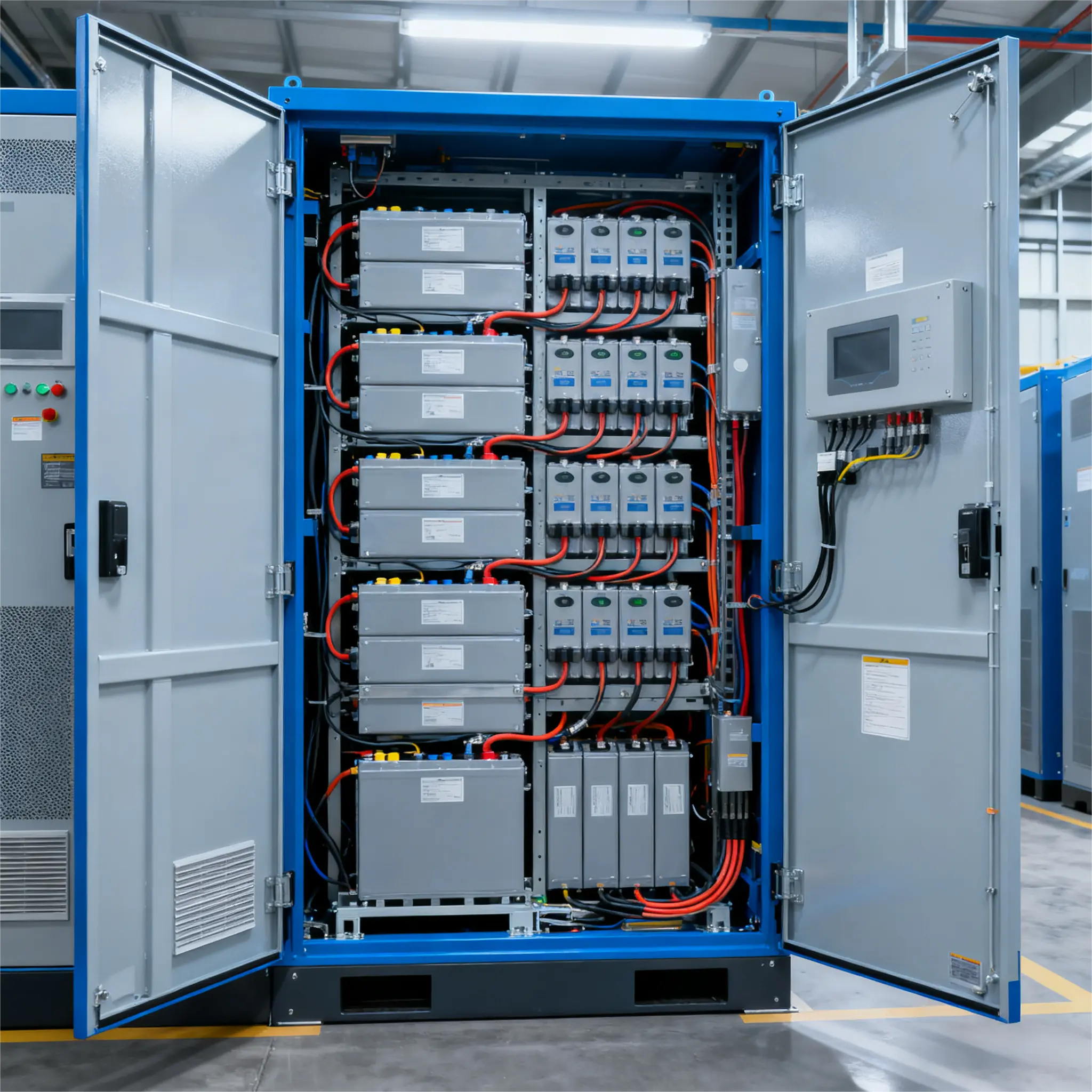
In modern Energy Storage Systems (ESS), the Battery Management System (BMS) is the intelligent brain that ensures every cell operates safely, efficiently, and consistently.
One of the most critical functions of a BMS is cell balancing — maintaining equal voltage across all cells to prevent overcharging or undercharging.
Two main balancing strategies exist: Passive Balancing and Active Balancing.
Understanding their technical differences and best-fit applications is key to designing an efficient, reliable ESS.
What is Cycle Life in Energy Storage?
Even cells produced in the same batch will naturally differ slightly in capacity, internal resistance, and self-discharge rate.
Over time, these variations cause voltage drift, meaning some cells reach full charge earlier or discharge faster than others.
Without proper balancing, this can result in:
Reduced usable capacity
Lower system efficiency
Shortened battery lifespan
Higher risk of overheating or failure
Cell balancing corrects these imbalances, ensuring consistent performance, safety, and longevity across the entire battery pack.
Passive Balancing Explained
Passive balancing is the most widely used and cost-effective method in many residential and commercial ESS.
When a cell reaches full voltage earlier than others, the BMS dissipates the excess energy as heat using resistors.
In essence, it “bleeds off” energy from higher-voltage cells until they match the lower ones.
Key Characteristics:
Uses resistors to release extra energy as heat
Efficiency typically around 70–80%
Simple, low-cost, and easy to implement
Requires thermal design to handle heat dissipation
Advantages:
Proven, reliable, and cost-effective
Easier to maintain and service
Ideal for small-scale systems and stable applications
Limitations:
Wastes energy as heat
Balancing speed is slower
Less efficient for large or high-power systems
Active Balancing Explained
Active balancing uses a more sophisticated approach.
Instead of wasting excess energy, the system transfers charge from higher-voltage cells to lower-voltage cells via inductors, capacitors, or DC-DC converters.
This makes it far more efficient and suitable for larger, high-energy systems.
Key Characteristics:
Transfers charge between cells or modules
Efficiency up to 95–98%
Faster balancing with minimal energy waste
More complex and costly circuit design
Advantages:
High efficiency and better energy utilization
Extends battery lifespan and improves SOH consistency
Ideal for high-capacity, high-voltage, or grid-scale ESS
Limitations:
Higher cost and complexity
Requires advanced control algorithms and precise calibration
Technical Comparison: Active vs Passive Balancing
When comparing active and passive balancing, the main differences lie in how energy is managed, the system’s efficiency, and overall complexity.
In passive balancing, extra energy from higher-voltage cells is dissipated as heat through resistors. This makes it simple and affordable but less efficient, typically achieving about 70–80% efficiency. The process is slower and produces more heat, requiring effective thermal design. This method is well-suited for smaller systems where cost, simplicity, and reliability are the main priorities.
By contrast, active balancing transfers energy directly from cells with higher voltage to those with lower voltage. This approach conserves energy and significantly improves efficiency — often reaching up to 98%. It also balances cells faster and more precisely, improving performance and extending battery life. However, it involves more complex circuits, advanced control systems, and higher upfront costs.
From a technical perspective, passive balancing is simple, affordable, and easy to maintain — ideal for residential or small commercial systems.
Active balancing, on the other hand, offers higher efficiency and performance consistency, making it better suited for industrial, utility-scale, and high-voltage systems.
In summary, the trade-off comes down to cost versus efficiency:
Passive balancing provides simplicity and reliability at a lower cost.
Active balancing delivers maximum efficiency, longer battery life, and better system optimization.
Choosing the Right BMS for Your System
The right balancing strategy depends on your system scale, application type, efficiency goals, and budget.
Choose Passive Balancing if:
You operate residential or small commercial systems
You value cost efficiency and simplicity
You want an easy-to-maintain system
Choose Active Balancing if:
You manage industrial, large-scale, or high-voltage ESS
You aim for maximum efficiency and battery longevity
Your system experiences frequent charge/discharge cycles
In simple terms:
Passive = Simplicity and Affordability
Active = Efficiency and Longevity
The Role of AI in Modern BMS Balancing
At FFD POWER, our advanced BMS solutions go beyond conventional balancing.
We integrate AI-powered algorithms that analyze cell behavior, temperature gradients, and degradation patterns in real time.
This enables predictive balancing, where the system anticipates imbalance before it occurs — reducing stress on cells and improving overall safety and efficiency.
The AI-driven BMS works seamlessly with our Energy Management System (EMS) to optimize:
Balancing strategy (active/passive hybrid)
Energy flow and load distribution
Thermal management and fault prevention
Long-term SOH and RUL prediction
Future Trends: Hybrid Balancing Systems
The next evolution of BMS technology is hybrid balancing, combining the strengths of both methods.
These systems use passive balancing during low-demand periods and switch to active balancing under high-load or fast-charging conditions.
Hybrid designs provide:
Optimized energy performance across all load levels
Reduced thermal losses
Improved cost-effectiveness compared to fully active systems
FFD POWER’s next-generation Galaxy BMS platform utilizes this hybrid balancing approach — delivering the perfect balance between efficiency, safety, and performance.
Conclusion
The choice between active and passive balancing is not just about technology — it’s about aligning your BMS strategy with your project’s performance, safety, and economic goals.
Passive balancing offers simplicity and low cost for smaller applications, while active balancing provides superior efficiency and battery health for large-scale or high-performance ESS.
By integrating AI-enhanced balancing intelligence, FFDPOWER ensures your system achieves the highest standards of safety, efficiency, and reliability — unlocking the full potential of modern energy storage.