News
A Complete Guide to Choosing Between High-Voltage (1500V) and Low-Voltage (750V) Energy Storage Systems
- December 6, 2025
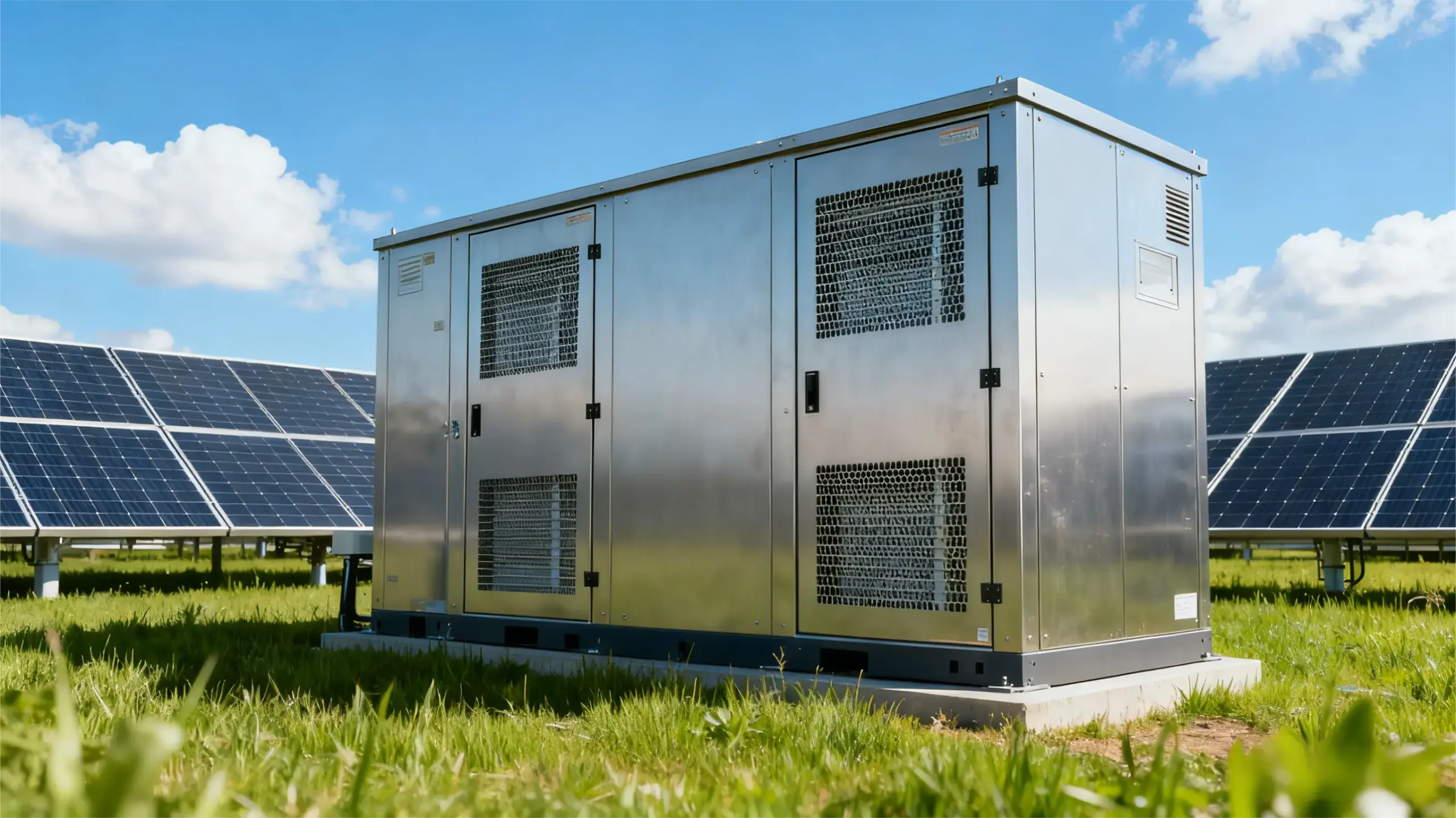
As energy storage systems (ESS) are deployed at a rapidly increasing scale—from commercial facilities to large utility plants—the choice of system voltage has become a critical design factor. Selecting between a 1500V high-voltage system and a 750V low-voltage system directly influences system efficiency, cost, safety, and long-term performance.
This article provides a deep technical comparison to help developers, EPCs, and end-users make informed decisions.
Why System Voltage Matters
System voltage determines key characteristics of an ESS, including efficiency, conductor size, thermal behavior, system layout, component selection, and overall CAPEX and OPEX. Higher voltage means lower current for the same power output, which improves efficiency and reduces losses. Lower voltage systems, however, typically offer easier handling, higher safety margins, and simpler maintenance.
Understanding 1500V High-Voltage Energy Storage Systems
A 1500V DC ESS has become the mainstream architecture for utility-scale and large industrial energy storage, especially in solar-plus-storage projects. This trend reflects the industry’s shift toward higher efficiency and reduced system cost.
Advantages of 1500V Systems
Higher Efficiency:
Lower current reduces I²R losses, improving both charge/discharge efficiency and overall thermal performance.
Lower Balance-of-System Costs:
Cables, connectors, and protection devices can be smaller because they carry less current. Fewer PCS units are typically required for the same power output.
Higher Energy Density & Fewer Parallel Branches:
More battery cells can be connected in series, simplifying system architecture and improving reliability.
Ideal for Large Installations:
1500V systems are most suitable for projects ranging from multi-megawatt to gigawatt scale, where efficiency and space utilization are critical.
Better Compatibility With Modern PCS:
Most advanced PCS platforms now support 1500V DC buses, enabling higher performance and grid flexibility.
Limitations of 1500V Systems
Requires enhanced insulation, clearance, and creepage distance.
More complex safety engineering (e.g., arc flash mitigation).
Higher component cost per device (switchgear, fuses, contactors).
Maintenance requires more expertise and higher safety protocols.
1500V systems deliver strong performance but demand stronger engineering capability across equipment design and on-site operation.
Understanding 750V Low-Voltage Energy Storage Systems
A 750V DC ESS is traditionally used in commercial and industrial (C&I) applications. It focuses on safety, flexibility, and ease of integration.
Advantages of 750V Systems
Higher Safety:
Lower voltage significantly reduces arc and shock risk. Insulation and clearance requirements are simpler, making the system easier to install and maintain.
Greater Deployment Flexibility:
More suitable for indoor environments, buildings with space constraints, and retrofitted electrical infrastructure.
Lower Component Cost:
Most low-voltage switchgear and protection devices are widely available and cheaper.
Ideal for Small to Medium ESS:
Factory microgrids, backup systems, and EV charging hubs often adopt 750V for simplicity and safety.
Limitations of 750V Systems
Higher current leads to higher power losses.
Cables and busbars must be larger, increasing installation cost.
Thermal management becomes more challenging.
Less efficient and less suitable for high-power or large-scale systems.
750V systems are safer and more user-friendly but not the most cost-effective option for large-scale projects.
1500V vs. 750V: A Technical Comparison (Narrative Format)
In terms of efficiency, 1500V systems clearly outperform 750V systems due to significantly lower current, which reduces resistive losses. This also helps maintain lower temperatures during heavy cycling.
Considering safety, 750V systems have the advantage because the lower voltage inherently reduces the risk of electric shock and arc flash events. This simplifies installation and field maintenance procedures.
From a cost perspective, 1500V systems typically offer lower total BOS cost because they require fewer and smaller cables, fewer PCS units, and simpler overall system architecture. However, individual components—such as breakers and contactors—tend to be more expensive due to higher voltage ratings.
In terms of system complexity, 750V systems are easier to engineer, install, and operate, making them ideal for C&I customers with limited technical resources. Meanwhile, 1500V systems require more advanced engineering but deliver superior scalability and performance.
For PCS compatibility, modern high-voltage PCS platforms favor 1500V, while 750V remains common in C&I inverters.
In summary, 1500V excels in efficiency, scalability, and cost at utility scale, while 750V stands out in safety and deployment flexibility for medium-scale applications.
Choosing the Right Voltage for Your Application
When to Choose 1500V
Select a 1500V ESS if your project involves:
Utility-scale or large industrial installations
PV+ESS hybrid systems
Frequency regulation or grid support
High power output with space constraints
A focus on long-term operational efficiency
This voltage level is best for solar farms, wind farms, large industrial parks, and grid-connected storage stations.
When to Choose 750V
Choose a 750V ESS if your project requires:
High safety standards
Indoor deployment
Microgrid or backup applications
Medium-scale C&I loads
Lower installation and maintenance complexity
This voltage level is ideal for factories, data centers, hospitals, commercial buildings, and community microgrids.
Industry Trends and Future Outlook
The global ESS market is shifting rapidly toward 1500V systems for utility-scale applications due to their efficiency and cost effectiveness. Meanwhile, the 750V architecture will continue to dominate C&I deployments, where safety and flexibility are more important.
Battery manufacturers now offer optimized cell grouping for both voltage levels, ensuring reliability across various applications.
Conclusion
Choosing between a 1500V high-voltage system and a 750V low-voltage system is a strategic decision that influences the overall performance, safety, cost, and longevity of an energy storage project.
1500V provides higher efficiency, lower BOS cost, and is ideal for large-scale installations.
750V delivers simpler engineering, higher safety, and is best suited for commercial and medium-sized systems.
A correctly selected voltage level ensures optimal efficiency, safer operation, and maximum return on investment over the ESS lifecycle.