Fast Frequency Response with Local EMS Control in Norway
Project Overview
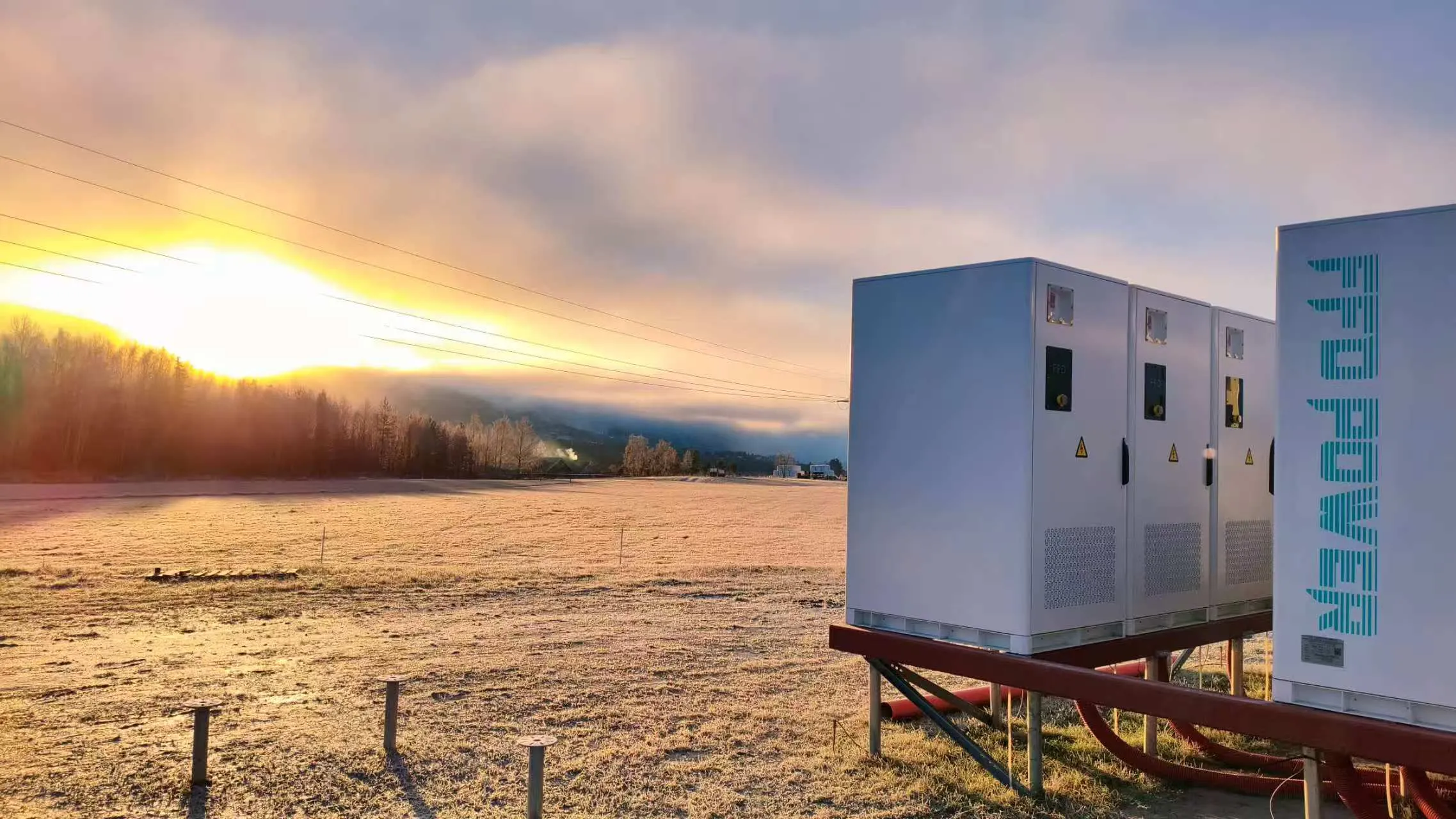
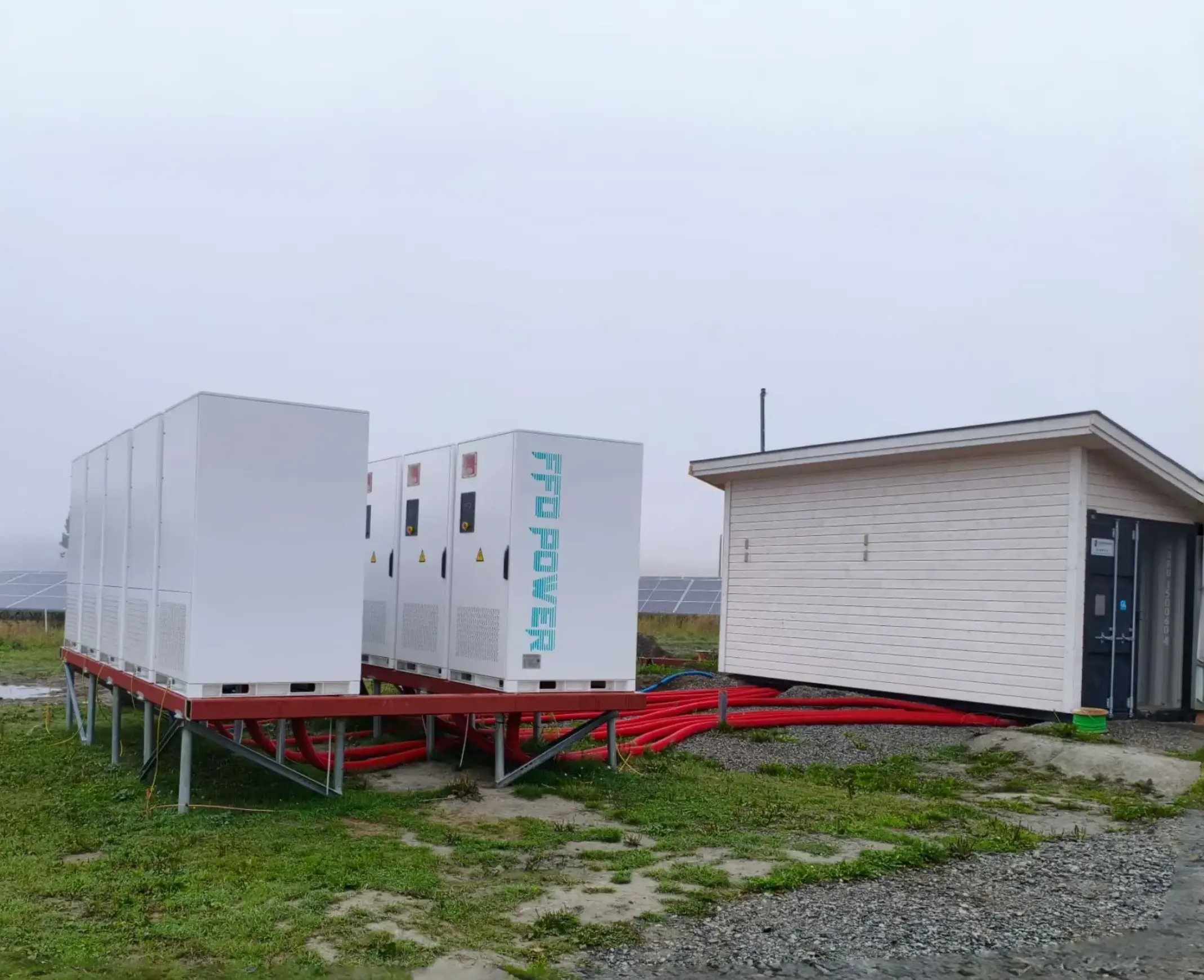
In response to the Nordic region’s high renewable energy penetration and the growing need for fast frequency support to maintain grid stability, FFD POWER deployed a 1.25MW/2.61MWh BESS project in Norway. This project demonstrates how Cabinet BESS can deliver FCR services while integrating on-site PV charging under local EMS control. Built for low-temperature operation and verified with fast response, the system supports grid frequency stability and enables flexible energy management for additional value stacking.
Project Background
In Norway, frequency containment reserves (FCR) require fast and reliable active power response to support grid stability. At the same time, many distributed energy projects are increasingly co-located with PV, creating opportunities to charge storage with renewable energy. For sites in cold climates, stable operation at low ambient temperature and robust control integration with the customer’s local EMS are critical to ensure compliance, performance, and long-term availability.
Project Challenge
- Local EMS Integration: The system must be dispatched by the customer’s local EMS through open communication protocols.
- Low-Temperature Operation: Reliable operation is required under cold-weather conditions
- Fast FCR Response: The project targets sub-second response (200ms, verified in testing).
FFD POWER Solution
FFD POWER delivered a grid-side BESS designed for FCR operation with PV-assisted charging and flexible value stacking. The system interfaces with the customer’s local EMS through Modbus TCP/IP, enabling external setpoint dispatch and coordinated control of charge/discharge. PV energy is used to charge the battery when available; when PV is unavailable, the EMS can schedule charging during low-price grid periods and reserve part of the energy for peak–valley price arbitrage, subject to local regulatory and site constraints.
System Specifications
- PV installed : On-site PV for battery charging
- BESS POWER : 1.25 MW
- BESS Capacity : 2.61 MWH
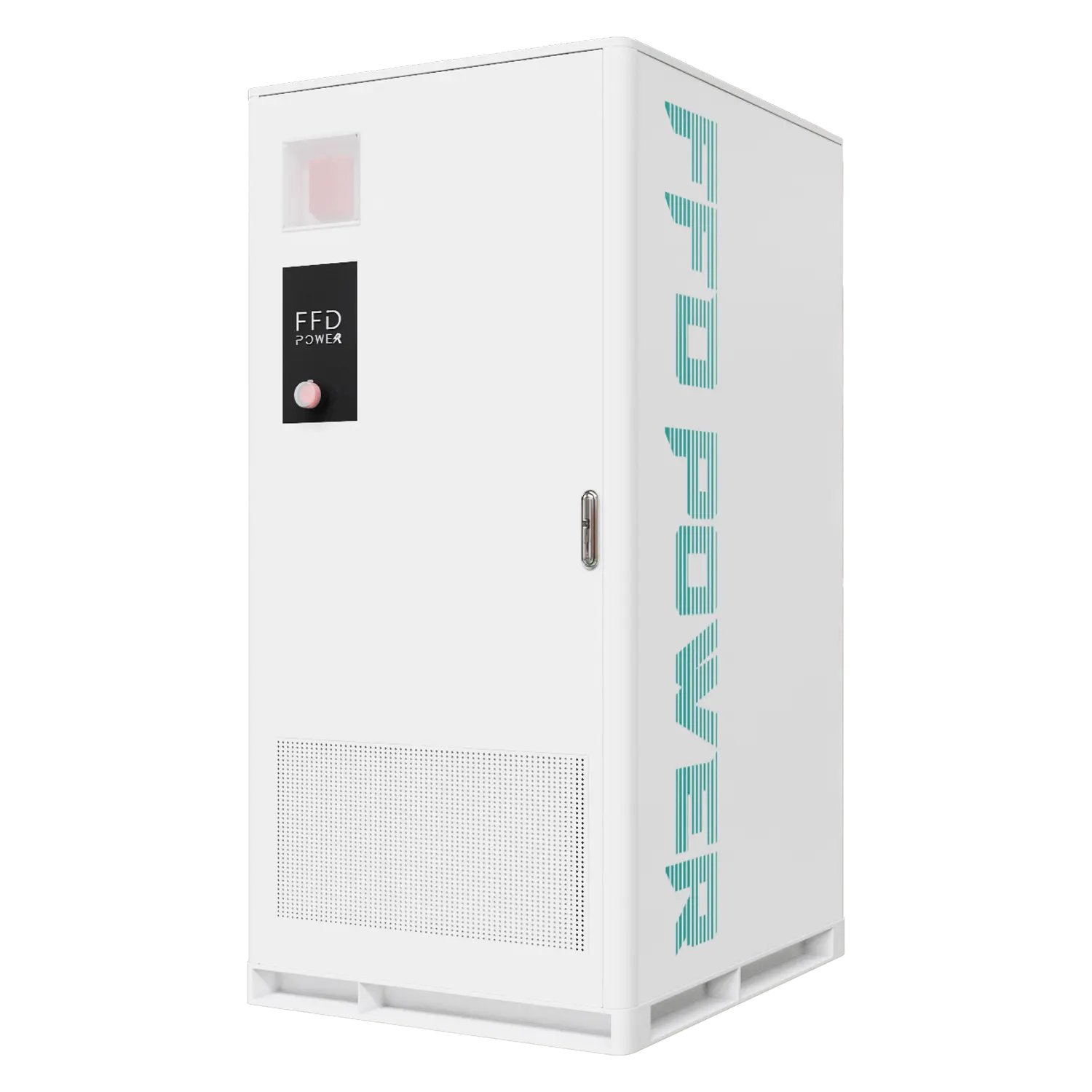
- Product used : Galaxy 261L-AIO -2H * 10
- Architecture: Grid-side BESS for FCR with PV Charging and Local EMS Dispatch (Modbus TCP/IP)
Operational Logic: FCR Delivery with PV-Assisted Charging
The system is operated by the customer’s local EMS, which coordinates FCR dispatch and energy management:
- Local EMS Control via Modbus TCP/IP: The local EMS communicates with the FFD POWER EMS using Modbus TCP/IP to send power setpoints and manage operating modes, ensuring the site retains centralized control of charging and discharging.
- FCR Response Performance: The PCS executes active power response for frequency regulation with sub-second performance. The project specification requires 400ms response, and on-site testing achieved response time within 200ms, providing strong support for FCR participation.
- PV & Market-Optimized Charging: PV charges the battery whenever available. When PV output is insufficient, the EMS can charge during low-price periods and reserve energy for peak–valley arbitrage while maintaining the required state-of-charge window for FCR availability.