Grid-Forming vs Grid-Following PCS: What Project Owners Should Know
As energy storage systems (ESS) become a core asset in commercial, industrial, and utility-scale power systems, Power Conversion Systems (PCS) are no longer viewed as simple DC/AC converters. Instead, they are now recognized as the control center that determines how an energy storage system interacts with the grid, with on-site loads, and with other distributed energy resources (DERs).
One of the most important — and often misunderstood — distinctions in modern PCS technology is the difference between Grid-Following and Grid-Forming control architectures.
For project owners, EPCs, and investors, understanding this difference is critical. The choice between Grid-Following and Grid-Forming PCS directly impacts system stability, resilience, scalability, compliance, and long-term return on investment (ROI).
This article provides a practical, project-owner-oriented explanation of Grid-Forming vs Grid-Following PCS, explaining how they work, where each is best applied, and what decision-makers should consider when selecting a PCS for real-world energy storage projects.
What Is a Power Conversion System (PCS)?
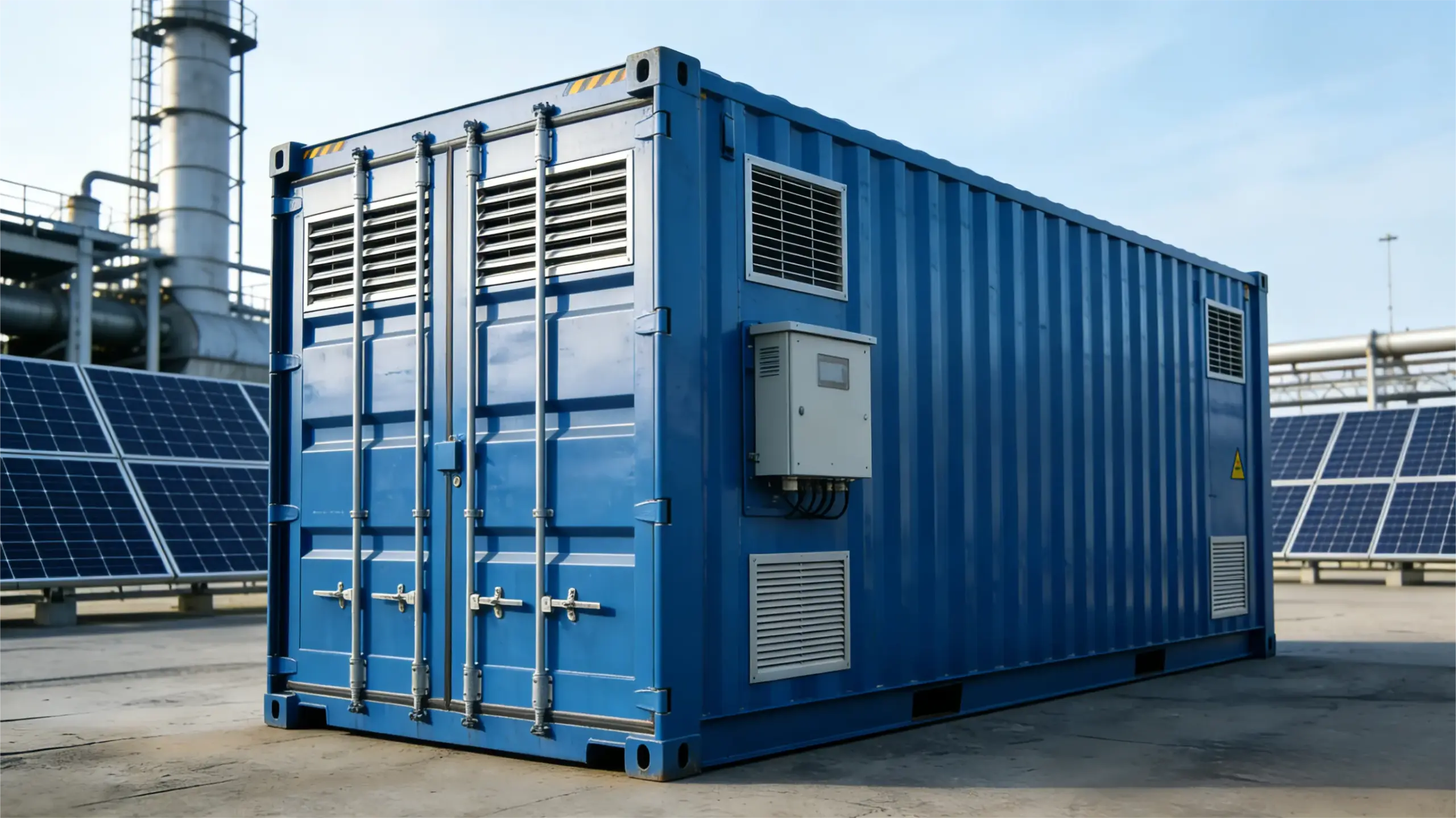
A PCS is the interface between the battery system (DC side) and the electrical grid or load (AC side). Beyond basic power conversion, a modern PCS is responsible for:
Active and reactive power control
Voltage and frequency regulation
Grid synchronization
Power quality management
Seamless mode switching (on-grid / off-grid / hybrid)
System-level stability in multi-source environments
The control philosophy used by the PCS determines whether it behaves as Grid-Following or Grid-Forming.
What Is Grid-Following PCS?
Definition
A Grid-Following PCS operates by synchronizing itself to an existing grid voltage and frequency. It measures the grid parameters and injects current accordingly.
In simple terms:
Grid-Following PCS needs a strong grid to operate correctly.
It assumes that voltage and frequency are already established by the utility grid or another grid-forming source (such as a synchronous generator).
How Grid-Following Control Works
Grid-Following PCS typically uses a Phase-Locked Loop (PLL) to track grid voltage and frequency. Once synchronized, it controls:
Active power (kW) output
Reactive power (kVar) support
However, it does not independently regulate system voltage or frequency.
Typical Applications of Grid-Following PCS
Grid-Following PCS is widely used in:
Grid-connected C&I energy storage systems
Peak shaving and energy arbitrage projects
Solar + storage systems connected to a strong utility grid
Applications where the grid is always present
Advantages of Grid-Following PCS
Mature and widely deployed technology
Lower system complexity
Cost-effective for pure on-grid applications
Well understood by utilities and EPCs
Limitations of Grid-Following PCS
Cannot operate without an existing grid
Limited capability during weak-grid conditions
No black-start capability
Not suitable for islanded or fully off-grid systems
For projects requiring high resilience or grid independence, these limitations become critical.
What Is Grid-Forming PCS?
Definition
A Grid-Forming PCS actively creates and regulates voltage and frequency. Instead of following the grid, it behaves like a virtual power source, similar to a synchronous generator.
In simple terms:
Virtual Synchronous Generator (VSG)
How Grid-Forming Control Works
Grid-Forming PCS uses advanced control algorithms such as:
Virtual Synchronous Generator (VSG)
Droop control
Virtual inertia control
These allow the PCS to:
Establish system voltage and frequency
Share load dynamically with other sources
Maintain stability under sudden load changes
Support black-start and islanded operation
Typical Applications of Grid-Forming PCS
Grid-Forming PCS is increasingly used in:
In simple terms:
Virtual Synchronous Generator (VSG)
These allow the PCS to:
Grid-Forming vs Grid-Following: Key Differences
Instead of comparing Grid-Forming and Grid-Following PCS only from a technical perspective, project owners should understand how their differences translate into real operational outcomes.
A Grid-Following PCS depends entirely on an existing grid to define voltage and frequency. It injects power based on what the grid provides, but it does not take responsibility for stabilizing the system. As a result, its performance is closely tied to grid strength and quality. In strong, stable grids, this approach works well and is cost-effective. In weak or unstable grids, however, performance can degrade significantly.
A Grid-Forming PCS, by contrast, actively establishes and regulates voltage and frequency. It behaves as a voltage source rather than a current source, allowing it to maintain system stability even when the utility grid is unavailable or unreliable. This capability enables black-start operation, seamless islanding, and reliable off-grid or hybrid operation.
From a project owner’s perspective, the key distinction is responsibility: Grid-Following PCS assumes the grid is stable, while Grid-Forming PCS takes responsibility for stability itself.
Why This Choice Matters for Project Owners
1. System Resilience and Reliability
If grid outages, voltage fluctuations, or unstable networks are a concern, Grid-Forming PCS provides significantly higher resilience.
2. Future Grid Requirements
As grids evolve toward higher renewable penetration, utilities increasingly require grid-supporting and grid-forming capabilities from DERs.
Choosing Grid-Forming PCS today can reduce future retrofit costs.
3. Microgrid and Hybrid Operation
For projects that may transition from grid-connected to islanded operation — even temporarily — Grid-Forming PCS is essential.
4. ROI and Lifecycle Value
While Grid-Forming PCS may involve higher upfront investment, it often delivers:
Higher system availability
Fewer operational constraints
Broader revenue opportunities
Lower long-term system risk
This translates directly into improved lifecycle ROI.
Can Grid-Following and Grid-Forming PCS Coexist?
Yes. In advanced energy storage systems, hybrid architectures are increasingly common:
Grid-Forming PCS establishes voltage and frequency
Grid-Following PCS optimizes power dispatch
A well-designed EMS coordinates both control modes to maximize performance, stability, and economic returns.
Key Questions Project Owners Should Ask PCS Suppliers
Before selecting a PCS, project owners should ask:
Can the PCS support Grid-Forming operation?
Is seamless transition between grid-connected and islanded modes supported?
How does the PCS perform under weak-grid conditions?
What control algorithms are used (VSG, droop, inertia)?
How does PCS selection impact system safety and ROI?
Conclusion
The choice between Grid-Following and Grid-Forming PCS is no longer a purely technical detail — it is a strategic decision that affects system resilience, flexibility, compliance, and financial performance.
For traditional, purely on-grid applications, Grid-Following PCS may still be sufficient. However, for projects that demand resilience, scalability, and future readiness, Grid-Forming PCS is rapidly becoming the preferred choice.
Project owners who understand this distinction — and design accordingly — will be better positioned to maximize the long-term value of their energy storage investments.