
News
The Role of the SEI Layer in Energy Storage Batteries: Balancing Stability, Impedance, and Cycle Life
- November 25, 2025
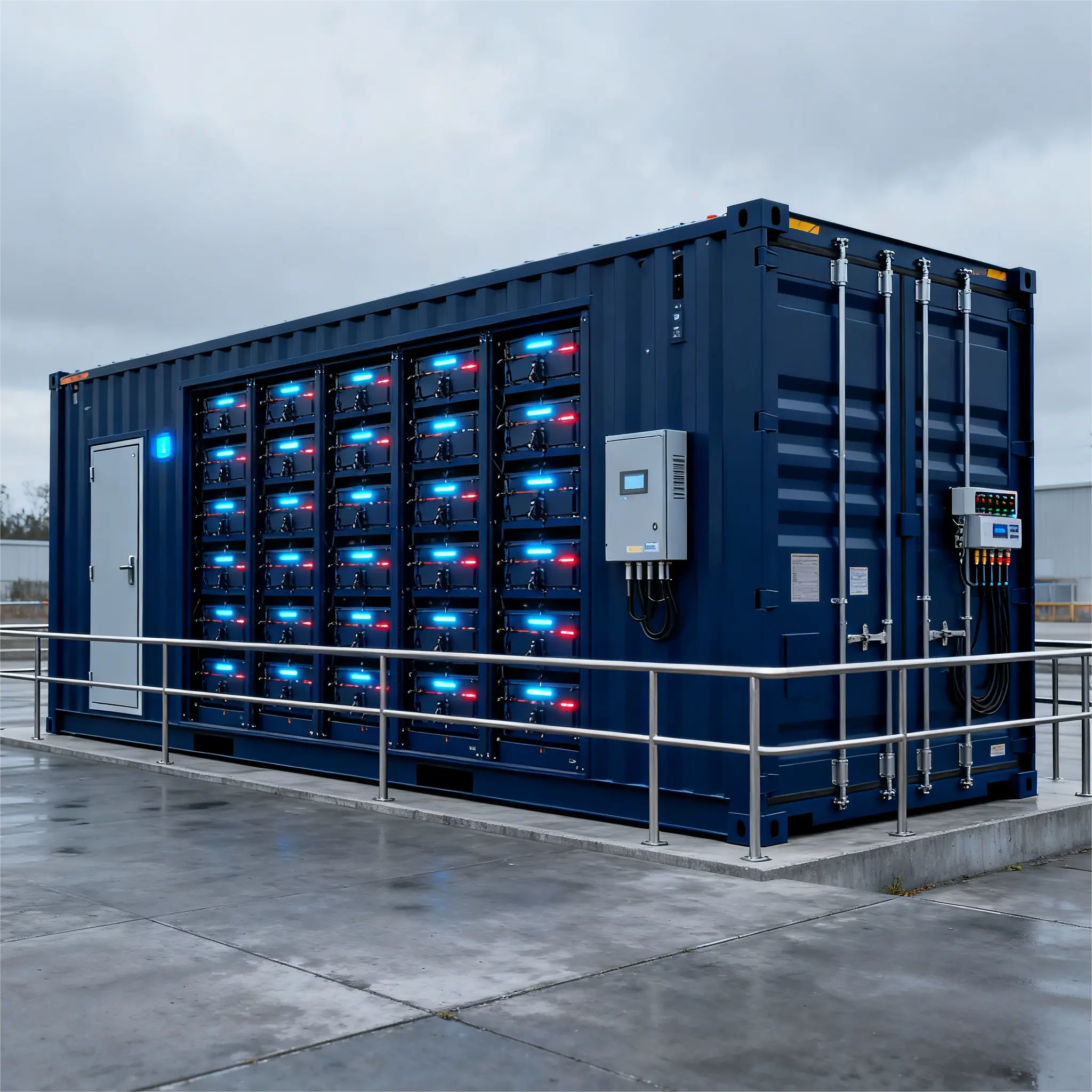
The Solid Electrolyte Interphase (SEI) layer is one of the most critical yet least visible components inside modern lithium-ion and lithium-iron-phosphate (LFP) energy storage batteries. Although microscopic in size, the SEI directly influences battery safety, longevity, coulombic efficiency, rate capability, and thermal stability.
For energy storage systems (ESS)—including industrial, commercial, and grid-scale applications—the performance of the SEI layer often determines the system’s real-world economic value. Understanding how the SEI forms, behaves, and degrades is essential for designing longer-lasting, safer, and more reliable batteries.
What Is the SEI Layer?
The SEI layer is a thin, passivating film that forms on the anode surface during the initial charge cycles. It results from electrolyte decomposition and reduction reactions at the electrode–electrolyte interface.
Despite being a by-product of decomposition, the SEI layer is beneficial and absolutely necessary for battery operation. A stable SEI enables the battery to function normally by preventing continuous electrolyte breakdown, protecting the anode materials, and regulating ion transport.
Why the SEI Layer Is Important for Energy Storage Batteries
A well-formed SEI layer provides three essential functions:
1. Stability and Protection
A stable SEI layer prevents further electrolyte decomposition while protecting the anode from excessive side reactions. This protection is crucial for:
preventing uncontrolled heat generation,
ensuring long-term cycle stability,
maintaining safe battery operation.
In ESS applications that operate with high cycle frequency or large depth of discharge (DoD), the SEI’s stability is directly tied to system lifespan and overall safety.
2. Regulating Lithium-Ion Transport
The SEI must maintain selective permeability:
allowing Li⁺ ions to pass through,
blocking electrons and electrolyte molecules.
A high-quality SEI ensures smooth ion transport with minimal losses. Poor SEI formation leads to:
higher internal resistance,
slower charge–discharge response,
increased heat generation,
reduced power capability.
3. Minimizing Capacity Loss
Every time SEI regenerates or thickens, it consumes active lithium. This leads to:
reduced initial capacity,
faster capacity fade,
worse aging performance.
In large-scale ESS, even small improvements in SEI stability can result in significant real-world gains in usable capacity over thousands of cycles.
How the SEI Layer Forms
The SEI is primarily formed during the initial formation cycles at the factory. Key contributors include:
decomposition of organic carbonate electrolytes,
reactions with lithium salts (e.g., LiPF₆),
additives such as FEC, VC, and PS that promote stable SEI formation,
properties of the anode material (graphite, LTO, silicon–graphite blends).
Optimal formation protocols—controlled current, voltage, and temperature—are designed to create a uniform, resilient, and chemically stable SEI layer.
The Balance Between Stability, Impedance, and Cycle Life
The SEI layer involves several competing engineering goals:
1. Thicker SEI → Greater Stability but Higher Impedance
A thicker SEI increases mechanical strength and stability but:
increases internal resistance,
reduces rate performance,
increases heat during high-power operation.
2. Thinner SEI → Lower Impedance but Reduced Protection
A thinner SEI enables:
faster lithium-ion transport,
better charge/discharge performance,
but also increases the risk of:
ongoing side reactions,
thermal instability,
premature capacity fade.
3. Optimized SEI → The Ideal Middle Point
Modern ESS batteries aim to achieve a uniform, stable, and moderately thick SEI through:
advanced electrolyte formulations,
functional additives,
surface coatings for graphite particles,
optimized formation protocols,
AI-driven cycle management and thermal control.
Achieving this balance is key to delivering long cycle life, high efficiency, and stable performance under high DoD operation.
SEI Degradation Mechanisms
Over time, the SEI layer can degrade due to several mechanisms:
1. Mechanical Cracking
Repeated expansion and contraction of the anode (especially in silicon-based materials) leads to SEI cracking and constant re-formation.
2. Chemical Instability
High temperature, high voltage, or impurities accelerate SEI decomposition.
3. Lithium Plating
Fast charging or low-temperature operation can cause metallic lithium plating, which disrupts SEI uniformity and increases safety risks.
4. Transition Metal Dissolution
In NCM batteries, dissolved Ni/Mn/Co ions can migrate to the anode and destabilize the SEI structure.
Improving SEI Performance in Energy Storage Batteries
Modern battery engineering focuses heavily on SEI design:
1. Electrolyte Additives
Compounds such as FEC, VC, LiDFOB, and PS are used to form a more stable SEI with improved elasticity and thermal stability.
2. Surface Coatings on Anode Materials
Using nano-coatings such as carbon, Al₂O₃, or TiO₂ helps reduce direct contact between the electrolyte and active materials.
3. AI-Based EMS and BMS Optimization
Intelligent charge management can significantly reduce SEI stress by controlling:
temperature profiles,
charge/discharge rates,
depth of discharge (DoD),
high-voltage exposure.
4. Advanced Formation Techniques
Refined formation processes ensure that the SEI created during manufacturing is dense, uniform, and optimized for long-term cycling.
SEI and Cycle Life: Why It Matters in ESS
For ESS applications—industrial peak shaving, solar energy storage, microgrids, and grid-level regulation—the SEI layer has a direct impact on operational cost and total return on investment (ROI).
A stable SEI layer improves:
effective cycle life,
round-trip efficiency (RTE),
calendar life,
thermal safety,
total usable energy over system lifetime.
In large-scale ESS deployments, extending cycle life by even 10–15% can dramatically improve LCOS (Levelized Cost of Storage).
Conclusion
The SEI layer is fundamental to the performance, stability, and longevity of lithium-based energy storage batteries. For ESS systems operating under continuous cycling and high DoD, SEI optimization becomes even more critical.
By improving electrolyte chemistry, anode surface treatments, formation protocols, and intelligent charge management strategies, manufacturers can significantly enhance battery lifespan and safety.
As the energy storage industry evolves, advances in SEI engineering will continue to play a central role in enabling safer, longer-lasting, and more economically competitive ESS solutions.