
News
What Is RTE? Why Can Two 1000kWh ESS Systems Earn Different Profits?
- October 22, 2025
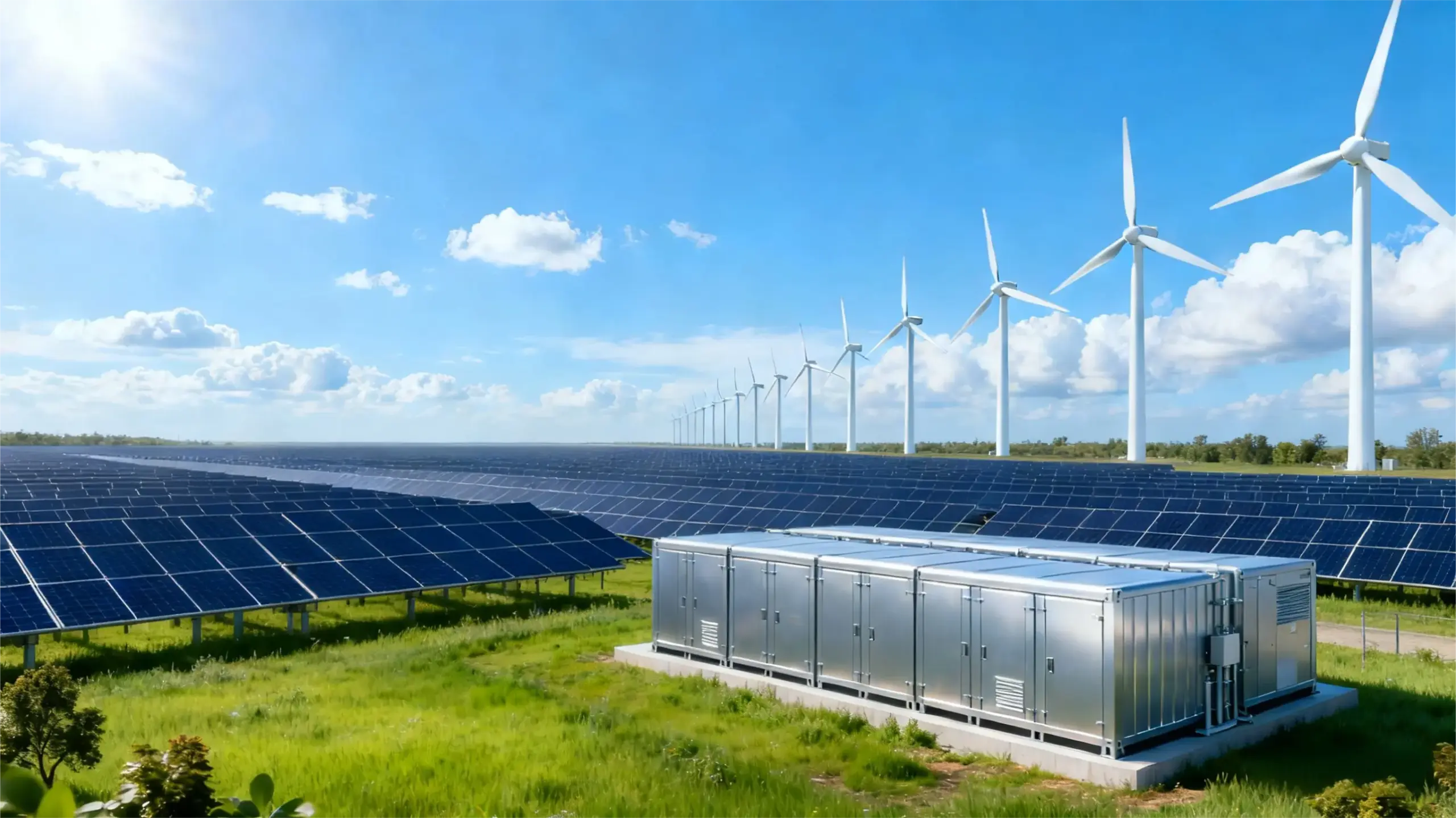
In the energy storage industry, many investors assume that a 1000kWh system equals a 1000kWh earning potential. In reality, two energy storage systems with the same capacity, same tariff strategy, and same working conditions can generate very different economic returns.
The key reason is Round-Trip Efficiency (RTE) — one of the most critical and most overlooked core metrics in commercial and industrial (C&I) energy storage.
What Is Round-Trip Efficiency (RTE)?
RTE measures how much energy you can get back after charging and discharging.
In simple terms:
RTE = (Energy Discharged ÷ Energy Charged) × 100%
If you charge 1000kWh and can only discharge 900kWh, your RTE is 90%.
The missing 100kWh becomes losses, mainly from:
PCS conversion losses
Cable and conduction losses
Heat and thermal management
Battery internal resistance
BMS and system standby consumption
Higher RTE means less loss, more energy output, and more real profit.
Why RTE Directly Impacts Your Profit
Consider two 1000kWh C&I energy storage systems operating daily for arbitrage:
| |System A|System B|
| |Higher RTE|Lower RTE|
Just concept clarify; no table allowed. remove]
System A (High RTE, e.g., 92%)
From 1000kWh charged, about 920kWh is delivered and sold at peak hours.System B (Low RTE, e.g., 85%)
From the same 1000kWh charged, only 850kWh can be delivered.
That means System A earns on 920kWh, while System B earns on 850kWh every cycle.
Even with identical batteries, tariffs, PCS rating, and operating strategy — System A simply earns more money every day because it wastes less energy.
Over years, the financial gap becomes huge.
The Long-Term Business Impact of RTE
RTE affects:
| Impact Area | Result |
Remove table—rewrite as text:
1. Higher RTE = Higher Daily Revenue
More kWh delivered at peak price → direct profit increase.
2. Higher RTE = Lower LCOS (Levelized Cost of Storage)
Less wasted energy → lower cost for each usable kWh.
3. Higher RTE = Better ROI and Faster Payback
Systems with higher RTE often recover investment months or even years earlier.
4. Higher RTE = Less Thermal Stress and Slower Degradation
Better efficiency means lower heat → longer battery life and lower O&M costs.
In short: RTE is not just a technical metric — it is a profitability metric.
What Determines RTE in a Real ESS?
RTE is influenced by five major factors:
Battery Chemistry (e.g., LFP vs NCM)
Internal Resistance and Cell Quality
PCS Conversion Efficiency
Thermal Management Design
System-Level Control Strategy (BMS + EMS)
A well-integrated system can maintain 90%+ RTE in real operation, while a poorly engineered system may drop below 85%, even using similar cells.
Why Many ESS Owners Lose Money Without Noticing
Many integrators only sell “capacity numbers” (kWh), and many buyers only compare price and capacity.
But electricity bills are paid with kWh delivered, not kWh installed.
So the market has a mistake:
They bought 1000kWh, but they never earned with 1000kWh.
This is why professional investors and EPCs always compare real-world RTE, not spec-sheet values.
How FFD POWER Maximizes RTE in Real Projects
To guarantee high RTE over the system lifetime, FFDPOWER focuses on:
High-quality LFP cells with low internal resistance
Precision pack balancing via advanced BMS
Smart EMS with AI-based charge/discharge optimization
High-efficiency PCS integration
Fine-tuned thermal management for uniform temperature
This ensures customers get higher usable energy per cycle, lower LCOS, and higher lifetime profit — even under heavy daily operation.
Conclusion: RTE = Real Profit, Not a Hidden Metric
Two 1000kWh systems are not equal. RTE is the invisible line separating high-profit systems from low-profit systems.
To maximize your return, always ask your supplier:
“What is your real RTE under full-load operation, not just the lab value?”
In commercial energy storage, capacity determines scale, but RTE determines revenue.