
News
Round-Trip Efficiency (RTE): A Key Performance Metric for Energy Storage Systems
- October 16, 2025
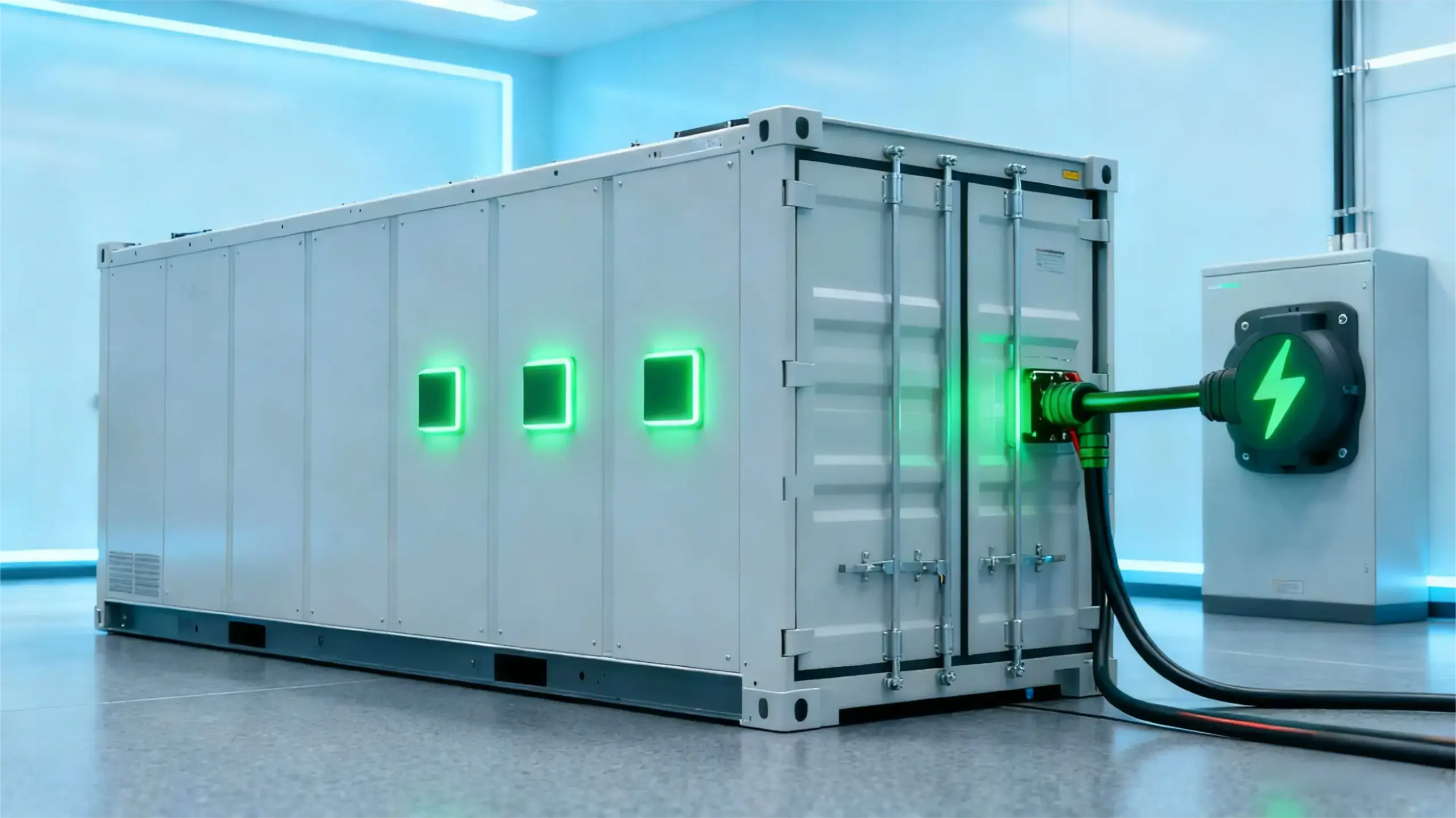
In the world of energy storage systems (ESS), Round-Trip Efficiency (RTE) is one of the most critical performance indicators.
RTE measures the amount of energy you can recover from a storage system relative to the energy you put in. In other words, it tells you how much of the stored energy can actually be used after accounting for losses during charging, storage, and discharging.
A higher RTE means the system delivers more usable energy per cycle, improving both economic value and system performance. It is a crucial factor for homeowners, commercial users, and grid operators who rely on energy storage for cost savings, peak shaving, and renewable energy optimization.
Definition: How Round-Trip Efficiency Works
Round-Trip Efficiency (RTE) indicates how much of the energy put into a storage system can be recovered and used. It is expressed as a percentage and calculated by dividing the energy output by the energy input.
For example, if a battery stores 100 kWh but only delivers 90 kWh to the load due to internal losses and energy conversion, the RTE is 90%.
RTE reflects losses in three main areas:
Battery losses – caused by internal resistance and chemical inefficiencies.
Power conversion losses – from inverters and controllers converting energy between AC and DC.
Thermal management losses – energy consumed to heat or cool the battery for safe operation.
A higher RTE means more usable energy, higher system efficiency, and better economic value.
Why RTE Matters for Energy Storage Systems
Round-Trip Efficiency is more than a technical number—it impacts economics, system sizing, and performance.
(1) Economic Value
Higher RTE means more of the stored energy is available for use, increasing return on investment (ROI) for energy storage projects. For applications like time-of-use arbitrage or solar self-consumption, every percentage point improvement in RTE can directly translate into cost savings.
(2) System Sizing and Optimization
When designing an ESS, engineers consider RTE to calculate how much storage capacity is needed to meet energy demands. A low-efficiency system requires more capacity to achieve the same usable energy output, which increases cost and footprint.
(3) Performance and Reliability
High RTE systems reduce energy loss, minimize heat generation, and improve overall system reliability. This is especially critical for industrial and utility-scale ESS that must perform consistently over thousands of cycles.
Typical RTE Values for Different Storage Technologies
Round-Trip Efficiency (RTE) varies depending on battery chemistry, system design, and operating conditions. Typical ranges include:
Lithium Iron Phosphate (LFP): 90–95% – High stability, low heat generation, long cycle life.
Lithium Nickel Manganese Cobalt (NMC): 88–92% – Slightly lower efficiency but higher energy density.
Lead-Acid Batteries: 70–85% – Higher internal resistance, faster degradation over cycles.
Flow Batteries: 75–85% – Efficiency depends on electrolyte and system configuration.
Sodium-Ion Batteries: 85–90% – Emerging technology with improving efficiency.
Understanding these typical RTE values helps system designers and users compare technologies, select the right storage solution, and optimize system sizing for maximum usable energy.
Factors That Affect Round-Trip Efficiency
Several factors influence RTE in real-world ESS:
Battery Chemistry: Internal resistance and electrochemical efficiency determine energy retention.
Depth of Discharge (DoD): Operating the battery too deeply can increase losses and degrade RTE.
Charge/Discharge Rate (C-rate): Faster rates can cause higher resistive losses, reducing efficiency.
Temperature: Extreme heat or cold impacts both battery and power electronics efficiency.
Power Electronics: Inverter efficiency and conversion losses can account for several percentage points of energy loss.
FFD POWER’s intelligent Energy Management System (EMS) continuously monitors these factors, optimizing charge/discharge strategies to maintain maximum RTE under real-world conditions.
How FFD POWER Optimizes RTE
FFD POWER leverages a combination of high-quality LFP cells, AI-driven EMS, and advanced BMS algorithms to maximize RTE:
Dynamic optimization: Adjusts charging and discharging based on energy pricing, load forecast, and battery health.
Thermal control: Keeps battery temperature within the ideal range for efficiency.
Smart inverter management: Reduces power conversion losses during AC/DC conversion.
Predictive maintenance: Identifies inefficiencies early, preventing RTE degradation over time.
By integrating hardware and software optimization, FFD POWER ensures each system delivers more usable energy per cycle, boosting economic value and system longevity.
Conclusion
Round-Trip Efficiency (RTE) is a vital metric for evaluating the true performance of any energy storage system.
A high RTE ensures:
✅ More usable energy per cycle
✅ Reduced energy waste and heat loss
✅ Lower operating costs and higher ROI
✅ Longer battery life and system reliability
FFDPOWER’s commitment to high-quality LFP cells and AI-driven energy management ensures that every system achieves optimal RTE, making it a reliable, efficient, and cost-effective solution for residential, commercial, and industrial energy storage applications.